Does Norway have a national plan for kidney health?
No, not any more. The Norwegian Directorate of Health made an action plan for preventing and treating chronic kidney disease for 2011 to 2015. It expired, and we have not found a new one. Cancer and diabetes have their own national plans today, and in 2025 the World Health Organization asked countries to bring kidney health into their health strategies.
Short answer: Norway has no current national plan or strategy for kidney health. The last plan ran from 2011 to 2015.
What plan did Norway have for kidney disease?
In 2011 the Norwegian Directorate of Health (Helsedirektoratet) published an action plan for the prevention and treatment of chronic kidney disease, commissioned by the Ministry of Health and Care Services. The plan ran from 2011 to 2015. It stated that about ten per cent of the adult population has chronic kidney disease, and that diabetes and high blood pressure are among the most important causes.
The plan focused on preventing the disease, finding it early and following it up well. The aim was to prevent serious complications, especially in the heart and blood vessels, and to delay or prevent severe kidney failure.
What has happened since 2015?
The plan period is over, and we have not found any new plan or strategy for kidney health from the authorities. LNT, the Norwegian association for kidney patients and transplant recipients, wrote in Dagens Medisin in March 2026 that Norway has no clear national strategy for kidney health.
Specialists have not stood still. The Norwegian Society of Nephrology and the Norwegian College of General Practice have a guide for GPs on chronic kidney disease, last updated in April 2026. But a guide for doctors is not the same as a national plan that sets out who is responsible, what should be achieved and what it will cost.
Which diseases have their own plans today?
Several major diseases have their own national plans or strategies, and they are named in the 2027 state budget: the national cancer strategy for 2025 to 2035, the national diabetes plan for 2025 to 2029 and the national brain health strategy for 2026 to 2036. Plans like these set goals, responsibilities and follow-up year by year.
In the 2027 health budget, cancer is mentioned 54 times and diabetes 17. The Norwegian word for kidney does not appear once. See what the budget still means for you in the guide to the 2027 state budget.
National plans and strategies
Cancer
Plan or strategy
National cancer strategy
Period
2025 to 2035
Diabetes
Plan or strategy
National diabetes plan
Period
2025 to 2029
Brain health
Plan or strategy
National brain health strategy
Period
2026 to 2036
Kidney disease
Plan or strategy
Action plan for chronic kidney disease
Period
Expired in 2015
National plans and strategies
Disease
Plan or strategy
Period
Cancer
National cancer strategy
2025 to 2035
Diabetes
National diabetes plan
2025 to 2029
Brain health
National brain health strategy
2026 to 2036
Kidney disease
Action plan for chronic kidney disease
Expired in 2015
Source: Prop. 1 S from the Ministry of Health and Care Services for the 2027 budget year and the Norwegian Directorate of Health (IS-1884).
What does the World Health Organization say about kidney health?
In May 2025 the World Health Assembly, the WHO’s highest body, adopted its first resolution on kidney health. It recognises kidney disease as a growing public health problem and encourages countries to bring kidney health into their national health strategies. Among other things, the resolution calls for more public awareness of kidney health, earlier detection and access to dialysis and transplants for everyone.
Why does kidney disease need a plan of its own?
Because the disease is common, silent and possible to find early. Around ten per cent of adults in Norway have chronic kidney disease, and at least two in three of them do not know. It rarely causes symptoms before kidney function is greatly reduced. Yet two simple tests at the GP, a blood test and a urine test, can find it early, and treatment can slow it down.
At the end of 2024, 5,517 people in Norway were living with dialysis or a transplanted kidney, according to the Norwegian Renal Registry. And according to forecasts published in The Lancet in 2018, chronic kidney disease may become the fifth leading cause of years of life lost worldwide by 2040.
A plan is about deciding who does what. For example, who should be offered the tests, how the results are followed up, and how people living with the disease get help between check-ups.
What can you do?
If you have diabetes, high blood pressure, heart disease or kidney failure in the family, you can ask your GP for the two tests. See How to detect kidney disease. You can also sign the pledge for more people to be offered them.
How Nyrami can help
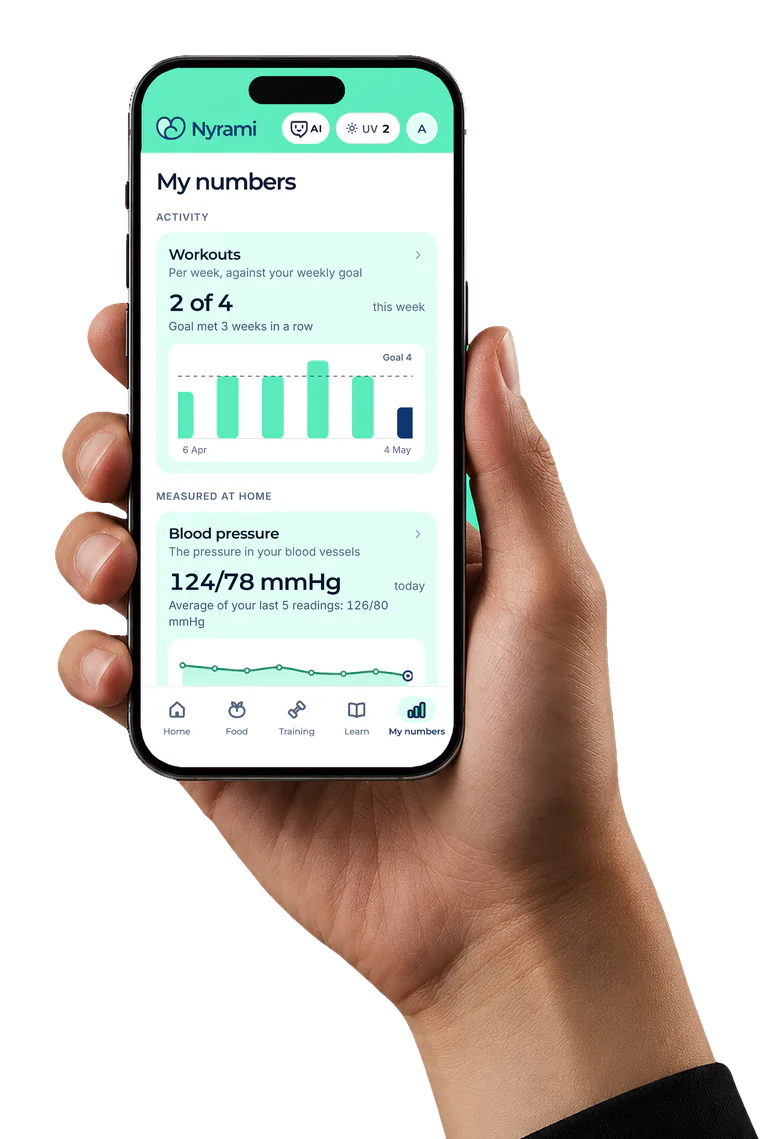
While the plan is missing, there is a lot you can do yourself. In the Nyrami app you can track test results, blood pressure and fluid, and scan food in the shop with potassium, phosphorus and salt assessed for you. The app is free for iPhone and Android.
Turns the advice into something you can use in the shop and the kitchen: scan food and see potassium, phosphorus and salt assessed for you, and follow your numbers over time. Free on iPhone and Android.