How to detect kidney disease: the tests that show it
Kidney disease rarely causes early symptoms, so it is found with two simple tests: a blood test that shows eGFR and a urine test that measures albumin (uACR). If you have diabetes, high blood pressure, heart or blood vessel disease, or kidney failure in the family, ask your GP for both, ideally every year.
Around ten per cent of adults in Norway have chronic kidney disease (CKD), and at least two in three of them do not know it. The reason is simple: the kidneys can lose much of their function before you notice anything. The good news is that two common tests at your GP are enough to find it early.
How do you know if something is wrong with your kidneys?
Often you notice nothing. Most people have no problems in the early stages, and symptoms such as tiredness, nausea, itching, swelling in the legs or around the eyes and foamy urine usually only appear when kidney function is considerably reduced. That is why you cannot wait for symptoms. If you are in a risk group, the tests are the only reliable way to know.
You should have your kidneys tested if you have diabetes, high blood pressure, heart or blood vessel disease, or kidney failure in the family. These groups have a clearly higher risk, and both Norwegian and international guidelines recommend that they are checked. Obesity, previous acute kidney injury and pre-eclampsia also increase the risk.
Diabetes: Helsedirektoratet (the Norwegian Directorate of Health) recommends eGFR and uACR every year for everyone with diabetes. See Diabetes and the kidneys.
High blood pressure: The most common cause of kidney failure in Norway. Among the almost 400 people registered with stage 5 kidney failure in the Norwegian Renal Registry in 2024, high blood pressure or disease of the kidney blood vessels was the cause in thirty-five per cent. See Blood pressure and the kidneys.
Heart or blood vessel disease: Including heart failure and atrial fibrillation. The heart and kidneys affect each other, see the guide to the kidneys and the heart.
Kidney failure in the family: Especially if a parent or sibling has kidney failure, or has an inherited kidney disease such as polycystic kidney disease. See the guide to genetics and kidney disease.
Significant overweight: Increases the risk, both directly and because it is linked to diabetes and high blood pressure.
Older age: Kidney function falls with age, and many older people have high blood pressure or diabetes. See Kidney failure in older people.
Other: Previous acute kidney injury, lupus and other autoimmune diseases, and women who have had high blood pressure or pre-eclampsia during pregnancy.
If a parent has developed kidney failure, you should have the tests yourself. And you can help an older parent ask for them, for example by going with them to the appointment.
Which blood tests show kidney disease?
The most important blood test is creatinine, which the laboratory uses to calculate eGFR. eGFR shows how well the kidneys filter the blood, and below 60 for more than three months means chronic kidney disease. If creatinine may be misleading, for example with a lot of or very little muscle mass, your doctor can also measure cystatin C.
The urine test uACR (called u-AKR in Norway) measures albumin in the urine and is often the first sign of kidney damage, before eGFR falls. It is taken on the first urine of the morning, and a result below 3 mg/mmol is normal. Your GP often also does a urine dipstick, which can show blood in the urine. Blood and protein at the same time can point to inflammation of the kidneys.
uACR is the test many people at risk miss out on. The blood test is often taken routinely, but your doctor has to order the urine test specifically. Read more in the guide to protein in urine.
The tests that reveal kidney disease
eGFR (from blood creatinine)
What it shows
How well the kidneys filter
Normal
60 or higher
uACR (albumin in morning urine)
What it shows
Whether the kidney filter leaks
Normal
Below 3 mg/mmol
Urine dipstick
What it shows
Blood and protein in the urine
Normal
Negative
The tests that reveal kidney disease
Test
What it shows
Normal
eGFR (from blood creatinine)
How well the kidneys filter
60 or higher
uACR (albumin in morning urine)
Whether the kidney filter leaks
Below 3 mg/mmol
Urine dipstick
Blood and protein in the urine
Negative
Source: Veileder for samhandling om pasienter med kronisk nyresykdom (April 2026) and KDIGO 2024. An eGFR between 60 and 89 is not kidney disease on its own.
How often? If you have diabetes, Helsedirektoratet recommends eGFR and uACR every year, and more often if your values change. LNT (the Norwegian kidney patient association) recommends the same for everyone with high blood pressure or heart or blood vessel disease: one blood test and one urine test every year. Without risk factors, healthy people are not usually tested routinely.
What can you ask your GP for?
You can ask your GP (fastlege) for eGFR and uACR. These are two simple tests taken on the same day, and most surgeries do them themselves. It helps to say why you are asking, for example that you have diabetes or that a parent has kidney failure. That makes it easier for your doctor to prioritise.
Ask for a blood test with creatinine and eGFR.
Ask for a urine test that measures albumin, uACR. Bring your first urine of the morning.
Ask to have your blood pressure measured.
Mention all the medicines and supplements you take, including painkillers you buy yourself.
Ask about the results, and when the tests should be repeated.
What happens if a test is abnormal?
One abnormal test is not a diagnosis. The test is repeated, and chronic kidney disease is only diagnosed when eGFR has been below 60 for more than three months, or when uACR is 3 mg/mmol or higher in at least two of three tests taken within three months. Your doctor also looks for things that can be corrected, such as dehydration, low blood pressure or medicines that strain the kidneys.
If the diagnosis is confirmed, you get a stage and a plan, see Kidney failure stages. Many people are followed up by their GP for life. Some are referred to a kidney specialist, often after an ultrasound of the kidneys. Treatment can slow the disease, protect the heart and delay or prevent the need for dialysis. Read more in the guide to chronic kidney disease.
Can I test my kidneys at home?
Home tests with urine dipsticks can show protein or blood in the urine, but they are less accurate than laboratory tests and cannot measure eGFR. A positive result must be confirmed by your doctor, and a negative result does not rule out kidney disease. If you are in a risk group, the tests at your GP are what count.
Can I have kidney tests without going to my GP?
Some private clinics and laboratories take creatinine and urine tests for a fee. The result should still be assessed by your GP, who can repeat the tests and look at them together with your blood pressure and medicines. Bring the result to your appointment, and remember that a single test is never enough for a diagnosis.
When should you contact a doctor?
Book an appointment with your GP if you are in a risk group and have not had your kidneys checked in the past year, or if you notice swelling in your legs, foamy urine, blood in your urine or ongoing tiredness. Call the out of hours service (legevakt) on 116 117 if you suddenly pass very little urine or swell up a lot. If a life is in danger, call 113.
How Nyrami can help
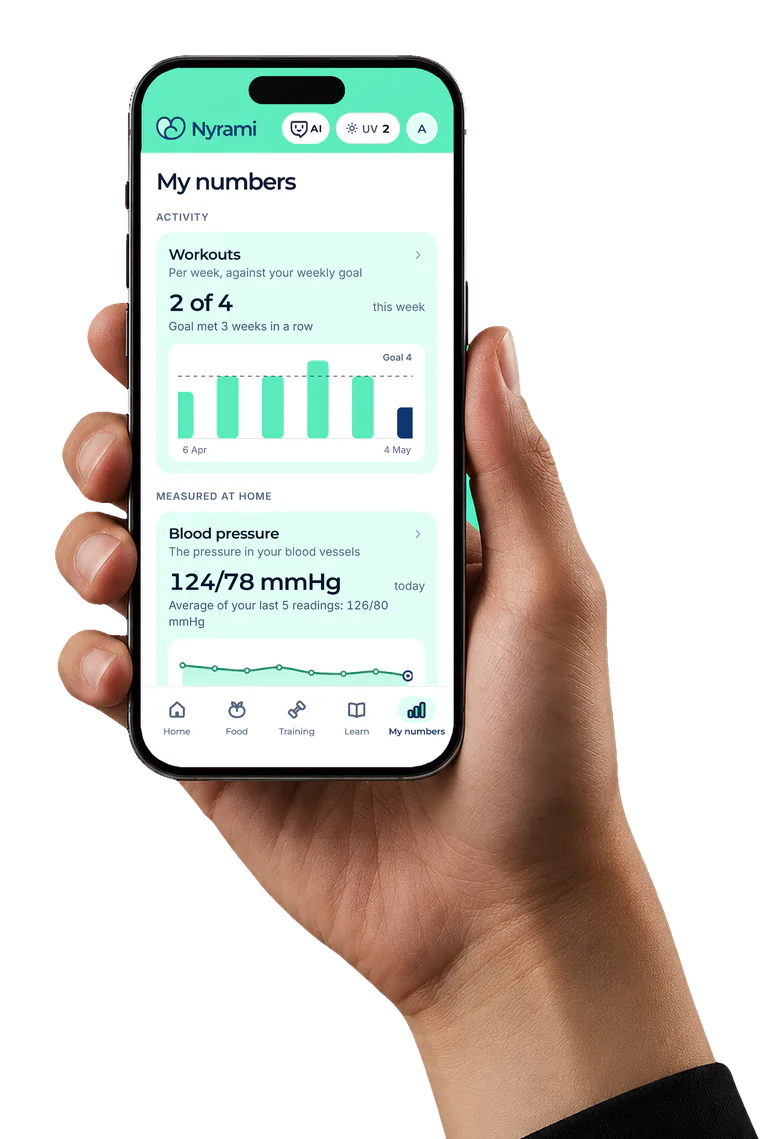
Once you have your test results, you can enter eGFR, creatinine, albumin and blood pressure in the Nyrami app and have them explained in words. The app also has a food scanner, recipes and workouts adapted to the kidneys, and is free for iPhone and Android.
Turns the advice into something you can use in the shop and the kitchen: scan food and see potassium, phosphorus and salt assessed for you, and follow your numbers over time. Free on iPhone and Android.