Diabetic kidney disease: signs, tests and treatment
Diabetic kidney disease is kidney damage caused by diabetes over time. It rarely causes symptoms until it is advanced, so a yearly urine albumin test and eGFR blood test are the way to find it early. Good blood sugar, blood pressure below 130/80 and kidney protecting medicines can slow it a lot.
Diabetes is one of the two most common causes of kidney failure in Norway, and more than a third of the people who start dialysis or receive a new kidney have diabetes. At the same time, kidney damage from diabetes is among the things we can now slow down best, especially when it is found early. Here is what you should know, whether you have diabetes yourself or care about someone who does.
What is diabetic kidney disease (diabetic nephropathy)?
Diabetic kidney disease, also called diabetic nephropathy, is damage to the kidney filters caused by blood sugar being too high for a long time, often together with high blood pressure. The small blood vessels in the filters are damaged and start letting albumin into the urine. Albumin is a protein that should normally stay in the blood. Later, kidney function, measured as eGFR, may start to fall. It is one form of chronic kidney disease.
The first sign is usually albumin in the urine. Without treatment the leak increases over time in most people: the Norwegian Medicines Handbook (Norsk legemiddelhåndbok) states that moderately increased albumin in the urine progresses to clear kidney disease in more than eighty per cent of cases if it is not treated. With treatment the outlook is far better.
In Norway, diabetes was the cause in twenty-one per cent of the nearly 400 people registered with stage 5 kidney failure in the Norwegian Renal Registry in 2024, while high blood pressure was the cause in thirty-five per cent. But when you also count people who have diabetes alongside another kidney disease, thirty-six per cent of those who started dialysis or received a new kidney in 2024 had diabetes.
How many people with diabetes get kidney damage?
Without treatment, twenty to forty per cent of people with type 1 or type 2 diabetes will develop kidney damage, according to Norsk helseinformatikk. The risk grows the longer you have had diabetes, and it is higher when blood sugar and blood pressure are poorly controlled. Even so, most people with diabetes never get kidney failure, and only a few need dialysis or a new kidney.
What are the symptoms of diabetic kidney disease?
Diabetic kidney disease usually causes no symptoms at first. You cannot feel albumin leaking into your urine, and you rarely notice eGFR falling until kidney function is greatly reduced. That is why you cannot wait for signs. It is the tests that find the disease.
When the disease is advanced, you may get swollen legs and ankles, tiredness, itching, poor appetite and nausea. Many also notice that their blood pressure becomes harder to bring down. Read more in Symptoms of kidney failure.
Foamy urine with diabetes can be a sign that a lot of protein is leaking. A little foam when you pass urine forcefully is common and harmless. But if your urine foams a lot every time for several days, you should have a urine test with your GP (fastlege). Read more in Foamy urine.
Which tests should you have, and how often?
Everyone with diabetes should have two kidney tests every year: a urine test that measures albumin, and a blood test that gives eGFR. Helsedirektoratet (the Norwegian Directorate of Health) recommends a yearly urine test, more often if the disease is suspected to be progressing, and a yearly eGFR rather than creatinine alone.
The urine test is reported as the albumin to creatinine ratio (u-AKR, often called ACR in English) in mg/mmol. One raised result is not enough, because hard exercise, fever and urinary tract infections can also increase albumin in the urine. The diagnosis requires raised values in at least two out of three samples.
Albumin in the urine in diabetes (u-AKR)
u-AKR (mg/mmol)
What it means
Below 3
Normal
3 to 29
Moderately increased albuminuria, often the first sign of kidney damage
30 to 299
Severely increased albuminuria
300 or more
Nephrotic range proteinuria, a very large amount of protein in the urine
Source: Helsedirektoratet, national clinical guideline for diabetes. American sources use mg/g, where the limits are about ten times higher.
What should your blood sugar and blood pressure be?
For most people with type 2 diabetes the target is a long term blood sugar (HbA1c) of around 53 mmol/mol, which equals 7 per cent. If you have had diabetes for a long time, have heart or blood vessel disease or have an eGFR below 45, the target is often 53 to 64 mmol/mol, because the risk of low blood sugar (hypos) increases. You set the target together with your doctor.
Blood pressure should be below 130/80. With albumin in the urine this is especially important, and a goal in itself is that the albumin leak goes down or stays stable. Read more in High blood pressure and kidney disease.
Is metformin bad for the kidneys?
No, metformin does not damage the kidneys. But metformin leaves the body through the kidneys, and when kidney function is reduced it can build up. That raises the risk of a rare but serious side effect called lactic acidosis. That is why metformin is adjusted according to eGFR.
Metformin and eGFR
eGFR (ml/min/1.73 m²)
What Helsedirektoratet says
Above 60
Can be used as usual
45 to 60
Can be used, with a lower maximum dose
30 to 45
Can be continued with a lower maximum dose, but new treatment should not be started
Below 30
Should not be used
Source: Helsedirektoratet, national clinical guideline for diabetes, and Norsk legemiddelhåndbok. Your doctor decides the dose.
The guidelines also say metformin should be paused when you become dehydrated from vomiting, diarrhoea or fever, and it may need pausing before scans that use contrast dye. Ask your doctor for a written plan, and do not stop or switch on your own.
Which medicines protect the kidneys in diabetes?
There are now four groups of medicines shown to protect the kidneys in diabetes, and several of them also protect the heart. Which ones suit you depends on your eGFR, albumin in the urine, potassium and which type of diabetes you have.
An ACE inhibitor or ARB, for example ramipril or losartan, is the foundation when albumin leaks into the urine. This applies to both type 1 and type 2 diabetes, and they protect the kidneys beyond their effect on blood pressure.
SGLT2 inhibitors such as dapagliflozin (Forxiga) and empagliflozin (Jardiance) slow kidney disease and help prevent heart and blood vessel disease. KDIGO recommends them in type 2 diabetes and chronic kidney disease when eGFR is 20 or higher. Below an eGFR of 45 they barely lower blood sugar any more, but they are still used to protect the kidneys. They should not be used in type 1 diabetes.
Finerenone (Kerendia) is a newer medicine for adults with type 2 diabetes and chronic kidney disease with albumin in the urine. It is added to an ACE inhibitor or ARB when the leak continues, and requires normal potassium and an eGFR above 25.
GLP-1 analogues such as semaglutide (Ozempic) lower blood sugar and weight, and have been shown to protect the kidneys and heart in people with type 2 diabetes and chronic kidney disease.
Many people take several of these at once. Read more in Medicines in kidney disease and The kidneys and the heart. Also be careful with painkillers: anti-inflammatories such as Ibux (ibuprofen) can damage the kidneys, especially together with blood pressure medicine and water tablets. See Painkillers and the kidneys.
What should you eat with both diabetes and kidney disease?
The best diet looks like the one that is good for blood sugar: plenty of vegetables, fish, wholegrain foods, little salt and little processed food. But when kidney function is reduced, some advice can pull in different directions.
Fruit, vegetables, whole grains and pulses are good for blood sugar, but some of them are high in potassium. That only matters if your potassium value is high. See Potassium in food.
Do not cut protein on your own. Helsedirektoratet says health professionals can suggest slightly less protein for some people with diabetes and kidney damage, but that the effect is uncertain and it should be followed up by a dietitian. See Protein in kidney disease.
There is no single answer that fits everyone. Ask for an appointment with a clinical dietitian if the advice you have been given feels contradictory.
Can diabetic kidney disease get better?
The damage to the kidney filters usually does not reverse, but the albumin leak can go down with good treatment, and the fall in eGFR can be slowed a lot. Helsedirektoratet calls a fall in urine albumin a good sign in itself. Untreated, eGFR often falls by 5 to 6 ml/min a year when a lot of albumin leaks, so early treatment can save many years of kidney function. Also read Can kidney failure get better?.
What can you do as a family member?
You can remind them about the yearly check-up and go along to the doctor if the person you care about wants you to. It also helps to know the plan for which medicines to pause during vomiting, diarrhoea or fever, especially if you help an older parent with their medicines. Read more in Family and kidney disease.
When should you contact a doctor?
You have diabetes and have not had a urine test and eGFR in the past year.
Your urine foams a lot every time for several days, or your legs swell.
You have vomiting, diarrhoea or fever and take metformin, an SGLT2 inhibitor, blood pressure medicine or water tablets.
You take an SGLT2 inhibitor and get nausea, vomiting, stomach pain, great thirst or fast, deep breathing. This can be a rare, serious build up of acid (ketoacidosis), even when blood sugar is normal. Contact a doctor or the out-of-hours service (legevakt, 116 117) straight away.
How Nyrami can help
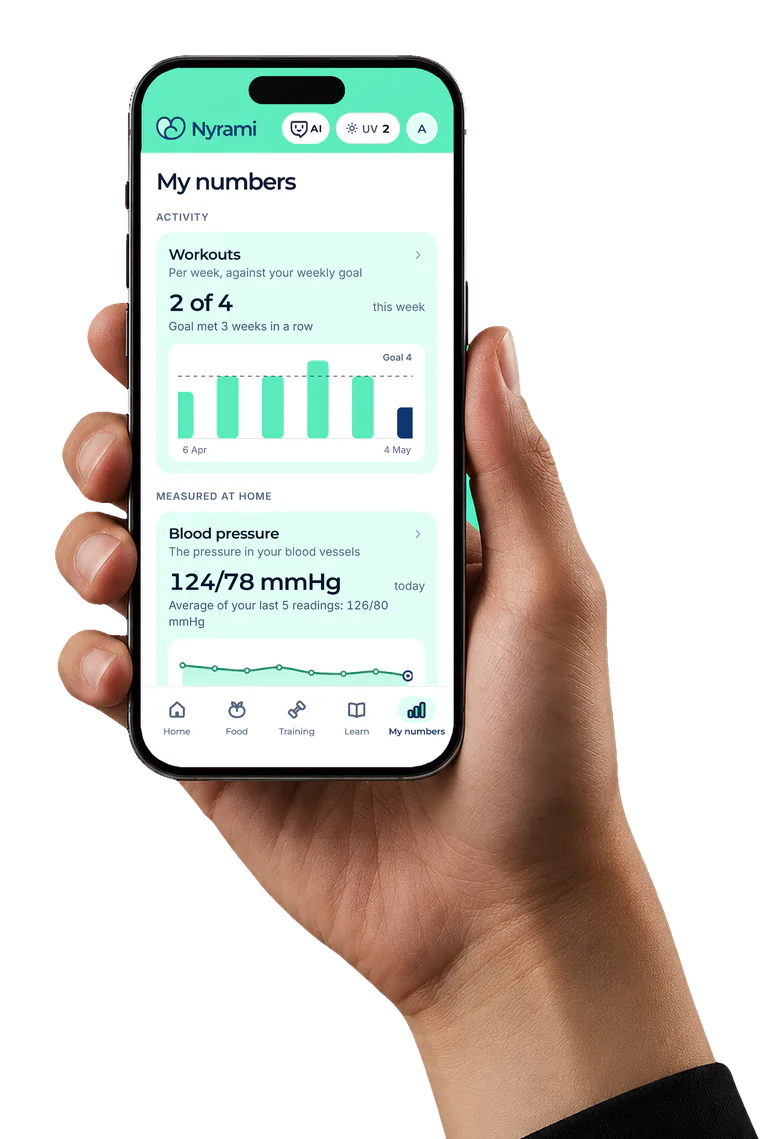
In the Nyrami app you can log blood sugar, blood pressure, eGFR, creatinine and albumin and see them over time in one place, so you come prepared to your yearly check-up. The food scanner reads the barcode and assesses potassium, phosphorus, sodium and protein for you, and the recipes are assessed per portion. The app is free for iPhone and Android.
Turns the advice into something you can use in the shop and the kitchen: scan food and see potassium, phosphorus and salt assessed for you, and follow your numbers over time. Free on iPhone and Android.