Ibuprofen, paracetamol and the kidneys: what can you take?
If you have kidney disease, paracetamol (Paracet, Pinex, Panodil in Norway) is the safest painkiller you can buy without a prescription. Ibuprofen (Ibux), diclofenac (Voltaren), naproxen and other NSAIDs can lower kidney function and should be avoided as far as possible. If your eGFR is below 30, you should not use them. Ask a doctor or pharmacist before taking anything new.
Headaches, back pain and sore joints happen when you have kidney disease too. Many people take an ibuprofen without thinking about it. With weakened kidneys, though, the choice of painkiller matters, because some of the most common tablets in the cupboard can make kidney function worse.
Can you take ibuprofen if you have kidney disease?
Ibuprofen (Ibux) and other anti-inflammatory painkillers, called NSAIDs, should be avoided in kidney disease as far as possible. If your eGFR is below 30, they should not be used at all. Between 30 and 60, they should only be used as agreed with your doctor, at the lowest possible dose for the shortest possible time, and your kidney function should be followed with blood tests of creatinine and eGFR.
eGFR is the measure of how well your kidneys filter the blood. If you do not know your own value, it is on your test results. Read more about what the number means in the guide on eGFR normal range, and about which stage it corresponds to.
NSAIDs and kidney function
eGFR
What applies to ibuprofen and other NSAIDs
Above 60, but with kidney disease
Ask a doctor or pharmacist first, and avoid long term use
30 to 60
Only as agreed with your doctor, lowest possible dose, shortest possible time, with checks of kidney function
Below 30
Should not be used
Dialysis or transplant
Only as agreed with your kidney specialist
Sources: The eGFR limits are in the Felleskatalogen entry on ibuprofen in reduced kidney function (below 30 is contraindicated, 30 to 60 requires caution and monitoring). See also RELIS and Norsk legemiddelhåndbok. Your doctor may give different advice based on the whole picture.
Why are NSAIDs risky for the kidneys?
NSAIDs dampen substances in the body called prostaglandins. In the kidneys, prostaglandins keep the blood vessels open so that enough blood reaches the filters. When they are dampened, the blood vessels narrow, the pressure in the filters falls, and kidney function can drop. Weakened kidneys depend more on this protection.
The effect usually reverses when you stop the tablets, but it can trigger acute kidney failure in the most vulnerable. According to Norsk legemiddelhåndbok (the Norwegian medicines handbook), the risk increases with:
dehydration, for example from vomiting, diarrhoea, fever or drinking too little
older age
blood pressure medicine of the ACE inhibitor or angiotensin II receptor blocker type
diuretics (water tablets)
widespread hardening of the arteries
NSAIDs can also make blood pressure medicine less effective and worsen heart failure, Felleskatalogen writes about Ibux. That is one more reason for caution, since well controlled blood pressure is one of the most important things for the kidneys.
Which painkillers are NSAIDs?
NSAIDs are a large group, and many are sold without a prescription under different names. It is the active ingredient that counts, not the brand name. Always read the ingredients on the pack, and look out especially for combination tablets where ibuprofen and paracetamol are mixed in the same tablet.
Common painkillers and the kidneys
Paracetamol
Examples of Norwegian brand names
Paracet, Pinex, Panodil
In kidney disease
First choice
Ibuprofen
Examples of Norwegian brand names
Ibux, Ibumetin
In kidney disease
Avoid if possible
Diclofenac
Examples of Norwegian brand names
Voltaren (tablets), Voltarol (gel)
In kidney disease
Avoid tablets if possible, ask about gel
Naproxen
Examples of Norwegian brand names
Naproxen, Pronaxen
In kidney disease
Avoid if possible
Etoricoxib and celecoxib
Examples of Norwegian brand names
Arcoxia, Celebra (prescription)
In kidney disease
Avoid if possible
Ibuprofen and paracetamol in the same tablet
Examples of Norwegian brand names
For example Oprixxa (prescription)
In kidney disease
Contains an NSAID, avoid if possible
Common painkillers and the kidneys
Active ingredient
Examples of Norwegian brand names
In kidney disease
Paracetamol
Paracet, Pinex, Panodil
First choice
Ibuprofen
Ibux, Ibumetin
Avoid if possible
Diclofenac
Voltaren (tablets), Voltarol (gel)
Avoid tablets if possible, ask about gel
Naproxen
Naproxen, Pronaxen
Avoid if possible
Etoricoxib and celecoxib
Arcoxia, Celebra (prescription)
Avoid if possible
Ibuprofen and paracetamol in the same tablet
For example Oprixxa (prescription)
Contains an NSAID, avoid if possible
Sources: Felleskatalogen, Norsk legemiddelhåndbok. The list is not complete.
Gel rubbed on the skin is absorbed into the blood less than tablets. Even so, Felleskatalogen writes that diclofenac gel should be used with caution in reduced kidney function if it is applied to large areas over a long time. Ask the pharmacy whether it suits you.
If you take low dose aspirin (acetylsalicylic acid, for example Albyl-E) to prevent blood clots, that is a different matter. Do not stop it without talking to your doctor.
Is paracetamol bad for the kidneys?
No, not with normal use. Paracetamol is the first choice among painkillers in kidney disease, according to Norsk legemiddelhåndbok, and can also be used by people on dialysis. With severely reduced kidney function, a lower dose or a longer gap between doses is recommended, and your doctor decides that.
Long term daily use of painkillers over many years can in rare cases damage the kidneys, and this cannot be ruled out for paracetamol either. If you need painkillers every day for a long time, talk to your doctor about the cause and about a plan. Always follow the dose in the patient leaflet, and remember that too much paracetamol damages the liver.
What is the triple whammy?
The triple whammy is the name for a dangerous combination of three types of medicine: blood pressure medicine of the ACE inhibitor or angiotensin II receptor blocker type, a diuretic and an NSAID. Each is common on its own, but together they can lower the pressure in the kidney filters so much that it causes acute kidney failure.
RELIS (the Norwegian medicines information service) refers to a study from an Australian hospital where this combination was involved in half of the cases where patients got acute kidney failure caused by medicines. Many computer systems only check two medicines against each other, so the combination can slip under the radar.
If you take blood pressure medicine and a diuretic, you should therefore not take ibuprofen or other NSAIDs unless your doctor has said it is fine. This also applies to many people with diabetes, who often take both types.
Who should not take ibuprofen?
Ibuprofen and other NSAIDs should not be used with severe kidney failure, severe liver failure or severe dehydration after vomiting, diarrhoea or drinking too little. You should also be careful, and ask a doctor first, if you have heart failure, high blood pressure or a stomach ulcer, take blood thinners or are older. The Norwegian Medical Products Agency (DMP) advises everyone with kidney failure, heart failure or high blood pressure, and everyone taking blood pressure medicine, to avoid ibuprofen, and calls paracetamol the first choice for most people.
Which medicines are worst for the kidneys?
Among medicines sold without a prescription, NSAIDs are the ones that most often harm the kidneys. Many other medicines are removed through the kidneys and need a lower dose when kidney function is reduced. That is why your doctor should go through your medicine list at every check-up, and the pharmacy should know that you have kidney disease. You will find more about medicines that protect and strain the kidneys in medicines with kidney disease.
Stronger painkillers such as codeine, found in Paralgin forte, can build up in the body when kidney function is reduced and have a stronger and longer effect. Medicines like these should only be used as agreed with your doctor.
The Norwegian guideline for chronic kidney disease says many people should pause blood pressure medicine (ACE inhibitor or ARB), diuretics, SGLT2 inhibitors and metformin during vomiting, diarrhoea, fever or surgery. Your doctor should tell you, both verbally and in writing, which of your medicines this applies to.
Are you caring for an older person with kidney disease?
Go through the medicine cupboard together. Ibuprofen, naproxen and other NSAIDs are often bought without a prescription, and in older people who also take blood pressure medicine and diuretics, they can cause acute kidney failure. Paracetamol is safer, and the pharmacy can help you go through everything. Bring the medicine list and the latest test results. Read more about kidney failure in older people and in the guide for family and carers.
What can you take instead of ibuprofen?
Paracetamol is the first thing to try. Many kinds of pain can also be eased without tablets. If paracetamol does not help, or you need pain relief over time, the next step is to talk to your doctor, not to take ibuprofen on your own.
Heat or cold on sore muscles and joints.
Movement and exercises from a physiotherapist for back and joint pain.
Rest, sleep and enough to drink for headaches, within any fluid limit you have. After an evening with alcohol, ibuprofen is a poor choice, see alcohol and the kidneys.
Ask the pharmacy if you are unsure. Bring a list of your medicines and your eGFR value.
When should you contact a doctor?
Contact a doctor if you have taken NSAIDs and notice that you pass much less urine, get swelling in your legs or face, feel unusually weak or feel sick. The same applies if you need painkillers almost every day. In an emergency in Norway: out-of-hours service (legevakt) 116 117, emergency number 113.
How Nyrami can help
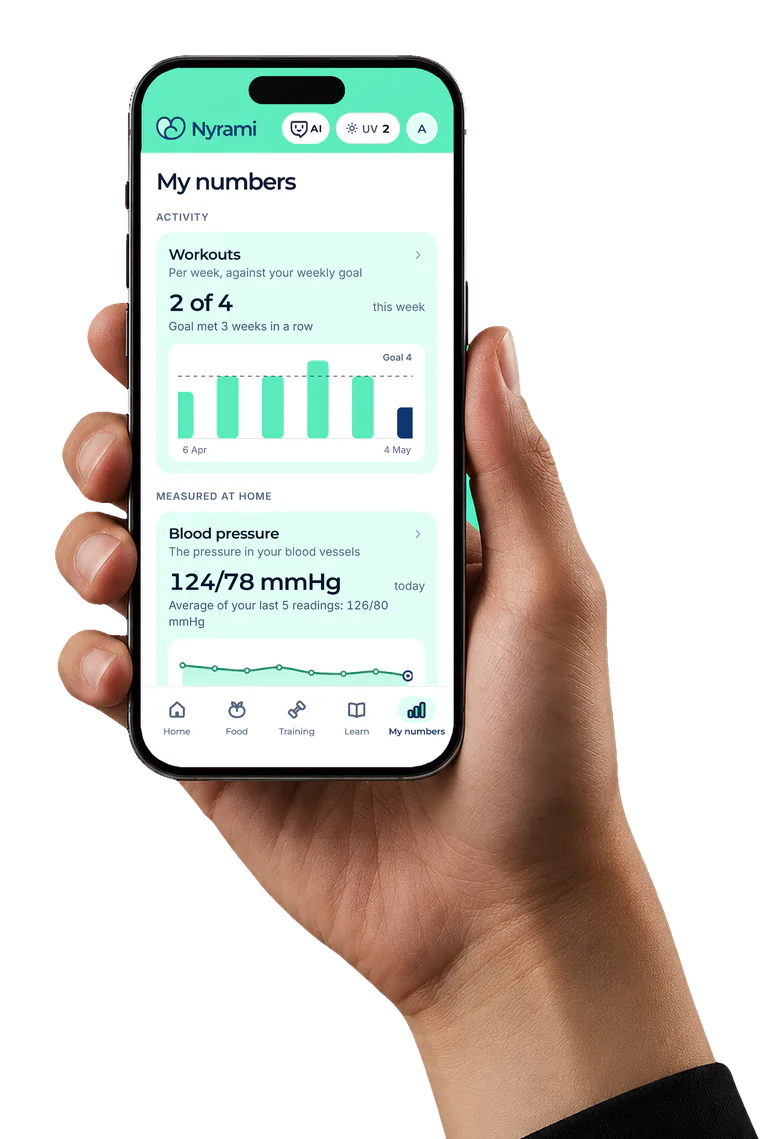
In the Nyrami app you have your values in one place, such as eGFR, creatinine and stage, explained in words. That makes it easy to show your doctor or pharmacist how well your kidneys are working when you need to choose a painkiller. The app is free for iPhone and Android. Also read understanding your test results.
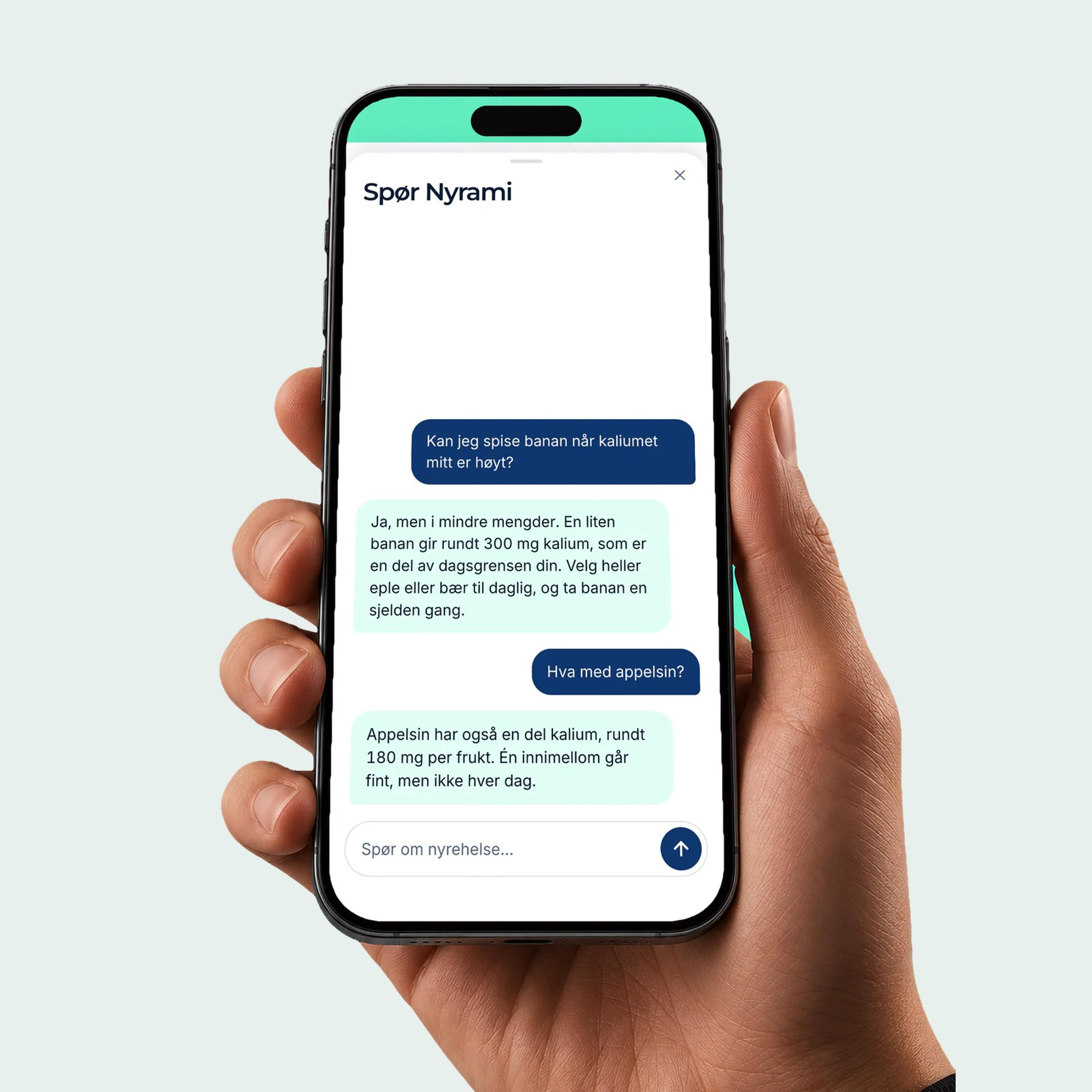
Turns the advice into something you can use in the shop and the kitchen: scan food and see potassium, phosphorus and salt assessed for you, and follow your numbers over time. Free on iPhone and Android.