High blood pressure and kidney disease: target and treatment
High blood pressure is the most common cause of kidney failure in Norway, and diseased kidneys in turn raise blood pressure. For most people with kidney disease the target is below 130/80. Less salt, blood pressure medicines that protect the kidneys and measuring correctly at home help the most.
High blood pressure and kidney disease are closely linked, and the link runs both ways. High blood pressure damages the kidneys, and damaged kidneys push blood pressure up. It also means that good blood pressure treatment is one of the most important things you can do for your kidneys. Here are answers to the questions people ask most, from blood pressure targets to medicines and measuring at home.
How does high blood pressure affect the kidneys?
High blood pressure damages the small blood vessels in the kidneys, so the kidney filters get a poorer blood supply and gradually stop working. Each kidney has around a million of these filters, called nephrons, and each one is built around a tangle of fine blood vessels. When the pressure stays high for many years, the vessel walls become thicker and stiffer. Filters that are lost do not grow back.
This happens silently. High blood pressure rarely causes symptoms, and kidney disease rarely causes symptoms before kidney function is greatly reduced. The only way to find the damage early is to measure your blood pressure and have a blood test (eGFR) and a urine test (albumin). Read more in How to detect kidney disease and Chronic kidney disease.
High blood pressure is the most common cause of kidney failure in Norway. Among the nearly 400 people registered with stage 5 kidney failure in the Norwegian Renal Registry in 2024, high blood pressure or disease of the kidney blood vessels was the cause in thirty-five per cent, diabetes in twenty-one per cent and disease of the kidney filters in eighteen per cent. High blood pressure has been the largest group every year since 2020.
Can kidney disease cause high blood pressure?
Yes, kidney disease is a common cause of high blood pressure. Diseased kidneys are less able to get rid of salt and water, and they can switch on a hormone system (the renin angiotensin aldosterone system) that makes the body hold on to salt and water. Both push the pressure up. This is called renal hypertension, or high blood pressure caused by the kidneys.
The further the kidney disease has progressed, the more common it is. Among the people registered with stage 5 kidney failure in 2024, only seven per cent took no blood pressure medicine, and six in ten took three or more.
A less common cause is narrowing of the artery to one or both kidneys, called renal artery stenosis. Doctors think of it especially if blood pressure is high in a young person, rises quickly, is very high or is hard to bring down with medicines.
What should your blood pressure be when you have kidney disease?
For most people with chronic kidney disease the target is a blood pressure below 130/80. That is what Norwegian kidney specialists and GPs consider sensible in practice. If a lot of albumin leaks into the urine (urine albumin to creatinine ratio, u-AKR, above 30 mg/mmol), blood pressure matters even more, and people who tolerate it may benefit from getting below 120/80.
The international KDIGO guideline suggests a top number below 120 when tolerated. But that figure is based on studies using a standardised measurement that is not quite the same as an ordinary reading at the surgery. For older and frail people, and for those who feel dizzy when they stand up, a gentler target may be more appropriate. Your doctor sets the target together with you.
Blood pressure targets in chronic kidney disease
Situation
Usual target
Most people with chronic kidney disease
Below 130/80
A lot of albumin in the urine (u-AKR above 30 mg/mmol)
Below 130/80, and below 120/80 if you tolerate it
Diabetes with albumin in the urine
Below 130/80
Older, frail or dizzy on standing
A gentler target set by your doctor with you
Measuring at home
Usually a little lower than at the doctor’s
Source: Norwegian collaboration guideline for chronic kidney disease (April 2026), Helsedirektoratet diabetes guideline, KDIGO 2024, Helsenorge. Your target may be different.
Which blood pressure medicine protects the kidneys?
ACE inhibitors and angiotensin receptor blockers (ARBs) are the blood pressure medicines that protect the kidneys best, especially when albumin leaks into the urine. They lower the pressure inside the kidney filters, not just in the rest of the body, and they reduce the leak of albumin. Norwegian and international guidelines call them the cornerstone of treatment.
ACE inhibitors, for example enalapril, lisinopril and ramipril.
ARBs, for example losartan, candesartan, valsartan and irbesartan. Among other uses, losartan is approved for treating kidney disease in adults with high blood pressure, type 2 diabetes and protein in the urine.
An ACE inhibitor and an ARB should not be used together. Many people also get an SGLT2 inhibitor, such as dapagliflozin (Forxiga) or empagliflozin (Jardiance). Together with an ACE inhibitor or ARB it slows kidney disease and helps prevent heart and blood vessel disease, also in people who do not have diabetes. Calcium channel blockers such as amlodipine and water tablets (diuretics) are often added to reach the target. Read more in Medicines in kidney disease and The kidneys and the heart.
Can blood pressure medicine damage the kidneys?
No, not when it is followed up properly, but eGFR can fall a little in the first weeks after you start an ACE inhibitor or ARB. That is expected. The fall happens because the pressure in the kidney filters goes down, and that is exactly what protects the kidneys in the long run. The Norwegian collaboration guideline for chronic kidney disease considers a fall in eGFR of up to thirty per cent in the first couple of weeks to be expected.
That is why blood pressure, eGFR and potassium should be checked one to two weeks after starting or increasing the dose. ACE inhibitors and ARBs can also raise potassium in the blood. If eGFR falls more than expected, or potassium rises too much, your doctor adjusts the treatment. Do not stop the medicine on your own.
There is one common situation where blood pressure medicine can cause a sudden fall in kidney function: when you become dehydrated from vomiting, diarrhoea or fever. Norwegian guidelines say you should be told, both verbally and in writing, to pause ACE inhibitors, ARBs, diuretics and SGLT2 inhibitors during such periods. If you have not been given a plan like this, ask your doctor. In the few people who have narrowing of both kidney arteries, these medicines can cause a larger fall, and the doctor follows them especially closely.
How do you measure your blood pressure correctly at home?
Home readings give a better picture than a single reading at the doctor’s, because blood pressure varies through the day and many people have higher pressure at the surgery. Measure on several days before your appointment and bring the numbers. Helsenorge gives this advice:
Use a monitor that measures on the upper arm.
Sit and rest for at least five minutes, with your back supported, your feet flat on the floor and your legs uncrossed.
Rest the arm with the cuff on a table or armrest, and do not talk while you measure.
Measure three times with one minute in between. The average of the last two readings is your blood pressure.
If your blood pressure at home is 180/120 or higher, sit quietly and measure again after a few minutes. If it is still that high, contact a doctor the same day.
What can you eat and do to lower your blood pressure?
Less salt is the single change that helps most people with kidney disease. KDIGO suggests less than 5 grams of salt a day, which equals 2 grams of sodium. Most of the salt comes from bread, sandwich fillings, cheese, ready meals and snacks, not from the salt shaker. See Salt and the kidneys.
Be careful with common advice about potassium rich food. Many diets for high blood pressure recommend bananas, potatoes and spinach because potassium can help lower blood pressure. That is fine for healthy kidneys. But with reduced kidney function, and especially together with an ACE inhibitor or ARB, potassium in the blood can become too high. Follow your potassium value and the advice you have been given. See Potassium in food.
Do not take anti-inflammatory painkillers such as Ibux (ibuprofen) or diclofenac without asking your doctor. They can make blood pressure medicine less effective and damage the kidneys. See Painkillers and the kidneys.
Take your blood pressure medicine every day, also on the days you feel completely fine.
When should you contact a doctor?
Your home blood pressure is still 180/120 or higher when you measure again after a few minutes: contact a doctor the same day.
You get chest pain, sudden breathlessness, a drooping mouth, weakness on one side or trouble speaking: call 113.
You feel dizzy or close to fainting when you stand up, after starting or increasing a blood pressure medicine.
You have vomiting, diarrhoea or fever and take blood pressure medicine, diuretics or an SGLT2 inhibitor.
Outside surgery hours you can call the out-of-hours service (legevakt) on 116 117.
How Nyrami can help
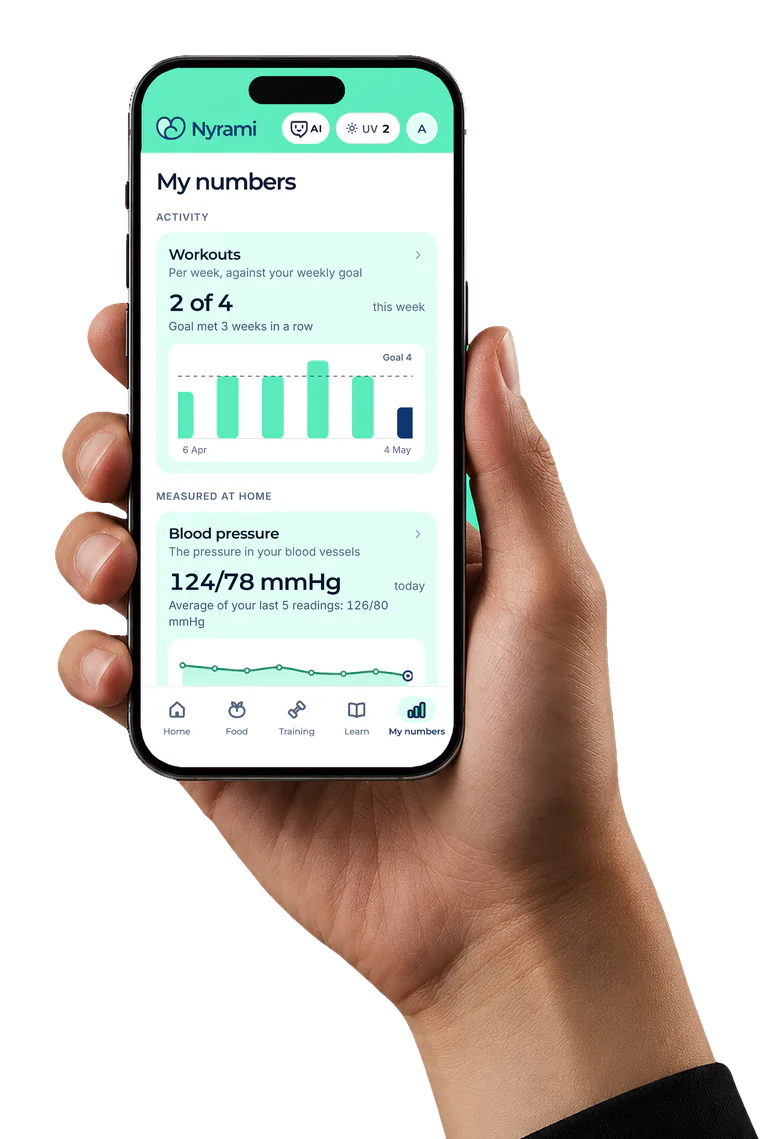
In the Nyrami app you can log your blood pressure and see it over time alongside eGFR and albumin, so you can tell whether a high reading was a blip or a trend. The food scanner reads the barcode and assesses sodium, potassium, phosphorus and protein for you, and the recipes are assessed per portion. The app is free for iPhone and Android.
Turns the advice into something you can use in the shop and the kitchen: scan food and see potassium, phosphorus and salt assessed for you, and follow your numbers over time. Free on iPhone and Android.