Alcohol and kidney failure: how much can your kidneys take?
A little alcohol now and then is rarely harmful to the kidneys on its own, but alcohol raises blood pressure, dehydrates the body and interacts with many medicines. With kidney disease it is therefore wise to drink little and rarely. If you are on dialysis, every drink counts towards your fluid limit.
It is common to wonder whether a glass of wine or a beer is fine once you have been told your kidneys are not working as they should. The answer depends on how much you drink, which medicines you take and how far the disease has progressed. Here is what you need to know.
What happens to the kidneys when you drink alcohol?
Alcohol suppresses a hormone called ADH, which normally makes the kidneys hold on to water. That is why you pass more urine when you drink, and your body can become dehydrated. Over time, alcohol also raises blood pressure, and high blood pressure is the most common cause of chronic kidney disease and kidney failure in Norway.
Among the nearly 400 people registered with stage 5 kidney failure in the Norwegian Renal Registry (Norsk nyreregister) in 2024, high blood pressure or disease of the kidney blood vessels was the cause in thirty-five per cent. That is the main reason alcohol matters for the kidneys: not because one glass damages them directly, but because regular drinking makes it harder to keep your blood pressure down.
Heavy drinking over a long time also damages the liver, and a diseased liver puts further strain on the kidneys. The US National Kidney Foundation states that regular heavy drinking roughly doubles the risk of kidney disease. By heavy drinking they mean more than three drinks in a day or seven a week for women, and more than four in a day or fourteen a week for men.
Can you drink alcohol if you have kidney disease?
Most people with kidney disease can drink a little alcohol now and then, but no amount is completely safe, and less is better. How much you can tolerate depends on your kidney function, blood pressure and medicines. Ask your doctor what applies to you, especially if you are on dialysis or have had a transplant.
If you choose to drink, it helps to drink slowly, eat at the same time and keep to small amounts. Alcohol also makes it harder to stick to advice on salt, potassium and phosphorus, because it often comes with crisps, pizza and late night snacks.
What does Helsedirektoratet recommend about alcohol?
The dietary advice from Helsedirektoratet (the Norwegian Directorate of Health) says alcohol intake should be as low as possible from a health point of view. There is no lower limit proven to be safe. Children, young people and pregnant women should not drink alcohol at all. The advice applies to everyone, including you if you have kidney disease.
One unit of alcohol in Norway is about 12 grams of pure alcohol. That equals 33 cl of lager at 4.5 per cent, a small 12.5 cl glass of wine or 4 cl of spirits. A half litre of lager is around one and a half units, and a standard glass of wine a little over one.
Are two bottles of wine a week a lot?
Two bottles of wine a week are around 12 units of alcohol. A 0.75 litre bottle at 12.5 per cent contains around 74 grams of alcohol, which is about 6 units. Helsedirektoratet has no safe limit and advises drinking as little as possible. You may have heard that the limit is 10 units a week, but that is the Danish advice from Sundhedsstyrelsen, not a Norwegian one. With kidney disease and blood pressure medicine, two bottles a week is an amount you should talk to your doctor about.
Is beer good for the kidneys?
No, beer does not protect the kidneys. Beer contains fairly little potassium and phosphorus compared with juice and milk, but it is a lot of fluid and alcohol. Alcohol-free beer is a better choice than regular beer, but has about twice as much phosphorus. If you have a fluid limit, both count just as much. Some people have heard that beer helps against kidney stones. Water gives the same fluid without the alcohol.
Potassium and phosphorus in common drinks, per serving
Lager, 4.7 per cent
Serving
0.5 l
Potassium
150 mg
Phosphorus
45 mg
Alcohol units
about 1.5
Lager, 4.7 per cent
Serving
0.33 l
Potassium
100 mg
Phosphorus
30 mg
Alcohol units
about 1
Alcohol-free beer
Serving
0.5 l
Potassium
150 mg
Phosphorus
95 mg
Alcohol units
almost 0
Red wine
Serving
15 cl
Potassium
165 mg
Phosphorus
20 mg
Alcohol units
about 1.3
White wine, dry
Serving
15 cl
Potassium
90 mg
Phosphorus
9 mg
Alcohol units
about 1.2
Spirits, 40 per cent
Serving
4 cl
Potassium
0 mg
Phosphorus
0 mg
Alcohol units
about 1
Orange juice
Serving
2 dl
Potassium
330 mg
Phosphorus
32 mg
Alcohol units
0
Whole milk
Serving
2 dl
Potassium
340 mg
Phosphorus
230 mg
Alcohol units
0
Potassium and phosphorus in common drinks, per serving
Drink
Serving
Potassium
Phosphorus
Alcohol units
Lager, 4.7 per cent
0.5 l
150 mg
45 mg
about 1.5
Lager, 4.7 per cent
0.33 l
100 mg
30 mg
about 1
Alcohol-free beer
0.5 l
150 mg
95 mg
almost 0
Red wine
15 cl
165 mg
20 mg
about 1.3
White wine, dry
15 cl
90 mg
9 mg
about 1.2
Spirits, 40 per cent
4 cl
0 mg
0 mg
about 1
Orange juice
2 dl
330 mg
32 mg
0
Whole milk
2 dl
340 mg
230 mg
0
Source: Matvaretabellen (the Norwegian food composition table), converted from values per 100 g and rounded. Alcohol units calculated from 12 grams of alcohol per unit.
The numbers show that a beer is no potassium bomb. If you have been told to limit potassium or phosphorus, the food around it and the total amount over the day matter most. Read more in the guides on potassium in food, phosphorus in food and food with kidney failure. You will find other drinks in the food lookup, for example lager and red wine.
Does alcohol count towards your fluid limit?
Yes. If you are on dialysis or have been given a fluid limit, beer, wine and mixed drinks count just as much as water. A half litre of beer takes up a large part of the day’s fluid if your limit is under one litre. Too much fluid between dialysis sessions causes swelling, higher blood pressure and harder treatments.
An example from St. Olavs hospital in Trondheim: if you pass no urine yourself, the advice is often no more than 7 dl of drinks a day. If you still pass urine, you can drink 7 dl more than your urine volume. Your own limit is set by your dialysis unit. Read more in fluid balance in kidney disease.
How does alcohol interact with your medicines?
Many people with kidney disease take blood pressure medicine, diuretics (water tablets) or diabetes medicine, and alcohol can strengthen the side effects. Blood pressure can drop too much, making you dizzy and more likely to fall. If you use insulin, alcohol can cause low blood sugar, because the liver is busy breaking down the alcohol.
Read the patient leaflet, or ask the pharmacy whether alcohol is fine with your particular medicines.
If you have had a kidney transplant, ask your doctor before drinking. The medicines that prevent rejection must be taken precisely.
Do not take painkillers such as ibuprofen (Ibux) for a hangover headache. Read why in the guide on painkillers and the kidneys.
If you have diabetes, you will find more about blood sugar and the kidneys in diabetes and the kidneys.
Can alcohol cause acute kidney failure?
Yes, it can happen. A lot of alcohol in a short time can cause a sudden drop in kidney function, called acute kidney injury. The National Kidney Foundation warns especially against drinking many units within a couple of hours. The damage usually passes, but sometimes it is permanent, and kidneys that are already weakened have less in reserve.
Heavy vomiting and diarrhoea dehydrate the body, which puts extra strain on the kidneys. If you have kidney disease and take blood pressure medicine or diuretics, it is wise to agree with your doctor what to do with your medicines when you cannot keep fluids down.
What can you drink instead?
Water is the best choice for most people, and the dietary advice from Helsedirektoratet recommends water when you are thirsty. No drink cleanses or repairs the kidneys. How much you should drink depends on your kidney function: some people should drink plenty, while others have a strict fluid limit. Ask your doctor what applies to you, and see what is good for your kidneys.
When should you contact a doctor?
Contact a doctor if you notice you are passing much less urine than usual, get swelling in your legs or face, or feel dizzy and weak after a period of alcohol, vomiting or diarrhoea. If you find it hard to cut down, your GP (fastlege) can help. In an emergency in Norway: out-of-hours service (legevakt) 116 117, emergency number 113.
How Nyrami can help
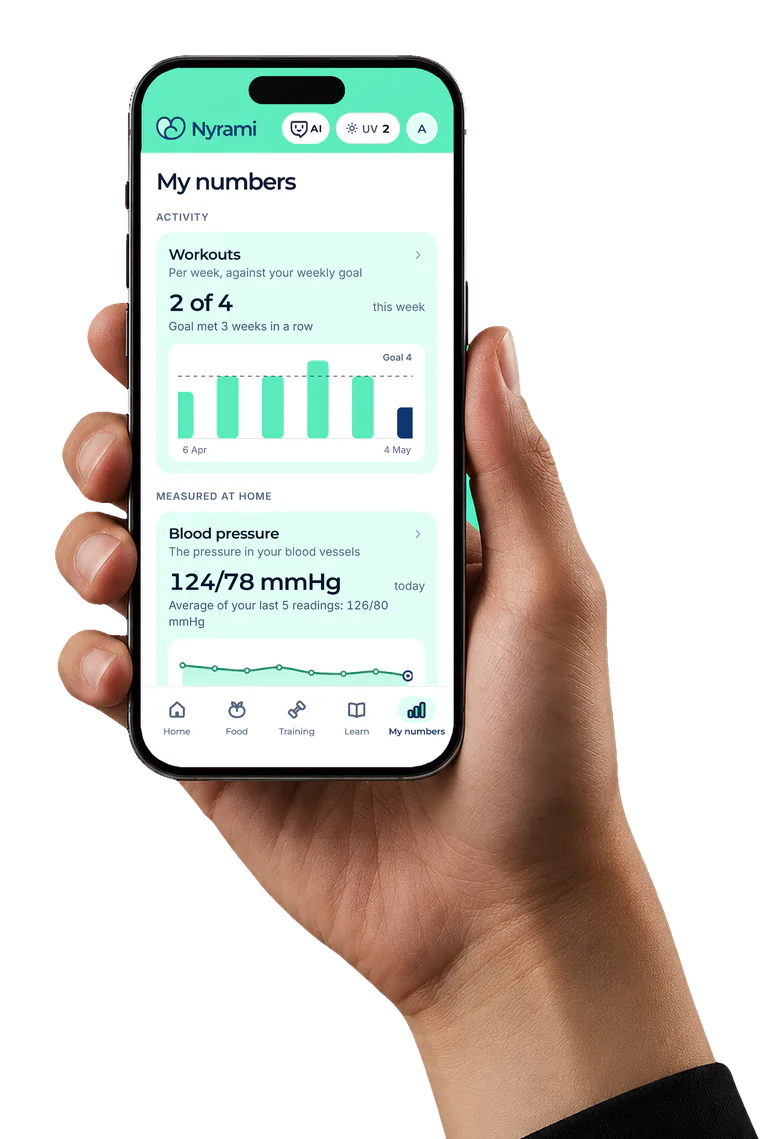
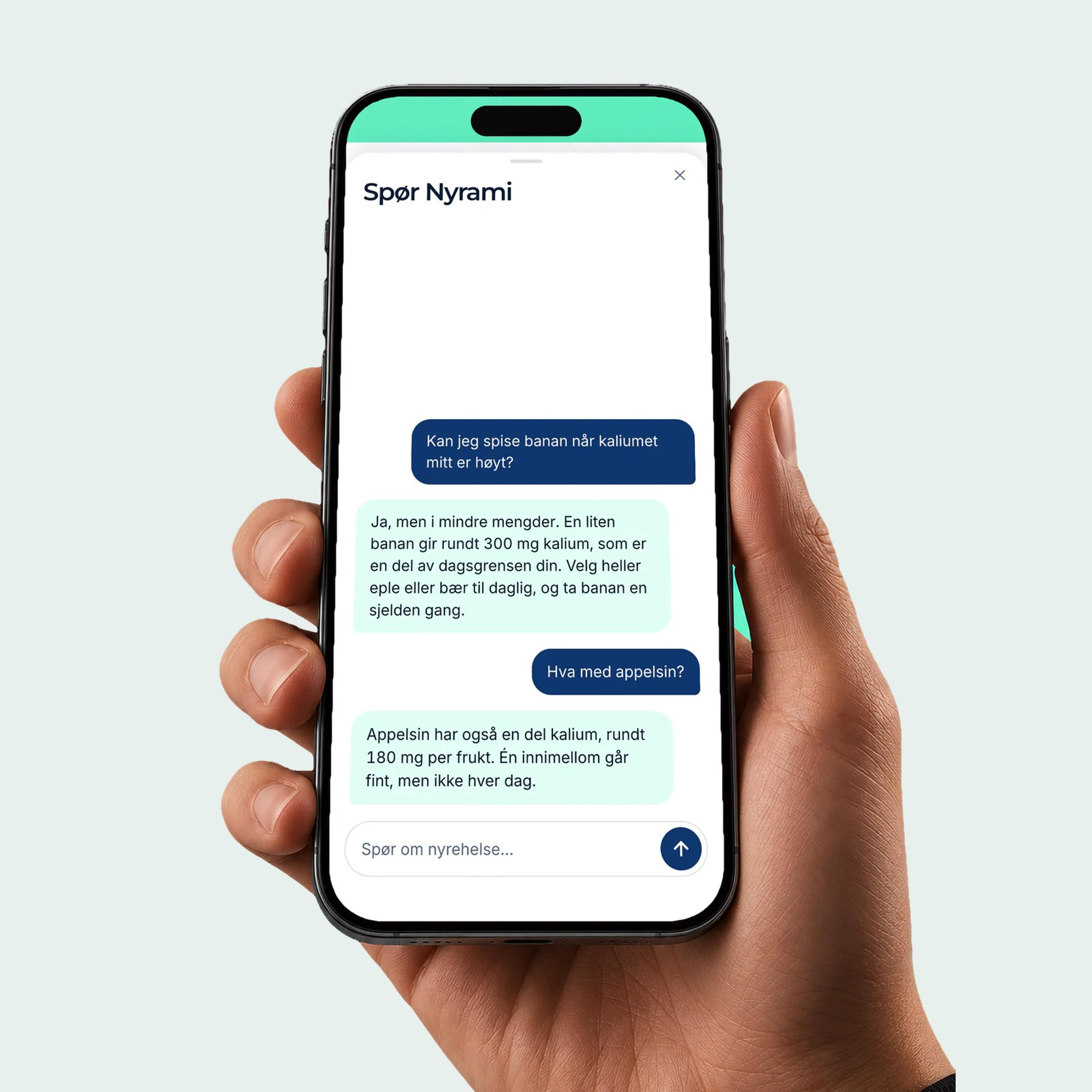
In the Nyrami app you can log how much you drink and see your fluid alongside your other values. The food scanner reads the barcode and assesses potassium, phosphorus, sodium and protein for you, also in drinks. The app is free for iPhone and Android.
Turns the advice into something you can use in the shop and the kitchen: scan food and see potassium, phosphorus and salt assessed for you, and follow your numbers over time. Free on iPhone and Android.