The kidneys and the heart are closely linked. Chronic kidney disease (CKD) raises the risk of heart attack, stroke and heart failure, and cardiovascular disease is the most common cause of death in people with kidney disease. Much of the treatment protects both: good blood pressure, little salt and medicines that work on the kidneys and the heart at the same time.
If you have been told your kidneys are weakened, it may surprise you that your doctor also talks about your heart. That is no coincidence. The kidneys and the heart share blood vessels, blood pressure and fluid balance, and when one organ struggles, the other feels it. Here we explain the link and what protects both. The kidney disease itself is explained in Chronic kidney disease.
How are the kidneys and the heart connected?
The heart pumps the blood, and the kidneys clean it and control how much salt and water the body holds on to. The kidneys also help regulate blood pressure. When the kidneys fail, blood pressure often rises and the body retains fluid, which puts strain on the heart. When the heart fails, the kidneys get too little blood and too much pressure in the veins, and that damages the kidneys.
Doctors call this interplay cardiorenal syndrome: disease in one organ leads to failure in the other. The kidneys and the heart also share many of the same risk factors: older age, high blood pressure, diabetes, overweight and atrial fibrillation. Read more in Blood pressure and the kidneys and Diabetes and the kidneys.
Why does kidney disease increase the risk of heart disease?
Chronic kidney disease is an important and underestimated risk factor for heart attack and stroke. High blood pressure, salt and fluid building up, and damage to the blood vessels strain the heart and circulation. People with chronic kidney disease have a clearly higher risk than others, and cardiovascular disease is the most common cause of death in this group.
Even early kidney disease counts. Albumin in the urine increases the risk of cardiovascular disease, even when eGFR is normal. The lower the eGFR and the more albumin, the higher the risk. That is why European guidelines consider chronic kidney disease a high risk for cardiovascular disease, and many people are given cholesterol lowering medicine. See Kidney failure stages.
Kidney failure and heart failure: what is the link?
Heart failure and kidney disease often occur together. More than half of patients with chronic heart failure followed at Norwegian heart failure clinics have signs of chronic kidney disease. Around one to two per cent of the population have heart failure, and among those over 75 it is around one in ten, according to Store medisinske leksikon and LHL.
The organs can drag each other down in a vicious circle: weak kidneys make the body hold on to fluid, which gives the heart more work, and a weak heart gives the kidneys a poorer blood supply. When both organs are weakened, the risk of serious cardiovascular events rises. That makes it especially important to treat both at the same time.
What is the outlook when both the heart and kidneys fail?
The outlook is more serious when both organs fail than when only one does. Chronic kidney disease is behind a large share of the heart events that lead to hospital admission and death, and in the late stages of kidney disease, heart failure and rhythm disturbances are common. That is why your doctor follows both the heart and the kidneys closely, and why the medicines that protect both matter so much.
Norwegian specialists point out that overly cautious treatment, for fear of straining the kidneys, has contributed to a poorer outlook for this group. If you are given a treatment that makes your creatinine rise a little, it is often intended and in your best interest in the long run. How long people live with kidney disease is covered in Kidney failure and life expectancy.
Which symptoms should you watch for?
Swollen legs, shortness of breath and rapid weight gain can come from both the kidneys and the heart, because both are about fluid the body cannot get rid of. Shortness of breath when you lie flat, or getting out of breath from things you used to manage, are signs to take seriously.
- Swollen ankles, feet or legs
- Shortness of breath with light activity or when lying down
- Weight gain of more than 2 kilos in 3 to 4 days
- Unusual tiredness and weakness
Family members can help by weighing and noting the weight every morning. It is the simplest warning that the body is holding fluid. More advice for you as the person alongside is in Supporting someone with kidney disease.
Read more about the kidney signs in Symptoms of kidney failure and about fluid in Fluid balance in kidney disease.
Which tests say something about both kidneys and heart?
Three tests say a lot about both the kidneys and the heart: creatinine in the blood (which gives eGFR), albumin in the urine and the heart marker BNP. Norwegian cardiologists particularly highlight the urine test, because albumin in the urine is an important warning sign for both kidney and heart disease.
Your doctor also keeps an eye on your blood pressure, cholesterol and potassium. Read how to interpret the numbers in Understanding your test results and Protein in urine.
Which medicines protect both the kidneys and the heart?
Several medicines protect both the kidneys and the heart. Blood pressure medicines of the ACE inhibitor or ARB type have been used for many years. SGLT2 inhibitors slow kidney disease and prevent cardiovascular events and death, also in people without diabetes. With type 2 diabetes, your doctor may also consider finerenone or semaglutide.
When you start some of these medicines, creatinine can rise and eGFR fall a little in the first weeks. This is often expected, because the pressure in the kidney filters goes down, and it protects the kidneys in the long run. Your doctor will therefore take new tests soon after you start or change the dose, often after one to two weeks, but the timing varies with the medicine. Do not stop the medicines on your own even if your tests change, but talk to your doctor.
Why do heart medicines need adjusting in kidney disease?
Many medicines are removed through the kidneys, and when eGFR falls they can build up in the body. Some blood thinners and some heart rhythm medicines therefore often need a lower dose, and the dose should follow kidney function. Water tablets (diuretics) work differently when the kidneys are weak, and ACE inhibitors, ARBs and some diuretics can raise potassium in the blood, so it needs to be monitored.
Anti-inflammatory painkillers such as ibuprofen can both strain the kidneys and worsen heart failure. Ask your doctor before taking them. Read more in Medicines in kidney disease, Painkillers and the kidneys and Potassium in food.
What can you do yourself for your kidneys and heart?
What is good for the heart is almost always good for the kidneys. The most important things you can do yourself are keeping your blood pressure down, eating little salt, stopping smoking, being physically active and keeping a healthy weight. If you have diabetes, well controlled blood sugar matters a lot for both organs.
- Measure your blood pressure at home if your doctor asks you to. The target for most people with kidney disease is below 130/80.
- Cut down on salt. See Salt and the kidneys.
- Move at your own pace. See Exercise with kidney disease.
- Take cholesterol medicine and blood pressure medicine as your doctor has prescribed.
When should you see a doctor?
Contact your GP (fastlege) if you notice increasing swelling, gain more than 2 kilos in 3 to 4 days, get more out of breath than before or feel dizzy after starting new medicines. Call 113 if you have chest pain, serious breathing problems or feel as if you are about to faint.
How Nyrami can help
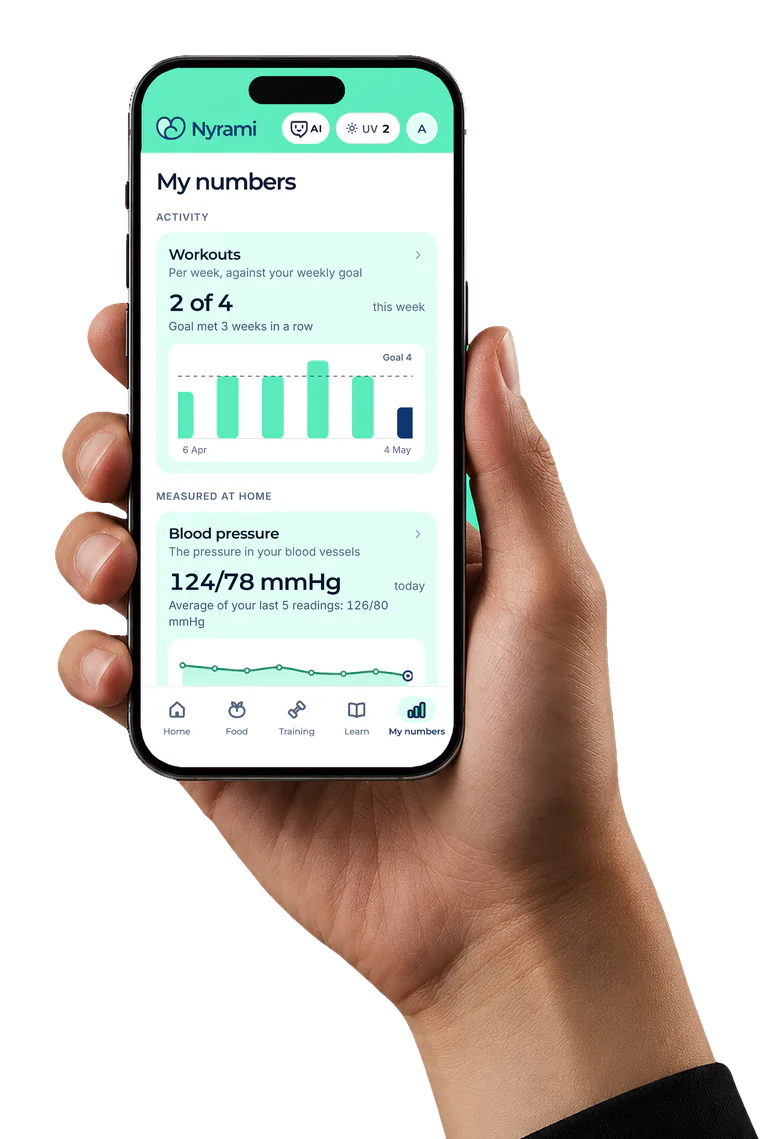
In the Nyrami app you can log blood pressure, weight and fluid and see them together with eGFR, creatinine and albumin, explained in words. That makes it easier to see if your weight is rising or your blood pressure is changing, and you have your values ready for your appointment. The food scanner helps you find products with less salt. The app is free for iPhone and Android.