Acute kidney failure: symptoms, causes and treatment
Acute kidney failure, which doctors now call acute kidney injury (AKI), means the kidneys stop working properly over hours or days. Common causes are fluid loss, serious infection and certain medicines. Many people recover fully or almost fully when the cause is treated quickly, but the risk of chronic kidney disease rises afterwards.
Acute kidney failure means that the kidneys suddenly cannot remove waste, salt and water as they should. It happens over hours or a few days, most often in people who are already ill with something else. Doctors now use the term acute kidney injury (AKI), because smaller falls in kidney function count too. Perhaps you have just heard the term in hospital, about yourself or someone you love. Here you can read what it is, what triggers it and what happens afterwards.
Acute kidney injury is common in hospital. According to NHI.no (Norsk helseinformatikk), around one in a hundred people have it when they are admitted, and two to five in a hundred develop it during their stay. Doctors make the diagnosis when creatinine in the blood rises quickly, or when you pass much less urine than usual over several hours, using the criteria of the international KDIGO guideline.
What is the difference between acute and chronic kidney failure?
Acute kidney failure comes on suddenly, over hours or days, and can often be reversed when the cause is treated. Chronic kidney disease (CKD) develops slowly over months and years, rarely causes symptoms before function is greatly reduced, and usually does not go away. The two are linked: an acute episode raises the risk of chronic kidney disease, and if you have chronic kidney disease, you are more likely to get acute kidney failure.
The most common causes are that the kidneys get too little blood, for example from fluid loss, sepsis or low blood pressure, that something damages the kidney tissue itself, such as certain medicines, or that urine cannot get out. Often several things work together: an older person with pneumonia who drinks little and takes blood pressure medicine is a typical example.
Fluid loss and low blood pressure: vomiting, diarrhoea, fever, heat, bleeding or drinking too little. This is the most common group.
Infection and sepsis: a serious infection can make blood pressure fall and damage the kidneys directly. Sepsis, sometimes called blood poisoning, is one of the most important causes in hospital.
Medicines: anti-inflammatory painkillers (NSAIDs) such as ibuprofen (Ibux), diclofenac (Voltaren) and naproxen. Blood pressure medicines of the ACE inhibitor type (for example ramipril, enalapril) or angiotensin II receptor blockers (for example losartan, candesartan) and diuretics, or water tablets (for example furosemide), can contribute when you are also losing fluid through vomiting and diarrhoea. Some antibiotics and chemotherapy can also harm the kidneys. See Painkillers and the kidneys and Medicines in kidney disease.
Contrast dye: iodine contrast given into a vein for a CT scan or an X-ray of the blood vessels.
Blocked urine flow: an enlarged prostate in men, kidney stones or a tumour in the urinary tract.
Rhabdomyolysis: major breakdown of muscle, after extreme exercise or after lying on the floor for a long time after a fall.
Can hard exercise cause kidney failure?
Yes, but it is rare. Rhabdomyolysis means that large amounts of muscle cells break down, and the substances that leak out can damage the kidneys. It most often happens after an unaccustomed, very hard session, often after a break from training, in heat and with too little to drink. The signs are severe muscle pain, swollen and weak muscles and reddish brown urine that looks like tea or cola. According to NHI.no, five to seven per cent of people with rhabdomyolysis develop acute kidney failure. Reddish brown urine after exercise is a reason to contact a doctor the same day. Read more in Exercise with kidney disease.
Is contrast dye harmful to the kidneys?
For most people the risk is small. Iodine contrast can cause a temporary fall in kidney function in some people, and the risk is greatest when kidney function is already severely reduced. In that case the hospital often gives fluid into a vein before and after the scan, in line with KDIGO. Always mention kidney disease, and whether you take metformin, when you are called in for a CT scan. More on this in Medicines in kidney disease.
What are the symptoms of acute kidney failure?
The most common sign is passing much less urine than usual. Other signs are nausea and vomiting, strong thirst, dizziness, swollen feet and legs, tiredness, confusion or drowsiness, and breathlessness, especially when lying down. Many people with mild acute kidney injury notice nothing, and it is only found on a blood test.
Little or no urine
Nausea, vomiting and poor appetite
Strong thirst and dizziness
Swollen feet, ankles or legs
Tiredness, confusion or unusual sleepiness
Breathlessness, especially when lying down, and a fast pulse
How can you tell if you are dehydrated?
Signs that your body is short of fluid are thirst, a dry mouth and tongue, dark yellow, strong smelling urine, passing urine less often than usual, headache, tiredness and dizziness when you stand up. Nausea and muscle cramps are also common. Older people often feel thirst less and may become confused before they complain. Pale yellow urine is a good sign that you are drinking enough. If you have kidney disease with a fluid limit, see Fluid balance in kidney disease.
When is it urgent?
Call 113 (the Norwegian emergency number) if someone becomes very short of breath, has chest pain, a very fast pulse, cold, pale or blotchy skin, or becomes very confused or hard to wake. Call the out of hours service (legevakt) on 116 117, or your GP the same day, if you pass very little or no urine, cannot keep fluids down, swell up quickly or get reddish brown urine after exercise.
Call 113: severe breathlessness, chest pain, very fast pulse, cold and pale or blotchy skin, unusual drowsiness or confusion.
Call legevakt on 116 117 the same day: little or no urine, vomiting or diarrhoea that stops you keeping drinks down, rapid swelling of the legs, reddish brown urine after hard exercise or after lying for a long time after a fall.
Contact your GP: you have chronic kidney disease, heart failure or diabetes and fall ill with fever, vomiting or diarrhoea, even when it seems mild.
How is acute kidney failure treated?
Treatment targets the cause. If you have lost fluid, you are given fluid, often into a vein. Infection is treated with antibiotics, medicines that strain the kidneys are paused, and a blockage of urine flow is relieved with a catheter, a stent or surgery. If the body holds too much fluid, you may be given diuretics.
Doctors monitor creatinine, potassium and urine output closely. If the kidneys do not recover quickly enough, dialysis may be needed for a period until they pick up again. For many people dialysis is temporary. If the kidneys are inflamed because of the immune system, treatment that dampens the immune system may be needed.
What are sick day rules?
Sick day rules are a plan your doctor gives you in advance about what to do with some of your regular medicines if you fall ill with vomiting, diarrhoea or fever. Some medicines can make it easier for the kidneys to fail when the body is short of fluid. It is your doctor who decides whether you should have such a plan and what it should contain.
The Norwegian guidance for GPs says that patients with chronic kidney disease should be told, verbally and in writing, to pause blood pressure medicine of the ACE inhibitor or angiotensin II receptor blocker type, diuretics and SGLT2 inhibitors, such as dapagliflozin (Forxiga) and empagliflozin (Jardiance), during vomiting, diarrhoea, fever or surgery. If you have diabetes, this also applies to metformin. The UK programme Think Kidneys in the NHS uses a simple definition of being unwell: vomiting or diarrhoea that is more than minor, or fever with sweats and shaking.
At the same time, Think Kidneys points out that the evidence of benefit is weak, and that stopping on your own can do harm. Heart failure can get worse when diuretics are stopped, blood pressure can rise, and many people forget to restart when they are well. The international KDIGO guideline makes the same point. So do not pause, and do not restart, without agreeing it with your doctor.
Can the kidneys repair themselves after acute kidney failure?
Yes, often. When the cause has not permanently damaged the kidney tissue itself, most people recover fully, and many regain their kidney function within a few weeks. Others only partly recover and are left with permanently reduced kidney function. The outlook is worst when the kidneys were weak beforehand, or when acute kidney failure comes with another serious illness.
Is acute kidney failure fatal? It can be life threatening, because potassium, acid and fluid build up. The danger is greatest for people who are critically ill for other reasons, for example with sepsis in intensive care. According to NHI.no, most people still survive, even among the sickest. Among those who were not seriously ill beforehand, most recover fully.
Even if the kidneys recover, you are afterwards at higher risk of chronic kidney disease, new acute kidney injury and cardiovascular disease. KDIGO recommends checking kidney function around three months after the episode. Ask your GP to note that you have had acute kidney injury, to take a blood test (eGFR and creatinine) and a urine test, and mention it before operations and CT scans with contrast. Read more about the outlook in Can kidney failure get better?.
Acute kidney failure in older people: what should the family know?
People over 65 are at higher risk of acute kidney failure, because their kidneys have less in reserve, many take several medicines, and thirst weakens with age. The signs can be vague: increasing confusion, drowsiness, eating and drinking little or passing urine less often. Changes like these should be taken seriously.
Keep an eye on drinking and urine during fever, vomiting, diarrhoea and heatwaves.
Go through the list of medicines with the GP or pharmacy, especially painkillers bought without a prescription. The combination of an NSAID, blood pressure medicine and a diuretic is particularly risky.
Ask for a written sick day plan, and agree who will make sure the medicines are restarted.
If someone has been lying on the floor for a long time after a fall, a doctor should examine them, even if they seem unhurt.
In older men an enlarged prostate can block the urine. If he cannot pass urine, or only a little, and has pain low in the belly, it is urgent. More about older people and the kidneys in Kidney failure in older people.
How Nyrami can help
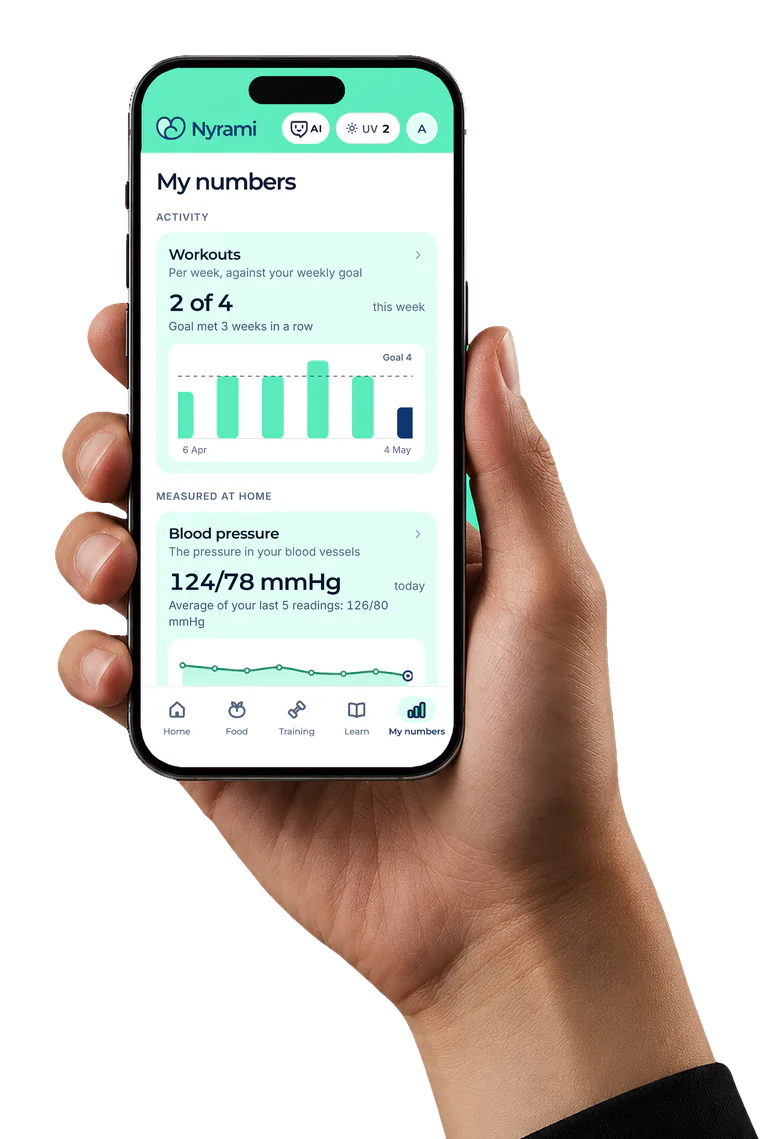
After acute kidney injury it is useful to follow whether your kidney function comes back. In the Nyrami app you can enter your values, such as eGFR, creatinine, albumin and blood pressure, and see them explained in words and over time, so you know what to ask your doctor at the check up. The app is free for iPhone and Android.
Turns the advice into something you can use in the shop and the kitchen: scan food and see potassium, phosphorus and salt assessed for you, and follow your numbers over time. Free on iPhone and Android.