Nephrotic syndrome: symptoms, causes and treatment
Nephrotic syndrome means the kidneys leak a large amount of protein into the urine, so albumin in the blood falls and the body holds on to water. Typical signs are swelling around the eyes and in the legs, and foamy urine. Most children respond well to steroids. In adults, treatment depends on the cause.
Perhaps your child has puffy eyes that will not go away, or perhaps the doctor has found a lot of protein in your urine. Nephrotic syndrome sounds frightening, and it should be taken seriously. But it is also a condition doctors know well, and most children recover. Here you can read what it is, what is common and what is rare, and what decides how it goes.
What is nephrotic syndrome?
Nephrotic syndrome is a condition where the filters in the kidneys (glomeruli) are damaged, so large amounts of protein leak into the urine. It is diagnosed when more than 3 to 3.5 grams of protein leak out a day, blood albumin is below 30 g/l and you have swelling. It is not one disease but a name for a set of findings that can have many causes.
Albumin is the most common protein in the blood. It keeps fluid inside the blood vessels. When albumin falls, fluid seeps into the tissues and you swell up. The liver tries to make more protein and at the same time makes more cholesterol, which is why cholesterol is often high. The body also loses other proteins in the urine, including antibodies that protect against infection and substances that stop the blood from clotting.
More about what protein in the urine means and how it is measured is in Protein in urine.
What are the symptoms of nephrotic syndrome?
The typical sign is swelling that builds up gradually: first around the eyes in the morning, later in the feet, lower legs and elsewhere in the body. Many people put on several kilos in a short time because the body holds on to water. The urine can be very foamy because it contains a lot of protein. Many also feel tired and have a poor appetite.
Swelling around the eyes and in the face, often worst in the morning
Swollen feet, ankles and lower legs, and in some people swelling of the scrotum or abdomen
Low albumin in the blood mainly causes swelling, because fluid seeps out of the blood vessels. At very low levels, fluid can collect in the abdomen or around the lungs, and you may become short of breath. Low albumin can also be caused by liver disease, malnutrition or serious illness, not only by the kidneys. A urine test shows whether the protein is being lost through the kidneys.
What is the difference between nephrotic and nephritic syndrome?
In nephrotic syndrome the main problem is that the kidneys leak a lot of protein. In nephritic syndrome, inflammation in the kidney filters causes blood in the urine, high blood pressure and often reduced kidney function, with less protein leakage. The names are similar, but the conditions behave differently and often have different causes.
Nephrotic and nephritic syndrome
Protein in urine
Nephrotic syndrome
A great deal, over 3 to 3.5 g a day
Nephritic syndrome
Some, usually less
Blood in urine
Nephrotic syndrome
Little or none
Nephritic syndrome
Typical, urine may turn red or brown
Blood albumin
Nephrotic syndrome
Low
Nephritic syndrome
Usually normal or slightly low
Blood pressure
Nephrotic syndrome
Often normal at first
Nephritic syndrome
Often high
Swelling
Nephrotic syndrome
Marked
Nephritic syndrome
Milder
Kidney function
Nephrotic syndrome
Often normal at first
Nephritic syndrome
Often reduced
Nephrotic and nephritic syndrome
Nephrotic syndrome
Nephritic syndrome
Protein in urine
A great deal, over 3 to 3.5 g a day
Some, usually less
Blood in urine
Little or none
Typical, urine may turn red or brown
Blood albumin
Low
Usually normal or slightly low
Blood pressure
Often normal at first
Often high
Swelling
Marked
Milder
Kidney function
Often normal at first
Often reduced
Some diseases show features of both. Source: Store medisinske leksikon, Norsk legemiddelhåndbok.
Why do children get nephrotic syndrome?
In children, nephrotic syndrome is usually caused by a condition called minimal change disease, where the kidney filters look almost normal under the microscope but still leak protein. The cause is unknown. It most often affects children between two and eight years old, and boys twice as often as girls. It is not something the parents have done wrong.
Kidney disease in children is rare, and nephrotic syndrome is one of the most important forms. Around nine in ten children stop leaking protein with steroids, usually within a few weeks. Children who respond usually do not need a kidney biopsy. Most still get relapses, and almost half get them often. Most are healthy as adults, and very few develop chronic kidney disease.
In around one in ten children, steroids do not work. The child is then examined more closely, often with a biopsy and genetic tests, because the cause may be different, such as FSGS or an inherited form. These children are followed closely by paediatric kidney specialists.
What are the most common causes in adults?
In adults, the most common causes are diseases of the kidney filters themselves, especially membranous nephropathy and focal segmental glomerulosclerosis (FSGS), and somewhat less often minimal change disease. Nephrotic syndrome can also result from other diseases that damage the kidneys, such as diabetes, amyloidosis, lupus and myeloma, and occasionally from medicines, for example anti-inflammatory painkillers.
Because the causes are so different, doctors almost always take a tissue sample (biopsy) of the kidney in adults. The result decides which treatment you get and what the outlook is.
What is membranous nephropathy?
Membranous nephropathy, also called membranous glomerulonephritis, is an autoimmune disease where the body makes antibodies against part of the kidney filters. It is among the most common causes of nephrotic syndrome in adults in Europe. Most people have an antibody called anti-PLA2R, which can be measured in a blood test and used to follow the disease.
The course varies a lot. Some people get better on their own over months to years, while others need medicines that dampen the immune system. In some, kidney function weakens over time. The amount of protein in the urine, the antibody level and how eGFR develops say the most about how it will go.
How is it diagnosed?
The doctor makes the diagnosis with a urine test showing a lot of protein, and blood tests showing low albumin, cholesterol and kidney function (creatinine and eGFR). If nephrotic syndrome is suspected in Norway, you have the right to assessment by a kidney specialist, and Helsedirektoratet (the Norwegian Directorate of Health) recommends that it starts within two weeks.
Nephrotic syndrome can cause serious complications, but most can be prevented or treated, and many people recover. Children have a good outlook. In adults it depends on the cause: some recover completely, while others get permanently reduced kidney function, and a few eventually need dialysis.
Blood clots: Losing the proteins that prevent clotting makes the blood clot more easily, in the legs, lungs or kidney veins. The risk is highest when albumin is very low.
Infections: Losing antibodies and the steroid treatment make the body more vulnerable, for example to pneumonia, peritonitis and chickenpox.
Too little fluid in the blood vessels: Even when the body is swollen, there can be too little fluid inside the blood vessels, especially with vomiting and diarrhoea. This can cause acute kidney injury.
High cholesterol: Over time it raises the risk of heart and blood vessel disease.
Lasting kidney damage: If the leak continues for a long time, it can develop into chronic kidney disease.
How is nephrotic syndrome treated?
Treatment has two parts: stopping the protein leak by treating the cause, and easing the swelling and preventing complications. What suits you depends on age, cause and your blood tests, and your kidney doctor decides this together with you. Never change your medicines on your own.
Steroids (prednisolone): The first choice in children and in minimal change disease in adults.
Medicines that dampen the immune system: For relapses, when steroids do not work, or in membranous nephropathy, the doctor may use rituximab, cyclophosphamide, tacrolimus or ciclosporin, or mycophenolate. In children with frequent relapses, levamisole is also used.
Diuretics (water tablets): Furosemide or bumetanide, sometimes together with spironolactone or amiloride, for the swelling.
Kidney protecting blood pressure medicine: An ACE inhibitor or angiotensin II receptor blocker (ARB), and in adults often an SGLT2 inhibitor, to reduce the leak.
Cholesterol lowering: A statin for many adults.
Blood thinners: The doctor considers them especially when albumin is very low.
The most important advice is to eat little salt, because salt makes the body hold on to more water. Much of the salt comes from ready meals, cold cuts, stock and soy sauce. Some people are also told to drink less for a while. Extra protein to replace what leaks out is usually not needed. Ask your doctor or dietitian what applies to you, and read more in Salt and your kidneys.
For parents: what should you know?
Most children with nephrotic syndrome recover, but relapses are common through childhood, often with a cold. You become an important part of the treatment. Many parents learn to test the urine at home, so a relapse is caught early and treatment can start before the child swells up.
Test the urine with dipsticks if the children's ward has agreed this with you, and write down the result.
Keep an eye on swelling and weight, especially around the eyes in the morning.
Ask about vaccines. Vaccines against pneumococcus and chickenpox are often recommended, but live vaccines are not given while the child is on high dose steroids.
Tell the doctor about chickenpox or measles at nursery or school if your child is not immune.
Limit salt in food while the child is swollen and taking steroids.
Steroids can cause increased appetite, a rounder face and mood swings. This passes when the course is over. Between relapses, the child can usually go to nursery or school and live as normal. More about being a family member is in Family and kidney disease.
When should you contact a doctor or out of hours service?
Contact your GP (fastlege) if you or your child get swelling around the eyes or in the legs that does not go away, or if the urine is very foamy for several days. If you already have the diagnosis, follow the plan from the kidney or children's ward and call them at signs of a relapse.
Call the out of hours service (legevakt) on 116 117 or the ward that follows you up if there is fever, abdominal pain, vomiting or diarrhoea, very little urine, or if the child becomes limp and pale.
Call the out of hours service if one leg becomes swollen, painful or red, which can be a blood clot.
Call 113 for sudden breathlessness, chest pain or if someone becomes very unwell.
How Nyrami can help
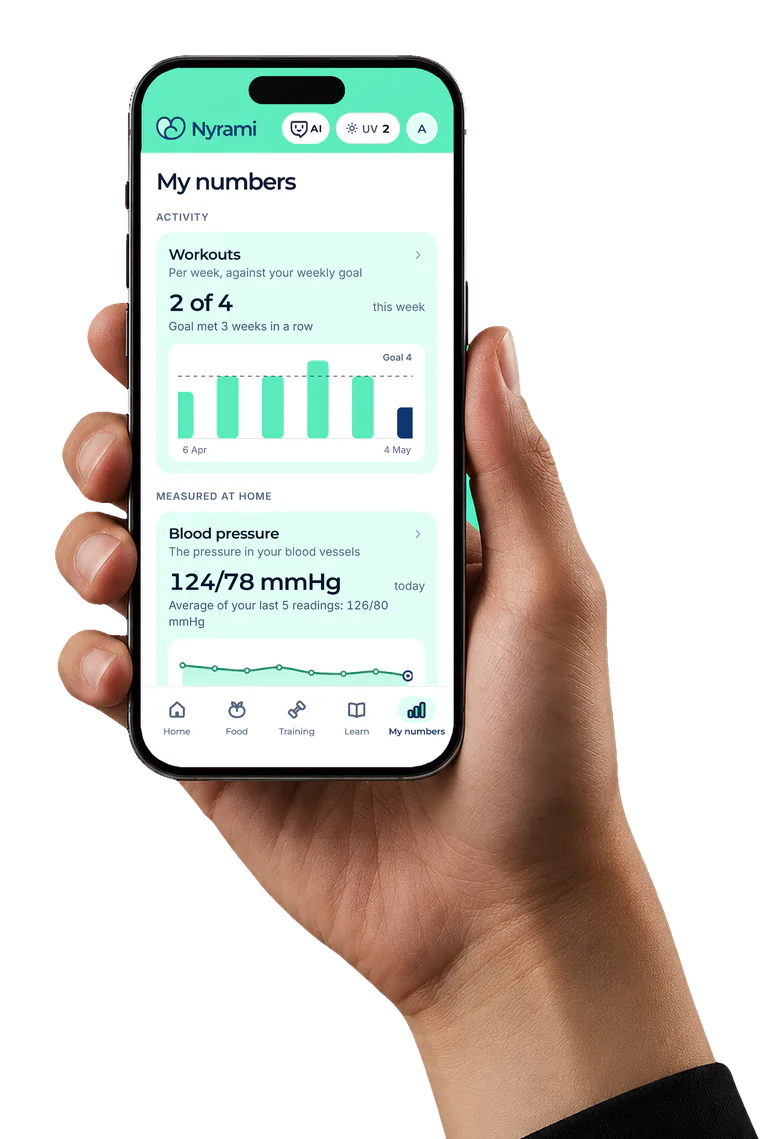
For adults with kidney disease, the Nyrami app gathers your values, such as albumin, eGFR, creatinine, blood pressure and weight, and explains what they mean. The food scanner reads the barcode and assesses sodium, among other things, for you, making it easier to keep salt down. The app is free for iPhone and Android.
Turns the advice into something you can use in the shop and the kitchen: scan food and see potassium, phosphorus and salt assessed for you, and follow your numbers over time. Free on iPhone and Android.