Protein and albumin in urine: normal range, is it serious?
Protein in urine is often harmless and temporary, for example after hard exercise, with a fever or a urinary tract infection. If albumin in your urine is 3 mg/mmol or higher in at least two of three tests taken within three months, it can be an early sign of kidney damage, and your doctor should follow it up.
Many people are told they have protein in their urine after a completely ordinary urine test. There is often a simple explanation. Here you can see what the test means, which numbers are normal, and when there is reason to follow it up.
Is it dangerous to have protein in your urine?
A single finding of protein in your urine is rarely dangerous in itself. Small amounts can appear temporarily after exercise, with a fever, during your period or with a urinary tract infection. If it persists over time, however, it is a sign that the kidney filter is letting through something it should hold back. It can then be an early sign of kidney damage.
That is exactly why the test is useful. Albumin in the urine is often the first sign of kidney damage, long before blood tests change and long before you notice anything. If it is found early, treatment can slow progression. What chronic kidney disease is, is explained in Chronic kidney disease.
What is the difference between protein and albumin in urine?
Albumin is the most common protein in the blood, and it is the first to leak out when the kidney filter is damaged. “Protein in urine” is a broader term for all proteins. When checking the kidneys, doctors prefer to measure albumin, because it is the most sensitive test.
A urine dipstick that your GP dips into the urine gives a rough answer with plus signs. If the dipstick shows protein, it should be followed up with an accurate laboratory test called the urine albumin to creatinine ratio (uACR).
Albumin in the blood is something else
If your blood test says albumin (serum albumin), it measures the protein in your blood, not the leak into your urine. At Fürst the reference range is 36 to 48 g/l for ages 15 to 39, 35 to 45 g/l for ages 40 to 69 and 34 to 45 g/l from age 70. Low albumin in the blood can be caused by a lot leaking into the urine, but also by malnutrition, liver disease or inflammation.
What is the urine albumin to creatinine ratio (uACR)?
uACR (called u-AKR in Norway) is the amount of albumin in the urine divided by the amount of creatinine in the same sample. Creatinine shows how concentrated the urine is, so the ratio is correct whether you have drunk a lot or a little. The result is given in mg/mmol, and below 3 mg/mmol is considered normal.
Albumin categories by uACR
A1
uACR (mg/mmol)
below 3
What it means
Normal or mildly increased
A2
uACR (mg/mmol)
3 to 30
What it means
Moderately increased
A3
uACR (mg/mmol)
above 30
What it means
Severely increased
Albumin categories by uACR
Category
uACR (mg/mmol)
What it means
A1
below 3
Normal or mildly increased
A2
3 to 30
Moderately increased
A3
above 30
Severely increased
Source: KDIGO 2024. Helsedirektoratet (the Norwegian Directorate of Health) and Store medisinske leksikon use the same limits. Very high values, from around 220 to 300 mg/mmol and above, are called nephrotic range: KDIGO 2012 sets the limit at 220 and Helsedirektoratet at 300.
The category is used together with eGFR to describe chronic kidney disease (CKD), see Kidney failure stages. The more albumin, the higher the risk that kidney disease progresses and of heart and blood vessel disease, see The kidneys and the heart. Read more about eGFR in the guide to normal eGFR.
When is protein in urine harmless?
Protein in urine is often temporary and harmless when it is caused by something short lived. Hard exercise, fever, acute illness, urinary tract infection, menstruation and blood in the urine can all give a raised value. Some young people also pass a little protein when standing but not when lying down. This is called orthostatic proteinuria and is harmless.
If you are a parent: in children and teenagers too, protein in the urine is often temporary or caused by body position. It should still always be assessed by a doctor, who decides whether the test should be repeated.
What do protein and leukocytes in urine mean?
Protein and white blood cells (leukocytes) in the urine at the same time are most often caused by a urinary tract infection. The test should be repeated once the infection is over, before anyone draws conclusions about the kidneys. If you have stinging, need to pass urine often or have a fever, contact your doctor to check whether you have an infection.
How is the test taken, and why does it need repeating?
The best sample is the first urine of the morning, taken midstream. You do not need to collect urine over 24 hours. One raised result is not enough for a diagnosis: Helsedirektoratet recommends a new test within three months, and only when at least two of three tests are raised is it considered persistent albumin in the urine. Read more about the tests in How to detect kidney disease.
Take the sample from your first urine in the morning.
Avoid hard exercise in the three days before.
Wait if you have a fever, a urinary tract infection or your period.
Which diseases cause protein in urine?
Persistent albumin in the urine is most often caused by diabetes or high blood pressure that over time has strained the small blood vessels in the kidneys. It can also come from inflammation of the kidney filters (glomerulonephritis), inherited kidney diseases and some autoimmune diseases. Read more in the article on diabetes and the kidneys and the article on blood pressure and the kidneys.
If you are pregnant, protein in your urine should always be assessed by a midwife or doctor, because it can be a sign of pre-eclampsia, especially together with high blood pressure.
Can protein in urine be a sign of cancer?
It is rare. One rare cause is myeloma (multiple myeloma), a type of blood cancer that can produce large amounts of small, abnormal proteins in the blood, which pass into the urine. Your doctor assesses this from the overall picture and other blood tests. By far the most common situation is that protein in the urine has a harmless explanation, or is caused by diabetes or high blood pressure.
How can you reduce protein in urine?
If the protein is caused by exercise, fever or infection, it goes away by itself. In kidney disease, the amount can often be reduced with treatment, which protects both the kidneys and the heart. Your doctor will assess what suits you, but these are what most often help:
Well controlled blood pressure, for most people below 130/80.
Blood pressure medicine of the ACE inhibitor or ARB type, which lowers albumin in the urine.
An SGLT2 inhibitor, which protects the kidneys, also in people without diabetes.
Weight loss if you are overweight, and stopping smoking.
Well controlled blood sugar if you have diabetes.
Protein in food is something else than protein in urine, and you should not cut protein on your own. See Protein in kidney disease. If you have diabetes, Helsedirektoratet recommends uACR at least once a year. If the value is raised, it is often checked more often, so your doctor can see whether treatment is working.
Foamy urine can sometimes be caused by a lot of protein, but foam alone is not enough to tell anything for certain. The urine test is what decides. Read more in Foamy urine and Symptoms of kidney failure.
When should you contact a doctor?
Contact your GP (fastlege) if you have been found to have protein in your urine and have not had a repeat test, if you have diabetes or high blood pressure and have not had a uACR in the past year, or if you have blood in your urine together with protein. Blood and protein at the same time can point to inflammation of the kidneys and should be investigated quickly.
If your legs or the area around your eyes swell a lot, or if you are pregnant and have a headache, vision problems or high blood pressure, contact a doctor or the out of hours service (legevakt) on 116 117 the same day. If a life is in danger, call 113.
How Nyrami can help
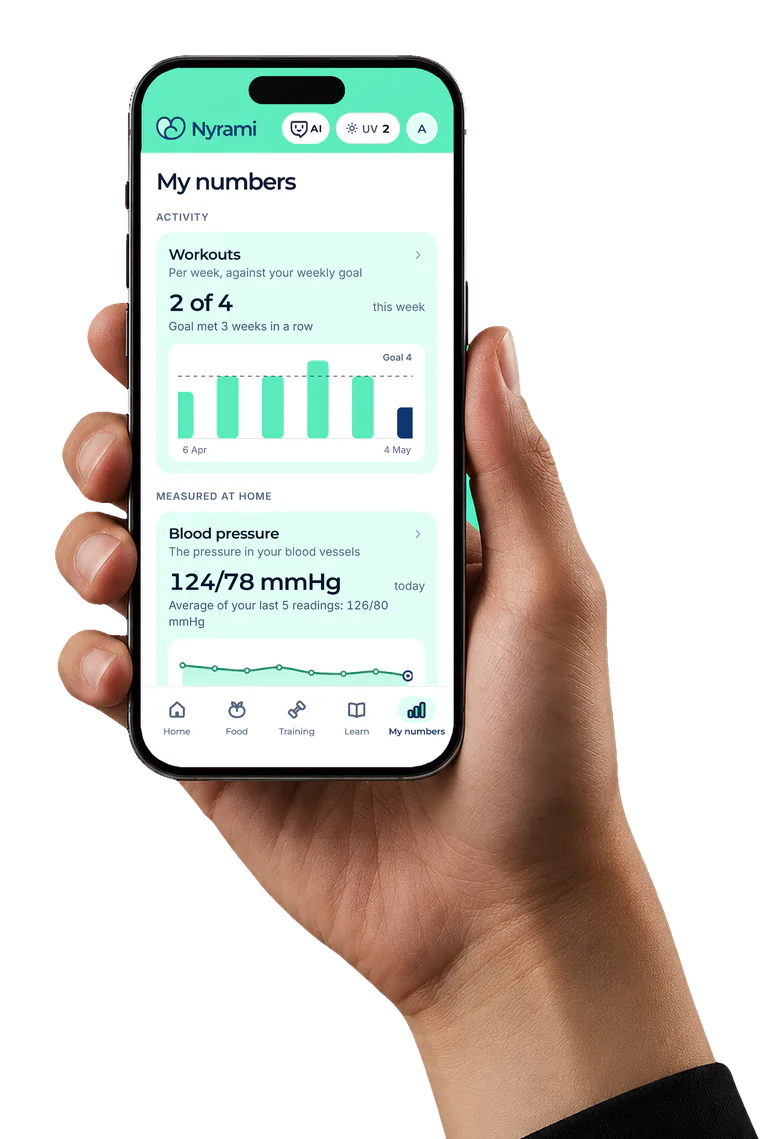
In the Nyrami app you can enter your albumin value and see which category it belongs to, explained in words. You can follow how it changes together with eGFR and blood pressure, which is what your doctor looks at. The app is free for iPhone and Android.
Turns the advice into something you can use in the shop and the kitchen: scan food and see potassium, phosphorus and salt assessed for you, and follow your numbers over time. Free on iPhone and Android.