Protein and kidney failure: how much should you eat a day?
In chronic kidney disease stages 3 to 5 without dialysis, KDIGO 2024 recommends around 0.8 grams of protein per kilo of body weight a day, and not over 1.3 grams. On dialysis you need more, often 1.0 to 1.2 grams per kilo. Do not cut protein on your own, because too little leads to muscle loss.
Protein is the building block of muscles, skin and the immune system. When the body breaks down protein, waste products such as urea are formed, and they have to leave through the kidneys. That is why many questions about diet with kidney disease are about protein: how much is too much, and how much is too little?
The answer depends on your stage, whether you are on dialysis, your age and how you eat otherwise. The numbers below are a starting point, not a prescription.
How much protein should you eat with kidney disease?
For adults with chronic kidney disease (CKD) stages 3 to 5 who are not on dialysis, KDIGO 2024 recommends a protein intake of around 0.8 grams per kilo of body weight a day. That is the same amount the World Health Organization recommends for healthy adults. KDIGO writes that adults in many countries eat around 1.2 grams per kilo on average, and the Norwegian Directorate of Health (Helsedirektoratet) estimates that the usual dietary advice for healthy people works out at about the same. If you are unsure of your stage, see the stages of chronic kidney disease.
If you weigh 70 kilos, 0.8 grams per kilo is about 56 grams of protein a day. If you have diabetes and kidney damage, the Norwegian diabetes guideline says health professionals can suggest 0.8 grams per kilo if you are motivated, that the effect on the kidneys is uncertain, and that it should then be followed up by nutrition professionals, preferably a clinical dietitian. Read more about diabetes and the kidneys.
Recommended protein per kilo of body weight a day
Situation
Protein
Usual dietary advice for healthy people
Around 1.2 g per kg on average
Stages 3 to 5 without dialysis
Around 0.8 g per kg
With a risk of getting worse
Avoid over 1.3 g per kg
Haemodialysis and peritoneal dialysis
1.0 to 1.2 g per kg
Peritoneal dialysis (LNT)
At least 1.2 g per kg
Sources: KDIGO 2024, Helsedirektoratet, KDOQI 2020, LNT. LNT, the Norwegian kidney patient association, recommends more with peritoneal dialysis; one reason is that some protein is lost with the dialysis fluid, around 5 to 15 grams a day. Your care team may recommend something else.
Local guides can be more detailed. The electrolyte guide in the Norwegian clinical handbook Metodebok, for example, gives 0.8 to 1.0 grams per kilo with an eGFR of 30 to 45, and 0.6 to 0.8 grams with an eGFR under 30. eGFR is a measure of how well the kidneys filter the blood. Read more in understand your test results.
Why can too much protein strain the kidneys?
The body cannot store excess protein. It is broken down, and the waste products must be removed by the kidneys. KDIGO describes how a lot of protein also increases the pressure and workload in the small filters of the kidneys, and that a high protein intake is linked in observational studies to a faster decline in kidney function. That is why it is recommended to stay away from large amounts, over 1.3 grams per kilo.
This also applies to protein powder and protein bars. With kidney disease, you should talk to your doctor or dietitian before using such products.
Is a lot of protein harmful for healthy kidneys?
For most people with healthy kidneys, there is little to suggest that a high protein intake damages the kidneys. A review of 28 studies with over 1,300 healthy adults found no difference in how kidney function changed with a lot of protein compared with a normal amount. It is when kidney function is already reduced that large amounts can cause a faster decline. If you have diabetes, high blood pressure or kidney disease in the family, it is wise to have your kidneys checked before you start a high-protein diet. See how kidney disease is detected.
Is a low-protein diet a good idea with kidney failure?
A strict low-protein diet is only relevant for a few people, and only with close follow-up. KDIGO mentions a very low-protein diet, 0.3 to 0.4 grams per kilo supplemented with essential amino acids or ketoacid analogues, for adults at risk of kidney failure who are willing and able. It should not be used if you are malnourished, have lost muscle or are unstable because of other illness.
The reason is that too little protein and too little energy make the body break down its own muscles. Many people with advanced kidney disease already have a poor appetite. Then a diet that is too strict can do more harm than good. The Norwegian Directorate of Health stresses that you must get enough energy when protein is reduced. KDIGO also says that frail older people or people with little muscle may need more protein and energy, not less. Physical activity also helps you keep your muscles, see exercise with kidney disease.
Why do you need more protein on dialysis?
Dialysis removes the waste products the kidneys cannot, but it also removes some protein and amino acids. That is why your needs increase when you start dialysis, to 1.0 to 1.2 grams per kilo for most people according to the American KDOQI 2020 guideline. LNT writes that the need with peritoneal dialysis is at least 1.2 grams per kilo. There, some protein is also lost with the dialysis fluid every day.
Many people find it confusing to go from eating less protein to having to eat more. That is completely normal. Ask your dialysis unit for an appointment with a clinical dietitian. Read more in life on dialysis.
How much protein is in your food?
Grams of protein are not the same as grams of food. KDIGO points out that 100 grams of meat contains only around 25 grams of protein. The table shows roughly how much protein common portions give.
Protein in common portions
Food and portion
Protein
Chicken breast, fried, 150 g
44 g
Salmon, 175 g (raw weight)
35 g
Beef mince, fried, 100 g
25 g
Tofu, 100 g
13 g
Chickpeas, boiled, 100 g
7 g
Egg, boiled, 1
7 g
Semi-skimmed milk, 1 glass (200 ml)
7 g
Rolled oats, 1 decilitre
6 g
Yellow cheese, for one slice of bread (20 g)
5 g
Wholemeal bread, 1 slice
4 g
Source: Matvaretabellen 2026 (the Norwegian food composition table). The numbers are rounded.
A dinner with a large chicken breast can on its own give most of the day’s protein at 0.8 grams per kilo. That does not mean you have to weigh your food. It shows why many people eat more than they think, and why the portion size of meat and fish is often the first thing a dietitian looks at. In the food lookup you will find protein per portion for more than 2,100 foods, for example chicken breast and salmon.
Is plant protein better for the kidneys?
It may be. KDIGO recommends eating more plant-based than animal-based food, and refers to studies where more plant protein is linked to a slower decline in kidney function. Beans, lentils, chickpeas, tofu, nuts and whole grains give protein together with fibre, and the phosphorus in plants is absorbed less well than phosphorus from meat and additives.
Pulses and nuts have a fair amount of potassium, so if your potassium is high, you should get advice on amounts and preparation. See potassium in food and phosphorus in food.
Is protein in food the same as protein in urine?
No. Protein in the urine, most often measured as albumin, means the filters in the kidneys are leaking. It is caused by damage to the kidneys, not by eating too much protein. To lower protein in the urine, good blood pressure control, kidney-protecting medicines and less salt are used, not less protein in your food. Read more in protein in urine.
When should you contact a doctor?
If you lose weight without trying, or have had a poor appetite for several weeks.
If you notice that your muscles are getting weaker or you can manage less than before.
Before you start a low-protein diet, or take protein powder or other supplements.
How Nyrami can help
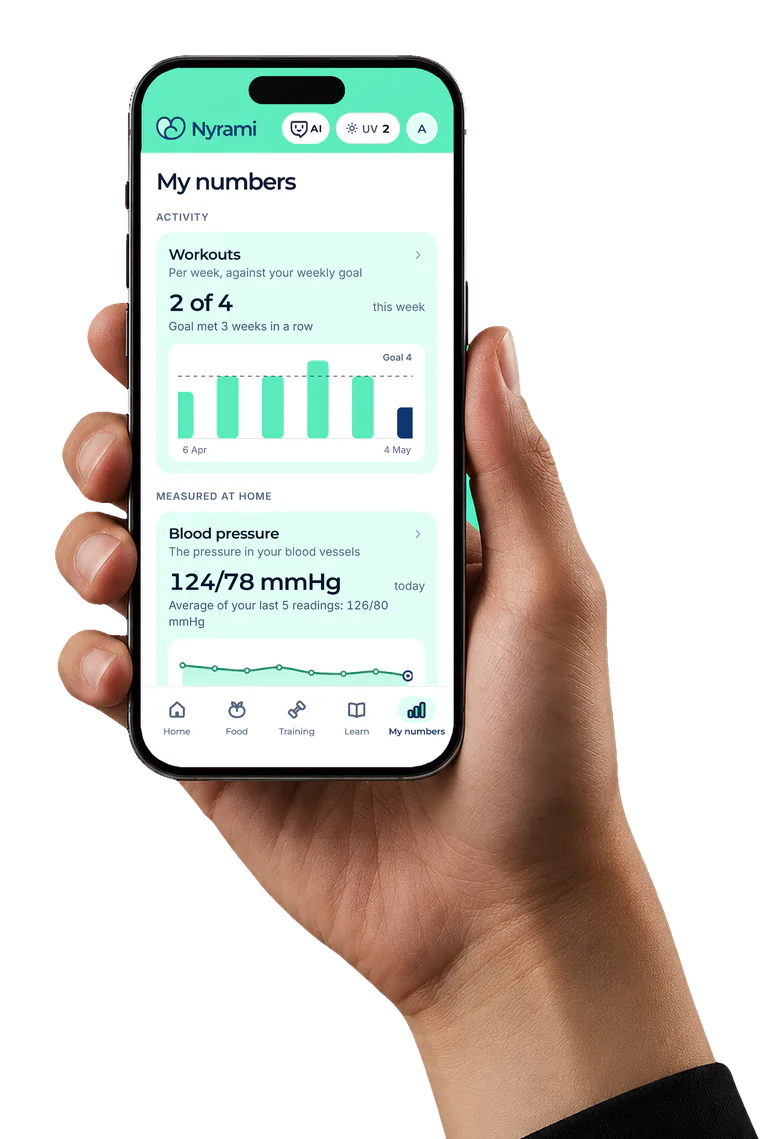
The food scanner in the Nyrami app assesses protein together with potassium, phosphorus and sodium for you. The 148 recipes are assessed per portion, so you see the protein in your dinner before you cook it. The app is free for iPhone and Android. For your diet as a whole, see food with kidney failure.
Turns the advice into something you can use in the shop and the kitchen: scan food and see potassium, phosphorus and salt assessed for you, and follow your numbers over time. Free on iPhone and Android.