What is dialysis? How often, side effects and home dialysis
Dialysis cleans the blood of waste products and excess water when the kidneys can no longer do it themselves. Haemodialysis is usually done in hospital three times a week for about four hours, while peritoneal dialysis is done at home every day. The two forms work about equally well, and many people can have dialysis at home.
When the kidneys can no longer clean the blood, dialysis, a new kidney or supportive care without dialysis is needed. This page explains how dialysis works and what everyday life is like, for you if you are approaching dialysis and for your family. At the end of 2024, 1,836 people in Norway were on dialysis.
What is dialysis?
Dialysis is a treatment that cleans the blood of waste products, salts and excess water when the kidneys no longer work well enough. It does not cure kidney disease, but it lets you live with it. Dialysis is a lifelong treatment unless you get a new kidney.
There are two forms. In haemodialysis the blood passes through a filter in a dialysis machine, outside the body. In peritoneal dialysis (PD) the peritoneum, the thin lining on the inside of the abdomen, is used as the filter. Neither does the whole job of healthy kidneys, so most people also need medicines and advice on food and drink. How long people live on dialysis varies a great deal. You will find the figures in How long can you live on dialysis?.
What is the difference between haemodialysis and peritoneal dialysis?
Haemodialysis is usually done at a hospital or dialysis centre three times a week, while peritoneal dialysis is done at home every day, either with bag exchanges during the day or with a machine at night. The two forms are considered equal in terms of survival and quality of life. The choice is therefore mostly about what suits your life and your health.
You can switch from one form to the other if you want to, or if it becomes necessary for medical reasons. Helsenorge, the Norwegian public health portal, has a shared decision tool (in Norwegian) that helps you think through what matters to you before you talk to your kidney specialist.
Haemodialysis and peritoneal dialysis compared
How it works
Haemodialysis
The blood is cleaned in a filter in a machine
Peritoneal dialysis (PD)
The peritoneum cleans the blood. About 2 litres of dialysis fluid are run into the abdomen and drained out again
Where
Haemodialysis
Hospital or dialysis centre, or at home after training
Peritoneal dialysis (PD)
At home, or wherever you are
How often
Haemodialysis
Usually three times a week for about four hours
Peritoneal dialysis (PD)
Three to four bag exchanges a day, or a machine at night for 8 to 10 hours
Access
Haemodialysis
AV fistula in the arm, or a catheter at the top of the chest
Peritoneal dialysis (PD)
Soft tube (catheter) in the abdomen
Who does it
Haemodialysis
Usually nurses, but many people do part of the treatment themselves
Feeling bloated, abdominal discomfort, risk of infection in the abdomen
Travel
Guest dialysis must be booked in advance
Supplies can be delivered to many countries
Source: Helsenorge (shared decision tool on end stage chronic kidney disease), Oslo University Hospital, Lovisenberg Diaconal Hospital.
When do you need to start dialysis?
There is no fixed limit for when dialysis must start. It is started when the problems caused by kidney failure can no longer be kept under control with medicines and diet, for example nausea, poor appetite, itching, fluid build up or high potassium. According to the international KDIGO guideline, this often, but not always, happens when eGFR is between 5 and 10.
eGFR is a measure of how well the kidneys clean the blood, and the figure roughly matches the percentage of kidney function you have left. Among people who started in Norway in 2024, the average eGFR was 8. Planning should begin well before, ideally when eGFR is below 15 to 20, so there is time to choose the type of dialysis, create a fistula and find out whether a new kidney is possible. Some people get a new kidney without going on dialysis first. Others, especially the oldest and frailest, choose supportive care without dialysis. Read more in End stage kidney failure and Kidney transplantation.
How often do you need dialysis?
Most people who have haemodialysis in hospital have treatment three days a week for about four hours each time. Some need more, and some manage with less for a while. It depends on how much kidney function you have left, how much fluid needs to be removed, your blood tests and your life situation.
Haemodialysis in hospital: usually three times a week for 3 to 5 hours. You are weighed before and after, and your blood pressure is measured during treatment.
Haemodialysis at home: you have more say over when and for how long. Some people have dialysis at night while they sleep.
PD with manual exchanges: three to four exchanges a day, about 30 minutes each time.
PD with a machine: you connect in the evening and stay connected for 8 to 10 hours, and are usually free of dialysis during the day.
Blood tests are taken regularly, and the treatment is adjusted to them. Read about energy, food and the long hours in Life on dialysis.
Does dialysis hurt?
The cleaning of the blood itself does not hurt. In haemodialysis you feel the needles when the nurse puts two needles into the fistula, and many people get used to it. If the needles bother you, there is a numbing cream that is applied to the skin at least an hour before. If you have a dialysis catheter, no needles are needed.
What can feel unpleasant is cramps, nausea or a drop in blood pressure during treatment, especially when a lot of fluid has to be removed. Tell the staff straight away if you feel unwell, so they can adjust the treatment. With PD, having fluid in your abdomen can feel bloated, especially at first, and some people feel slight discomfort towards the end of draining. It is not dangerous.
What side effects can dialysis cause?
The most common side effect is tiredness after treatment. Haemodialysis changes the fluid and salt balance in the body over a short time, and it is normal to feel worn out afterwards. Other problems during or after haemodialysis can be:
muscle cramps, often in the calves
headache, dizziness, nausea and vomiting
low blood pressure, which can make you feel cold, clammy and unwell
thirst
The less weight you gain between treatments, the less fluid has to be removed, and the less often cramps and drops in blood pressure happen. That is why many people are given a fluid limit. Read more in Fluid balance with kidney disease. Less common complications are heart rhythm problems, bleeding from the fistula, narrowing of the fistula and infection in the dialysis access.
With PD, infection is the biggest risk, either around the catheter or in the peritoneum (peritonitis), which needs treatment in hospital. Good hand hygiene is the most important thing you can do yourself. Leakage around the catheter and hernia can happen, most often early on. Over the years the peritoneum can become thicker and filter less well, and then a switch to haemodialysis may be needed.
Can you have dialysis at home?
Yes. Peritoneal dialysis is always done at home, and many people can also have haemodialysis at home after training. In Norway about one in four dialysis patients has dialysis at home, and the Norwegian Directorate of Health aims for at least three in ten.
With home haemodialysis you should expect a few weeks of training at the hospital. In return you have more say over when and for how long, and night dialysis is possible. Training for PD takes one to two weeks, and the catheter is put in a few weeks before you start. If you need help, home care nurses can get the same training, and family members can also help. The supplies are delivered by the hospital and take up space, roughly the size of a double wardrobe. Even in hospital, many people can do all or part of the treatment themselves.
What are a fistula and a dialysis catheter?
To have haemodialysis you need a way into the bloodstream. The best is an AV fistula: a vein and an artery in the arm are joined in a small operation, so the vein becomes large and strong enough to take the needles. A fistula carries a low risk of infection, but usually needs a few weeks to a couple of months to mature before it can be used. That is why it is often made well before dialysis starts.
A dialysis catheter is a thin silicone tube placed in a large vein, usually at the top of the chest near the collarbone. It can be used straight away and without needles, but carries a higher risk of infection and is less practical when you shower or bathe. Many people start with a catheter and move on to a fistula. With PD you have a different catheter, in the abdomen.
Feel or listen for the buzzing (thrill) in the fistula every day.
Do not let anyone take your blood pressure or blood samples from that arm.
Do not sleep on the arm, and avoid tight clothing and jewellery there.
Can you work and travel on dialysis?
Yes, many people do both, but it takes planning. PD and home haemodialysis at night are the easiest to combine with work, because your days are freer. If you have dialysis during the day, it can help to talk to your employer about adjustments. If you have questions about sick leave or other support, you can contact NAV, the Norwegian Labour and Welfare Administration.
Travel to and from your regular dialysis can be covered by Pasientreiser. If you want to go on holiday in Norway, you have to arrange guest dialysis at another dialysis unit. It can be hard to get a place, so get in touch early. The unit can often give an answer about two months ahead. LNT, the Norwegian kidney patient association, has a list of all dialysis units in the country.
If you are going abroad:
In the EU/EEA and Switzerland you get dialysis at public hospitals and only pay the same patient charge as the people who live there, when you bring your European Health Insurance Card. You have to arrange a place with the clinic yourself.
Outside the EU/EEA you pay yourself and can apply to Helfo within six months to have the costs covered, up to what the treatment would have cost in Norway.
With PD, supplies can be delivered to many countries. Start planning two to three months ahead.
If you are on the waiting list for a new kidney, you are temporarily taken off the list while you are abroad.
Read more at Helsenorge and LNT (both in Norwegian).
How can you help as a family member?
As a family member, you can help most by being there when the choices are made, and with practical things afterwards. Feel free to join the conversation about the type of dialysis, so you have both heard the same thing. Learn the fluid limit and the food advice, so you can eat the same meals. With home dialysis, family members can be trained and help out, but say so if it becomes too much: home care nurses can be trained too.
Remember that you need breaks as well. The municipality can offer respite to family members with heavy caring duties, and LNT has peer supporters with their own experience. Read more in Family and kidney disease.
When should you contact the dialysis unit or a doctor?
Contact the dialysis unit or your doctor the same day if you notice signs of infection, or signs that dialysis is not working well enough:
fever, or redness, swelling or fluid around the catheter or fistula
the fistula stops buzzing, or feels different from before
cloudy dialysis fluid or abdominal pain with PD
rapid weight gain, swollen legs or shortness of breath
unusual tiredness or poor appetite
Outside opening hours you can call the out of hours service (legevakt) on 116 117. If you have severe shortness of breath, chest pain or loss of consciousness, call 113.
How Nyrami can help
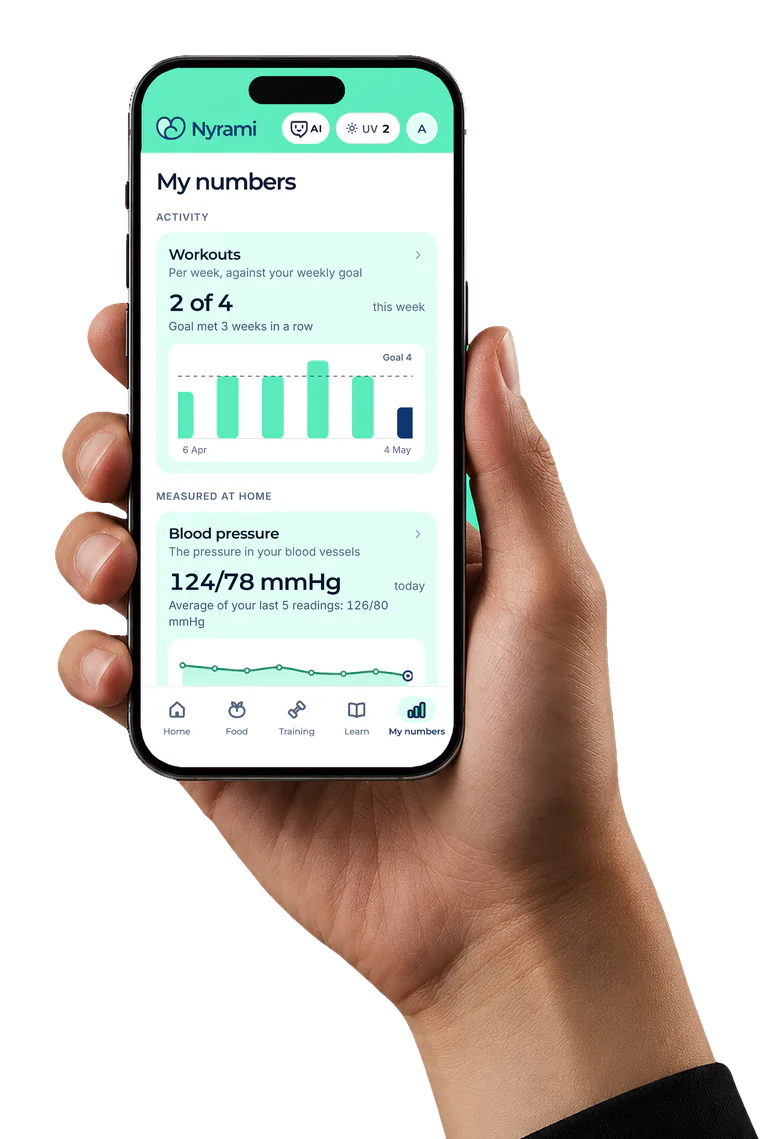
In the Nyrami app you can log weight, fluid and blood pressure between treatments and see your values over time. The food scanner reads the barcode and assesses potassium, phosphorus, sodium and protein for you, and the recipes are assessed per portion. The app is free for iPhone and Android.
Turns the advice into something you can use in the shop and the kitchen: scan food and see potassium, phosphorus and salt assessed for you, and follow your numbers over time. Free on iPhone and Android.