How long can you live on dialysis? Figures from Norway
About half of people who start dialysis in Norway are alive five years later, and around three in ten after ten years. Some live for 20 years or more. Age and other illnesses matter most: most people under 55 live a long time, while the outlook is shorter for the oldest. A new kidney gives the best outlook.
This is a hard question to ask, whether it is about you or someone you love. Here are the figures from the Norwegian Renal Registry (Norsk nyreregister), which follows everyone in Norway who receives dialysis or a new kidney. Remember that the figures are about groups, not about you. They show how things went for many people in recent years. Your kidney specialist knows your health and can tell you more about what they mean for you.
How long can you live on dialysis?
About half of people who start dialysis in Norway are alive five years later, and around three in ten are alive after ten years. Some live for 20 years or more. The figures apply to people who started haemodialysis or peritoneal dialysis between 2015 and 2024, including those who later got a new kidney. They are read from the curves in the Norwegian Renal Registry's figures and are therefore approximate.
There is no single figure for how long a person lives on dialysis, because the spread is large. Some people are very ill for other reasons when they start, while others are young and otherwise healthy. Across Europe, a little over four in ten were alive five years after starting dialysis, among those who started between 2013 and 2017, according to the ERA Registry.
How do age and other illnesses affect life expectancy?
Age at the start matters most for how long people live on dialysis, followed by other illnesses such as heart disease and diabetes. Among those under 55, the vast majority are alive five years later. Among those who are 75 or older when they start, around one in five are alive after five years. Half of those who started dialysis or got a new kidney in Norway in 2024 were 66 or older.
Alive five years after starting, by age (Norway, 2015 to 2024)
Age at start
Alive after five years
Under 35
Almost all
35 to 54
Around eight in ten
55 to 64
Around seven in ten
65 to 74
About half
75 or older
Around one in five
Covers everyone who started dialysis, or got a new kidney without dialysis first, in Norway from 2015 to 2024. The figures are unadjusted and read from curves, so they are approximate. Source: Norsk nyreregister (figure pack and annual report 2024).
How healthy you are otherwise also matters a lot. Among people who started dialysis between 2015 and 2024 and were assessed as suitable for a new kidney, almost eight in ten were alive after five years. Among those who could not have a new kidney, often because they were older or had other serious illnesses, fewer than three in ten were. Heart and blood vessel disease was the cause of death for about three in ten dialysis patients who died in Norway in 2024.
European figures show the same pattern. A person aged 65 to 69 on dialysis has on average 5 to 6 years left to live, while a person aged 20 to 24 on dialysis has around 20 years. That is shorter than for others of the same age, but these are averages, and many people live longer.
How many years can you be on dialysis?
There is no upper limit to how many years you can be on dialysis. Dialysis is lifelong treatment for those who do not get a new kidney, and some people are on dialysis for 20 years or more. For many, though, dialysis is a period while they wait for a new kidney. Those in Norway who got their first new kidney in 2024 after being on dialysis had been on dialysis for around two years: half for less, half for longer.
With peritoneal dialysis, the peritoneum can become thicker and filter less well after some years. You can then switch to haemodialysis. Read more about the two types in Dialysis.
Do you live longer with a new kidney than on dialysis?
Yes, for most people who can have one, a new kidney gives both a longer life and a better quality of life than dialysis. European figures show that a person aged 65 to 69 with a working transplanted kidney has on average 9 to 10 years left to live, compared with 5 to 6 years on dialysis. Among people aged 20 to 24, the difference is around 41 against 21 years.
Part of the difference is because people who get a new kidney are healthier to begin with. But the experience is clear enough for transplantation to be considered the best treatment when it is possible. A new kidney requires anti-rejection medicines for life and regular check ups, and it does not always last a lifetime. Five years after transplantation, around nine in ten kidneys from living donors and almost eight in ten from deceased donors are still working.
Not everyone can have a new kidney. Of those who started dialysis in Norway in 2024, a little over four in ten were assessed as suitable for a transplant, and almost two in ten more as possible candidates. There is no fixed age limit: a third of those who received their first kidney from a deceased donor in 2024 were over 65. All kidney transplants in Norway are carried out at Oslo University Hospital, Rikshospitalet. In 2024 there were 255, and 71 of the kidneys came from living donors, according to the Norwegian Directorate of Health. Read more in Kidney transplantation and Donating a kidney.
Does haemodialysis or peritoneal dialysis give the longest life?
As far as we know, neither gives a longer life than the other. The two types are considered equal in terms of survival and quality of life, and in Norway the curves for those who started on haemodialysis and on peritoneal dialysis are almost the same. Choose the type that best suits your life and your health, together with your kidney specialist.
What can you do yourself to live well and long on dialysis?
The most important things you can do are to get all the dialysis you are meant to have, stick to your fluid limit and eat enough. Much of what decides life expectancy, such as age and other illnesses, is beyond your control. But everyday habits matter both for how long and how well you live.
Go to every session, and do not cut sessions short.
Stick to your fluid limit. Less weight gain between sessions means fewer drops in blood pressure and fewer cramps. See Fluid balance with kidney disease.
Eat enough protein. On dialysis you need more, not less. Potassium and phosphorus are adjusted to your blood tests. See Protein with kidney disease.
Take your medicines, and say if you have side effects. There are usually alternatives.
If you smoke, get help to stop. Heart and blood vessel disease is one of the most common causes of death on dialysis.
Ask whether you can go on the waiting list for a new kidney, and whether dialysis at home could suit you.
What happens if you stop dialysis?
You have the right to say no to dialysis and to stop it. Without dialysis, waste products and fluid build up, and most people then live from a few days to a couple of weeks, some longer if the kidneys still make urine. Symptoms can be relieved, and pain is rare. In Norway, stopping treatment was recorded as the cause of death for about seven in a hundred dialysis patients who died in 2024. Read about the decision, what the last days are often like and what the family is entitled to in End stage kidney failure.
For you as a family member
The figures can be hard to read when they concern someone you love. They say something about groups, and the kidney specialist can tell you more about the person you are thinking of. Feel free to ask together, if the person concerned wants that: What does it look like for us? Is a new kidney possible? What happens if their health gets worse?
Many family members carry a lot on their own. Pårørendelinjen, a Norwegian helpline for relatives (90 90 48 48), is free and open on weekdays, and LNT, the Norwegian kidney patient association, has peer supporters with their own experience. Read more in Family and kidney disease.
How Nyrami can help
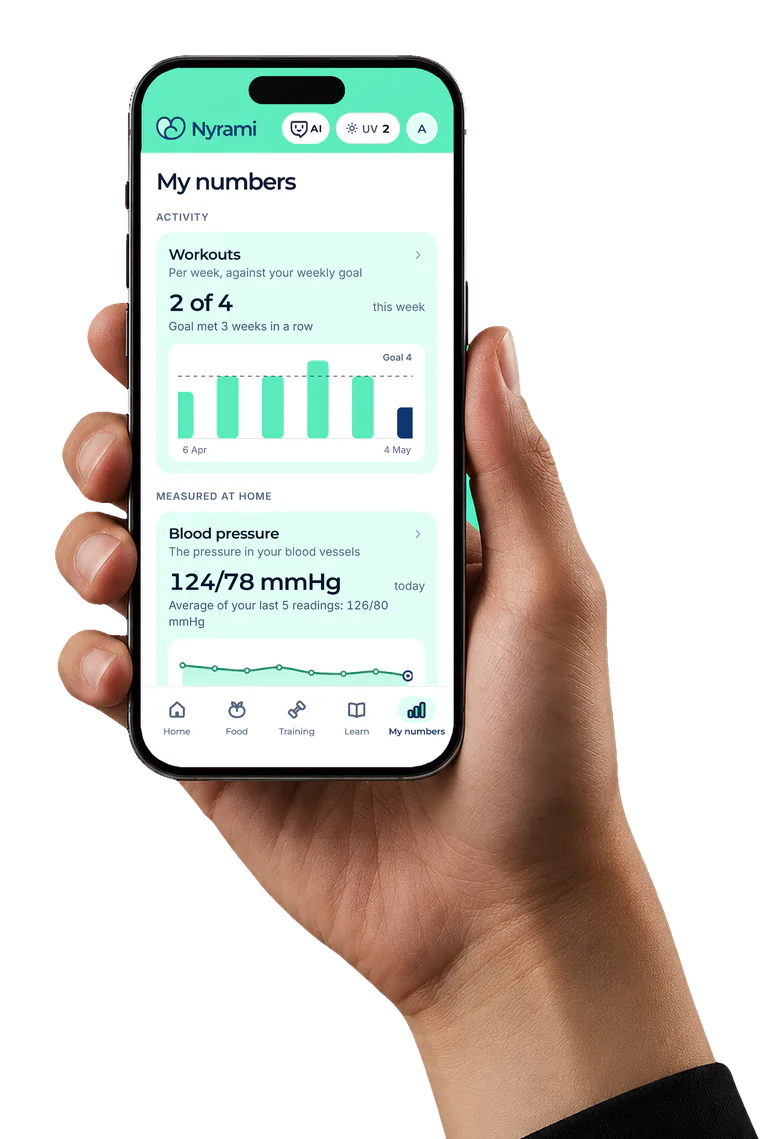
In the Nyrami app you can log weight, fluid and blood pressure between sessions and see your values over time, which makes it easier to stick to your fluid limit and to know what to ask your doctor. The food scanner assesses potassium, phosphorus, sodium and protein for you. The app is free for iPhone and Android.
Turns the advice into something you can use in the shop and the kitchen: scan food and see potassium, phosphorus and salt assessed for you, and follow your numbers over time. Free on iPhone and Android.