End stage kidney failure: symptoms, choices, final weeks
End stage kidney failure means the kidneys have almost stopped working (stage 5, eGFR below 15). Dialysis, a new kidney or supportive care without dialysis is then needed. You have the right to say no to dialysis or to stop it. Symptoms can be relieved, and family members can get care allowance and leave.
This page is for you if you have been told that your kidneys will soon not cope any more, and for those who stand beside you. It is about the symptoms, the choices and the last days. Feel free to read a little at a time.
What does end stage kidney failure mean?
End stage kidney failure means the kidneys have so little function left that the body will eventually not manage without dialysis or a new kidney. It corresponds to stage 5 chronic kidney disease, with an eGFR below 15, and is also called end stage kidney disease. eGFR is a measure of how well the kidneys clean the blood.
The words "end stage" sound as if life will soon be over, but that is not what they mean. Many people live for many years with dialysis or a new kidney. It means it is time to choose treatment: dialysis, a transplant or supportive care without dialysis. Read about the stages in Stages of chronic kidney disease.
What symptoms come in the final stage?
The most common symptoms of end stage kidney failure are tiredness, nausea, poor appetite and itching. They come because waste products and fluid build up in the body. The symptoms often come on gradually, and many of them can be relieved with medicines and diet.
tiredness, weakness and weaker muscles
nausea, vomiting, poor appetite, weight loss and a changed sense of taste
itchy skin
swelling in the legs and face, and shortness of breath when fluid collects in the lungs
feeling colder than before
trouble sleeping and restless legs
difficulty concentrating and confusion late in the course
It depends mostly on how much kidney function is left, and on other illnesses. People who stop dialysis usually live from a few days to a couple of weeks, some longer if the kidneys still make a little urine. People who choose supportive care instead of starting dialysis usually have more kidney function left and often live for months, sometimes years.
In studies of older people with stage 5 kidney failure, the typical survival (median) for those who chose care without dialysis ranged from half a year to two and a half years, depending on the study. The figures vary because the people in the studies were very different. For the oldest and frailest, dialysis often does not seem to give a longer life, while younger and healthier people usually live longer with dialysis. The research is very uncertain, and no one can give a certain figure for one person. Ask your kidney specialist what they think in your situation. Also read Can kidney failure get better?.
Can you choose not to have dialysis, or stop it?
Yes. You have the right to say no to dialysis, and to stop it. Healthcare can only be given with your consent, and a dying patient has the right to refuse life prolonging treatment, according to the Norwegian Patients' and Users' Rights Act. Stopping dialysis does not mean you are giving up, or that care stops. It is the goal of treatment that changes: from prolonging life to comfort, security and good care in the time that is left.
Some people consider stopping because the burden becomes too great, because other illnesses take over, or because life on dialysis no longer feels meaningful to them. It is a known and respected choice. In Norway, stopping treatment was recorded as the cause of death for about seven in a hundred dialysis patients who died in 2024. If the choice is linked to depression or a hard period, that should be addressed first, because such feelings can change.
This is often how the decision is made:
Talk to your kidney specialist and dialysis nurse about why you are considering it, and whether anything could make daily life easier, for example shorter or fewer sessions.
Bring the people you love. It is often easier when your family has heard the same as you.
Make a plan for symptom relief, and for where you want to be in the last days.
You can change your mind. If you regret your decision, dialysis can usually be started again.
What is supportive care without dialysis?
Supportive care without dialysis, also called conservative care, means that kidney failure is treated with medicines, diet and good follow up, but the blood is not cleaned. The aim is a good quality of life, fewer symptoms and avoiding the burden of dialysis and travel. You are followed up by your kidney specialist or GP (fastlege), and home care nurses, physiotherapists and occupational therapists in the municipality can help.
It is not the same as doing nothing. Medicines can ease nausea, itching, swelling and shortness of breath, and your diet is adjusted. The usual course is that you gradually become weaker. Pain is rare. The international KDIGO guideline recommends that supportive care without dialysis is supported as a choice for people who do not want dialysis.
Dialysis or supportive care without dialysis
What happens
Dialysis
The blood is cleaned by a machine or through the peritoneum
Supportive care without dialysis
Medicines and diet relieve the symptoms. The blood is not cleaned
Where
Dialysis
Hospital, dialysis centre or at home
Supportive care without dialysis
At home or in a nursing home, followed up by a kidney specialist or GP
Time
Dialysis
Often three sessions a week, or dialysis at home every day
Supportive care without dialysis
No treatment sessions, only check ups
Life expectancy
Dialysis
Longer for most people
Supportive care without dialysis
Often about the same for the oldest and frailest
Side effects
Dialysis
Tiredness, cramps, low blood pressure, infections
Supportive care without dialysis
Low risk
Dialysis or supportive care without dialysis
What
Dialysis
Supportive care without dialysis
What happens
The blood is cleaned by a machine or through the peritoneum
Medicines and diet relieve the symptoms. The blood is not cleaned
Where
Hospital, dialysis centre or at home
At home or in a nursing home, followed up by a kidney specialist or GP
Time
Often three sessions a week, or dialysis at home every day
No treatment sessions, only check ups
Life expectancy
Longer for most people
Often about the same for the oldest and frailest
Side effects
Tiredness, cramps, low blood pressure, infections
Low risk
Source: Helsenorge (shared decision tool on end stage chronic kidney disease), Metodebok (nursing home medicine, Bergen 2026).
What are the last weeks and days like?
In the last weeks, most people gradually become more tired and sleep more. Appetite and thirst fade, and many become more confused or distant. In the end, most people slip into a deep sleep and then unconsciousness. Death from kidney failure is usually not painful.
These signs are common in the last days:
more sleep, and harder to wake
little or no food and drink
changes in breathing, with pauses, and sometimes a rattling sound that does not necessarily bother the person who is dying
pale, cold hands and feet
restlessness, confusion or nausea
Shortness of breath, restlessness and nausea can be relieved with medicines. Talk to the doctor in advance about which medicines should be available, also at night. Many people can die at home if the municipality can provide enough help, with home care nurses, the GP and often a palliative care team. Others want to be in a nursing home or hospital, and in Norway most people die there.
As a family member, you can show care with words and gentle touch, be present and take part in personal care if you wish.
What are family members entitled to?
As a family member you have the right to information when the person who is ill consents, and you may be entitled to care allowance, leave and help from the municipality. The schemes have conditions, so check with NAV and the municipality what applies to you.
Care allowance at the end of life (pleiepenger i livets sluttfase) from NAV, the Norwegian Labour and Welfare Administration, replaces your income, up to six times the national insurance basic amount, for up to 60 days while you care for someone at the end of life. Several people can share the days. Among the conditions are that the person is cared for in a private home, that you are under 70 and have been working, and that a doctor confirms the situation. Read more at NAV (in Norwegian).
Leave from work for up to 60 days to care for a close family member at the end of life, under section 12-10 of the Working Environment Act. The leave is not paid in itself, but can be combined with care allowance. Read more at Arbeidstilsynet, the Labour Inspection Authority.
Respite, training and a carer's payment (omsorgsstønad) from the municipality if you have particularly heavy caring duties. Contact the municipality.
Information: the next of kin has the right to information when the patient consents, and health professionals can always listen to what you have to say.
Someone to talk to: Pårørendelinjen, a helpline for relatives (90 90 48 48), is free and open on weekdays from 10:00 to 17:00. LNT, the Norwegian kidney patient association, has peer supporters with their own experience.
What can you do as a family member?
The most important thing you can do is to be there and to talk about what is difficult while there is still time. Ask what the person you love wants: about dialysis, about where to spend the last days, and about who should be there. It is easier to respect a choice when you have talked about it.
Join the conversations with the kidney specialist, if the person who is ill wants you to.
Go through the shared decision tool together at home, before the appointment.
Agree with the doctor or home care nurses whom to call if symptoms get worse, also in the evening and at night.
Accept help, and take breaks. You need strength, also afterwards.
It is common to feel grief, anger, relief and guilt all at once, especially when the person who is ill chooses to stop dialysis. None of these feelings are wrong. Read more in Family and kidney disease and How long can you live on dialysis?.
When should you call for help?
Call the home care nurses, the GP or the palliative care team if symptoms are not relieved, for example shortness of breath, restlessness, nausea or pain. Outside opening hours you can call the out of hours service (legevakt) on 116 117. If there is a sudden, serious change you have no plan for, call 113.
How Nyrami can help
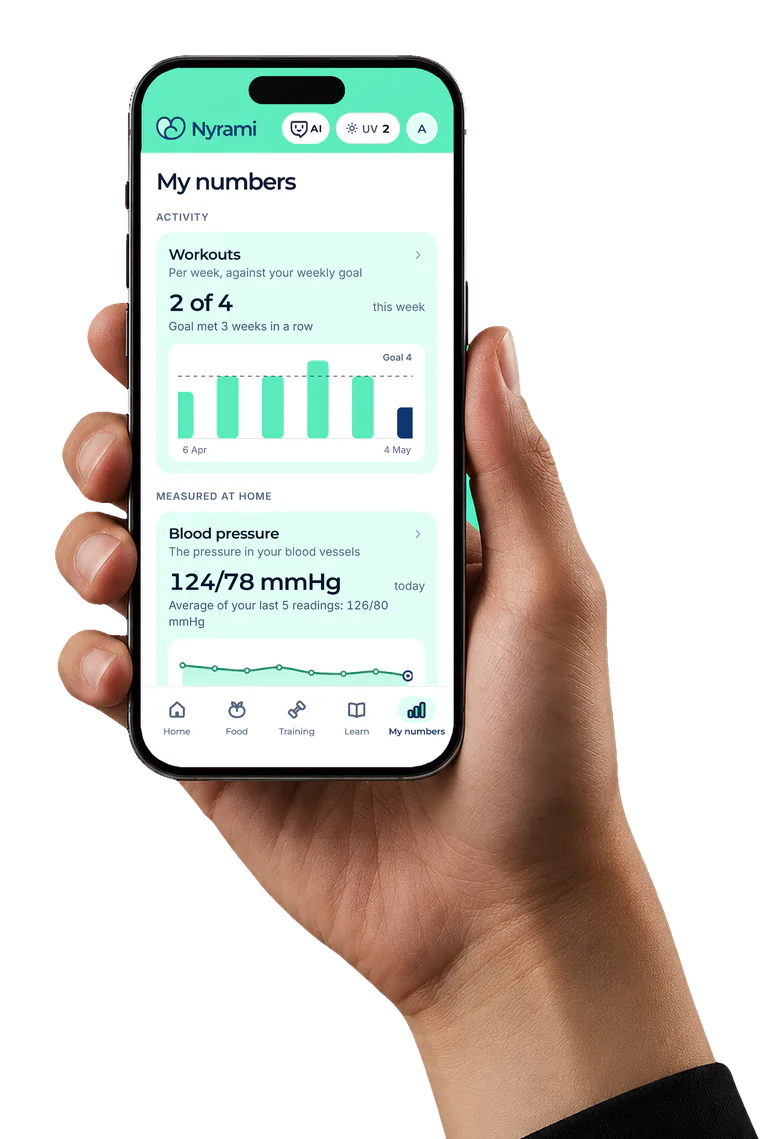
If you choose care without dialysis, food matters a lot for how you feel. The food scanner in the Nyrami app reads the barcode and assesses potassium, phosphorus, sodium and protein for you, and the recipes are assessed per portion. In the last days, though, it is the people around you and the care team that matter most.
Turns the advice into something you can use in the shop and the kitchen: scan food and see potassium, phosphorus and salt assessed for you, and follow your numbers over time. Free on iPhone and Android.