Kidney failure symptoms: 10 signs and when to see a doctor
Chronic kidney disease rarely causes symptoms at first, and many people notice nothing until kidney function is greatly reduced. When signs appear, the most common are tiredness, swollen legs, itching, nausea, poor appetite and changes in your urine. The only sure way to know is a blood test and a urine test.
The kidneys are good at compensating. When part of the kidney tissue stops working, the rest works harder, and you feel nothing. That is why kidney disease is often found late. Here are the signs you may notice, why they happen, and when you should contact a doctor. The disease itself, its causes and treatment are explained in Chronic kidney disease.
What is the first sign of kidney failure?
The first sign of kidney disease is usually not something you feel, but something that shows up in a test: albumin in the urine or a low eGFR in the blood test. Many people have no symptoms in stages 1 to 3. Foamy urine can be an early sign you can see yourself, because it can mean protein is leaking out.
If you have high blood pressure, diabetes or heart disease, you should therefore not wait for symptoms. Ask your GP (fastlege) for a blood test (creatinine and eGFR) and a urine test (albumin to creatinine ratio). Read more in How kidney disease is detected and Protein in urine.
What are the symptoms of poor kidney function?
The most common symptoms of reduced kidney function are tiredness, swollen legs, itching, nausea, poor appetite and passing urine more often at night. They happen because the kidneys can no longer remove waste products, salt and water, and because they make less of the hormones the body needs to form blood.
Common symptoms of kidney failure, and why they happen
Symptom
Why it happens
Tiredness and lack of energy
Low blood count (anaemia) and waste products building up in the blood
Swollen legs, ankles or eyelids
The body holds on to salt and water
Itching and dry skin
Waste products and an imbalance of minerals in the blood
Poor appetite, nausea, weight loss
Waste products building up (uraemia)
Metallic taste in the mouth
Waste products in the blood (uraemia), late in the course
Passing urine more often at night
The kidneys regulate fluid less well
Shortness of breath
Fluid collecting, including in the lungs
Cramps, restless legs, poor sleep
Waste products and salts out of balance
Pale skin, bruising easily
Anaemia and poorer blood clotting
High blood pressure
The kidneys help control blood pressure
Source: Norsk helseinformatikk, Store medisinske leksikon.
None of these symptoms on its own means you have kidney failure. Tiredness and swollen ankles have many other causes. But if you have several of them at once, or you have a risk factor, it is worth having the tests.
How do you notice reduced kidney function?
Most people notice little or nothing in stages 1 and 2, and many not in stage 3 either. In stage 3, tiredness and anaemia often appear. In stages 4 and 5 the symptoms become clearer: poor appetite, nausea, vomiting, itching, weakness, restless legs and difficulty sleeping.
The symptoms come on gradually, often over months and years. Many people get used to feeling tired and put it down to age or a busy life. That is why your values say more than how you feel. When the kidneys are weak, potassium in the blood can also become too high, which can cause muscle weakness and an irregular pulse, see Potassium in food. Read what each stage means in Kidney failure stages.
Where do you itch with kidney failure?
Itching with kidney failure is called uraemic itch (uraemic pruritus) and is common in advanced kidney disease. It can affect large parts of the body, for example the whole back, and is often worst at night. The skin often becomes dry. The itching is caused by waste products and an imbalance of minerals and hormones that the kidneys no longer keep in check.
The itching can badly affect sleep and quality of life, but it can be treated. Cream for dry skin is a first step. Your doctor will also check phosphate and other minerals in the blood, because levels that are too high can make the itching worse, see Phosphorus in food. Some people are helped by light therapy or medicines, and for those on dialysis, adjusting the dialysis can help. Tell your doctor about the itching, even if it seems minor.
Can swollen legs and puffy eyes come from the kidneys?
Yes. When the kidneys cannot get rid of enough salt and water, fluid builds up in the body. This often shows as swollen ankles and legs, and as puffiness around the eyes in the morning.
Swollen legs can also have other causes, such as heart failure. A weight gain of more than 2 kilos in 3 to 4 days is a sign that the body is holding fluid, and then you should contact a doctor. Read more in Fluid balance in kidney disease and The kidneys and the heart.
Does your urine change with kidney disease?
Your urine can change, but it does not always. Foamy urine can mean protein is leaking, and reddish, brown or cola coloured urine can mean blood. Many people with reduced kidney function need to pass urine more often, especially at night, and with advanced kidney failure there may be less urine than before.
The smell of your urine is not a known sign of kidney disease. A strong smell is more often due to drinking too little, or a urinary tract infection. Visible blood in the urine should always be checked by a doctor. Read more in Foamy urine and Protein in urine.
Does kidney disease hurt?
Chronic kidney disease usually does not hurt, and pain is not one of the common signs. Pain in the side or back is more often caused by kidney stones, an infection of the kidney (pyelonephritis) or the muscles. If you have a fever and pain in your side, or severe pain that comes in waves, contact a doctor the same day.
The exception is some inherited diseases, such as polycystic kidney disease, where large cysts can cause pain in the side or back. Read more in Is kidney disease hereditary?.
Are the signs of kidney cancer the same?
No. Kidney cancer is a different disease from chronic kidney disease. It often causes few symptoms early on and is often found by chance, for example when a doctor investigates blood in the urine. Blood in the urine, pain in one side of the back or belly just under the ribs, and a lump in the belly can be signs.
Visible blood in the urine should always be checked by a doctor, even if it only happens once. Read more about kidney cancer at the Norwegian Cancer Society (Kreftforeningen).
Are the symptoms different in women, men and older people?
Norwegian health sources describe the same symptoms of kidney failure in women and men. In older people the signs are also the same, but they are easier to overlook: tiredness, poor appetite and swollen ankles are quickly put down to age. Chronic kidney disease becomes more common as we get older, so the tests are especially useful then. Read more in Kidney failure in older people.
What should family members look for in an older parent?
In older people the signs creep up and are easily put down to age: more tiredness, less appetite, swollen ankles, less urine or becoming more confused than before. If you notice several of these, especially in someone who takes blood pressure medicine or water tablets (diuretics), ask for the kidney tests to be done.
Go through the medicines together, including painkillers bought without a prescription, and take them along to the doctor. Advice for you as the person standing alongside is in Supporting someone with kidney disease.
What is the difference between acute and chronic kidney failure?
Acute kidney injury comes on over hours or days, often with serious illness, dehydration or certain medicines, such as anti-inflammatory painkillers, and can often get better. Chronic kidney disease develops slowly over months and years and usually does not go away. The symptoms of acute kidney injury come on quickly and can be serious.
Signs of acute kidney injury are passing little urine, nausea and vomiting, strong thirst, dizziness, shortness of breath (especially when lying down) and a fast pulse. If you have these signs, contact a doctor the same day. Read more about the outlook in Kidney failure and life expectancy.
When should you see a doctor?
Contact your GP (fastlege) if you notice increasing swelling, tiredness that does not go away, lasting itching, nausea, changes in your urine or that you bruise easily. Also contact your GP if you have high blood pressure, diabetes or heart disease and have not had your kidneys checked.
Call the out of hours service (legevakt) on 116 117 if you pass very little urine, vomit a lot, become very weak or dizzy, or have a fever and pain in your side.
Call 113 if you have chest pain, severe shortness of breath, fainting, heavy bleeding or if you become unusually drowsy or confused.
How Nyrami can help
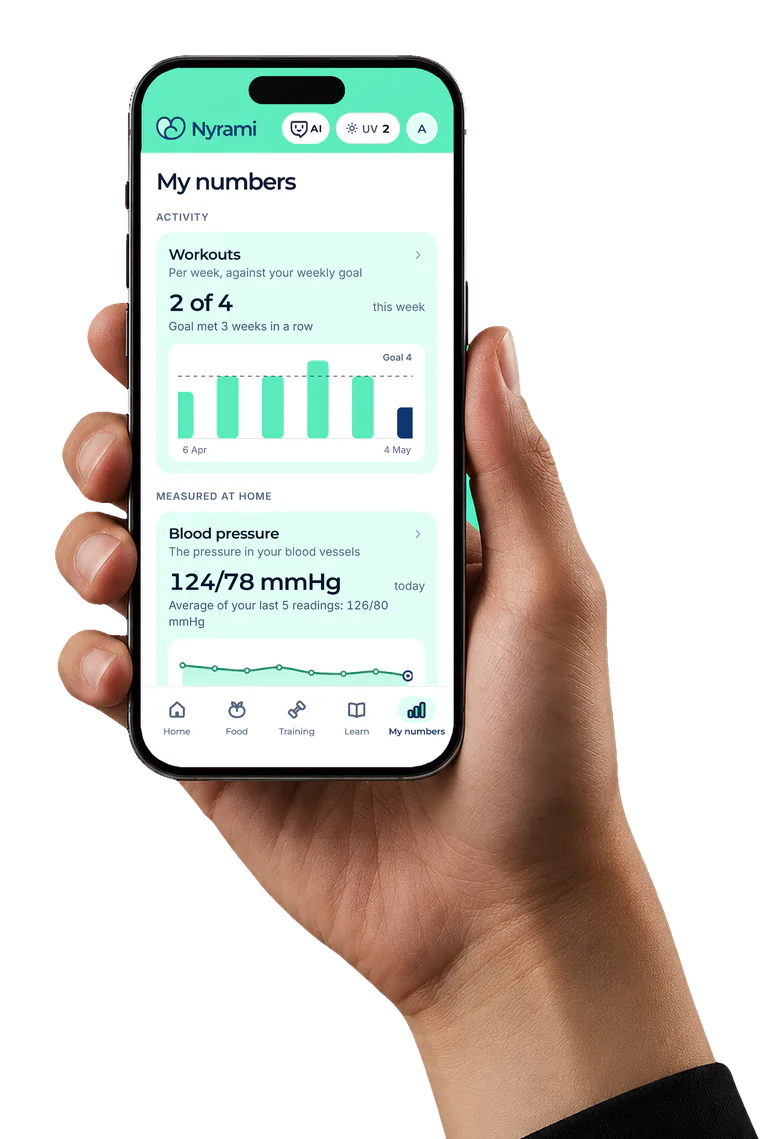
In the Nyrami app you can log blood pressure, weight and fluid and see your values, such as eGFR, creatinine and albumin, explained in words. That makes it easier to see if something is changing, and to have your values ready when you talk to your doctor. The app is free for iPhone and Android.
Turns the advice into something you can use in the shop and the kitchen: scan food and see potassium, phosphorus and salt assessed for you, and follow your numbers over time. Free on iPhone and Android.