Kidney failure in older people: signs, treatment, family
Kidney function declines with age in everyone, and an eGFR of 60 to 89 is common in older people. Kidney failure often causes vague signs such as tiredness, poor appetite and confusion. Dehydration, infection and medicines can cause acute kidney failure, which is urgent.
Perhaps your mother or father has been told they have “reduced kidney function” after a blood test, or perhaps it is you. In many older people, kidney function is lower than it used to be without it becoming a big problem, but sometimes it is urgent. Here is what you need to know.
Is it normal for the kidneys to get weaker with age?
Yes. Kidney function gradually declines with age, even in healthy people, by about 0.5 to 1 ml/min a year according to the Norwegian Directorate of Health (Helsedirektoratet). That is why an eGFR between 60 and 89 is considered common in older people. eGFR is an estimate of how much blood the kidneys filter per minute, calculated from creatinine in the blood, age and sex.
It only counts as chronic kidney disease (CKD) when eGFR is below 60 for more than three months, or when there are other signs of kidney damage, most often albumin (a protein) in the urine. EKFC, the formula many Norwegian laboratories now use, takes age into account. See eGFR normal range by age, or work out eGFR with the eGFR calculator.
Creatinine is made in the muscles. In a thin, frail older person, creatinine can therefore look normal even though the kidneys filter poorly, according to the Norwegian Medicines Handbook (Norsk legemiddelhåndbok). The doctor can then measure cystatin C, a blood test that is not affected by muscle mass.
What are the signs of kidney failure in older people?
Chronic kidney disease rarely causes symptoms until kidney function is greatly reduced, and in older people the signs are often vague and easy to mistake for ordinary ageing. In severe kidney failure, waste products building up in the blood can also cause confusion and drowsiness.
More tired than before, often because haemoglobin falls (anaemia).
Poor appetite, nausea or weight loss.
Swollen legs and ankles, or puffiness around the eyes.
Itching and restless legs.
Frequent urination at night, or shortness of breath when lying down.
Confusion, drowsiness or changed behaviour.
These signs can have many other causes. It is the blood test and the urine test that show whether the kidneys are to blame. Read more in Symptoms of kidney failure.
Acute or chronic kidney failure: when is it urgent?
Acute kidney failure comes on over hours or days and is urgent, while chronic kidney disease develops over months and years. Older people are especially prone to acute kidney failure, because their kidneys have less in reserve. Dehydration from vomiting, diarrhoea, fever or heat, infections and certain medicines are the most common triggers.
In older men, an enlarged prostate can also block the flow of urine. Acute kidney failure can often be reversed when the cause is treated quickly, but in someone who already has chronic kidney disease, such an episode can leave kidney function permanently worse.
High blood pressure, diabetes, disease of the kidney blood vessels
Typical signs
Little urine, drowsiness, confusion, nausea, breathlessness
None for a long time. Later tiredness, poor appetite, itching, swelling
Can it get better?
Often, if the cause is treated quickly
Usually does not go away, but can be slowed
What do you do?
Contact a doctor the same day, out-of-hours service for serious signs
Regular check-ups with the GP (fastlege)
Source: Helsenorge, Store medisinske leksikon, Metodebok (nursing home medicine, Bergen).
When should you contact a doctor?
Call the out-of-hours medical service (legevakt) on 116 117 if an older person with kidney disease passes very little or no urine, becomes more confused or drowsy than usual, gets short of breath or swells up quickly. Contact the GP the same day if vomiting, diarrhoea or fever means they are eating and drinking little. If life is in danger, call 113.
Which medicines need adjusting when the kidneys are weak?
Many medicines are removed through the kidneys and need a lower dose, a switch or to be avoided when kidney function is reduced. The Norwegian Medicines Handbook recommends that older people who take several medicines have them reviewed regularly. Ask the GP for a review.
Anti-inflammatory painkillers (NSAIDs) such as ibuprofen (Ibux), diclofenac (Voltaren) and naproxen can trigger acute kidney failure. Paracetamol (Paracet, Pinex) is the first choice. See Painkillers and the kidneys.
Metformin for diabetes needs a lower dose when kidney function is moderately reduced and must not be used when it is severely reduced.
ACE inhibitors (for example ramipril) and angiotensin II receptor blockers (for example losartan) often protect the kidneys, but together with diuretics (water tablets) such as furosemide they can make kidney function drop when the body is dehydrated.
SGLT2 inhibitors such as dapagliflozin (Forxiga) and empagliflozin (Jardiance) slow kidney disease, but should be paused during acute illness.
Many other medicines also have to be dosed according to kidney function, so always tell doctors and pharmacies. See Medicines and kidney disease.
What are “sick day rules”?
During vomiting, diarrhoea, fever or surgery, many people with chronic kidney disease should pause ACE inhibitors or angiotensin II receptor blockers, diuretics, SGLT2 inhibitors and metformin, according to the Norwegian guidance for GPs. This spares the kidneys while the body is short of fluid. Which medicines this applies to, and when to restart them, should be agreed with the doctor in writing in advance. The KDIGO guideline points out that the most common problem is that medicines are not restarted. Do not change anything on your own without such a plan.
How is kidney failure treated in older people?
Chronic kidney disease in older people is treated as in younger people: blood pressure is kept down, diabetes is treated, kidney protecting medicines are used where they fit, and anything that harms the kidneys is avoided. But the goals are adapted to each person’s health and wishes, and in the frailest the doctor weighs the benefit against side effects and quality of life.
The blood pressure target may, for example, be less strict for someone who gets dizzy when standing up, because falls are dangerous. The GP follows up most people, but according to the Norwegian guidance a kidney specialist should be consulted about, among others, older people who manage on their own and are not severely frail.
How long can you live with kidney failure when you are old?
Many older people with mildly or moderately reduced kidney function never need dialysis. In the oldest, kidney disease on average progresses more slowly than in younger adults, and for many the heart is a bigger threat than the kidneys. When the kidneys fail completely, life expectancy depends on the person’s other health and on the choice between dialysis and treatment without dialysis. Figures from studies apply to groups, not to individuals. Read more in How long can you live on dialysis?
Is dialysis right for an older person?
Dialysis can give good years to older people too, but for the oldest and frailest it often adds little or no extra life. Treatment without dialysis, called conservative care, can then be a good choice. There is no fixed age limit. The decision is made together with the kidney specialist, based on the person’s health and what matters most to them.
Half of those on haemodialysis in Norway at the end of 2024 were over 68 (Norwegian Renal Registry). A large American study from 2024 followed more than 20,000 people over 65 with severe kidney failure who had not been referred for a transplant. Those who started dialysis lived on average nine days longer over three years, but spent around two weeks less at home.
Conservative care does not mean that treatment stops. It slows the disease, relieves problems such as nausea, itching and swelling, and leaves room to plan the last part of life together with the family. The KDIGO guideline says that everyone with severe kidney disease should be told about this option. Helsenorge, the Norwegian public health portal, has a decision aid (in Norwegian) that helps you compare the treatments.
Age alone does not rule out a new kidney either: in 2024, a third of those who received their first kidney from a deceased donor in Norway were over 65 (Norwegian Renal Registry). Read more in End-stage kidney failure and Kidney transplantation.
What should an older person with kidney failure eat and drink?
For many older people, getting enough food and protein matters more than limiting potassium and phosphorus. The KDIGO guideline advises considering more protein and energy in older people who are frail or have lost muscle, while less protein may be right for some whose kidney function is falling fast. Undernutrition is common among older people receiving home care or living in nursing homes, according to the Norwegian Directorate of Health.
Small, frequent meals, with some protein in each, for example eggs, fish, meat or milk, unless the doctor has said otherwise.
Older people often feel less thirsty and drink too little, which raises the risk of acute kidney failure during illness and hot weather. Some people with severe kidney failure or heart failure nevertheless have an upper limit for fluids. See How much should you drink?
What can you do as a family member?
As a family member you can be an extra pair of eyes and ears, but the person who is ill should decide as much as possible themselves. This is what you can do:
Keep an up to date list of medicines, including over the counter products, and bring it to the doctor and the pharmacy.
Ask for a written sick day plan.
Keep an eye on food and drink during illness and hot weather, and call a doctor early if you see confusion, little urine or swelling.
Come along to appointments if the older person wants you there. With their consent, the closest relative has a right to information.
Talk early about wishes for treatment, including dialysis and the last part of life.
You should not carry everything alone. The municipality must offer support to people with particularly heavy care responsibilities, and LNT (the Norwegian association for kidney patients and transplant recipients) has peer supporters. Read more in Caring for someone with kidney disease.
How Nyrami can help
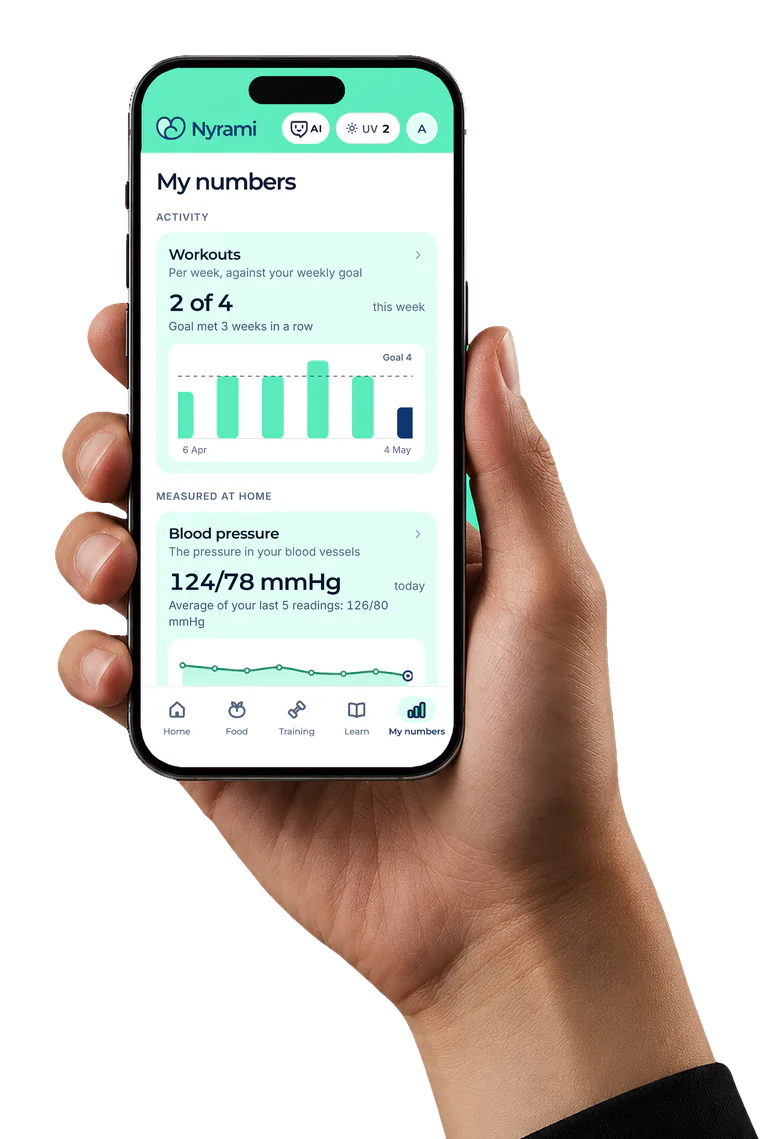
In the Nyrami app you can enter values such as eGFR, creatinine, albumin, blood pressure and weight, and see them explained in words and over time. That makes it easier to see whether kidney function is stable, and to have the figures ready for the appointment. The food scanner assesses potassium, phosphorus, sodium and protein in foods for you. The app is free for iPhone and Android.
Turns the advice into something you can use in the shop and the kitchen: scan food and see potassium, phosphorus and salt assessed for you, and follow your numbers over time. Free on iPhone and Android.