Medicines for kidney disease: what protects, what harms?
No medicine cures chronic kidney disease, but several can slow it down: blood pressure medicines called ACE inhibitors or ARBs, SGLT2 inhibitors such as Forxiga and Jardiance, and in type 2 diabetes also finerenone and semaglutide. Other medicines, such as ibuprofen, must be used with care. Never change anything on your own.
Many people with kidney disease take several medicines, and it is easy to feel unsure: which ones help the kidneys, which can harm them, and what should you do when you are ill? Here is an overview. It does not replace your doctor, but it can make it easier to ask the right questions. Never make changes to your medicines without talking to a doctor first.
Are there medicines for kidney failure?
There is no medicine that cures chronic kidney disease, but several medicines can slow it down and protect the heart. The most important are blood pressure medicines called ACE inhibitors or ARBs, and SGLT2 inhibitors. If you also have type 2 diabetes, finerenone and semaglutide may be added. Many people also take cholesterol lowering medicine to protect the heart.
Slows kidney disease, also in people without diabetes
Genital thrush, pause during acute illness
Finerenone
Kerendia
Slows kidney disease in type 2 diabetes with albumin in the urine
Can raise potassium
GLP-1 analogue
Semaglutide (Ozempic)
Lowers blood sugar and weight, and protected the kidneys in the FLOW trial
Nausea and diarrhoea can cause fluid loss
Statin
Atorvastatin, simvastatin
Lowers cholesterol to protect the heart
Is for the heart, not the kidneys
Sources: Norwegian guideline for chronic kidney disease in general practice (2025), Norsk legemiddelhåndbok, Felleskatalogen, KDIGO 2024. Which ones suit you is decided by your doctor.
With more reduced kidney function, medicines are added to treat the consequences of kidney failure. Potassium binders such as Lokelma (sodium zirconium cyclosilicate) and Veltassa (patiromer) bind potassium in the gut, so that many people can continue their blood pressure medicine. Phosphate binders, for example sevelamer (Renvela), are taken with meals and bind phosphorus from food. Some people also get medicine for anaemia (EPO) or sodium bicarbonate when the blood becomes too acidic.
Which blood pressure medicine protects the kidneys?
ACE inhibitors and ARBs (angiotensin II receptor blockers) are the blood pressure medicines that protect the kidneys best, especially when there is albumin in the urine. They lower the pressure inside the kidney filters and reduce the leakage of albumin. The Norwegian guideline for chronic kidney disease calls them the cornerstone of treatment. For most people the target is a blood pressure below 130/80.
Do not be alarmed if creatinine rises a little, or eGFR falls a little, in the first weeks after starting or increasing the dose. It is expected and happens because the pressure in the filters goes down, which protects the kidneys in the long run. According to the guideline, eGFR may fall by up to just under a third in the first couple of weeks. Your doctor measures your blood pressure and takes a blood test of eGFR and potassium one to two weeks after starting, and decides whether the dose should change.
What do SGLT2 inhibitors such as Forxiga and Jardiance do for the kidneys?
SGLT2 inhibitors, such as dapagliflozin (Forxiga) and empagliflozin (Jardiance), slow chronic kidney disease and protect the heart, also in people who do not have diabetes. They make the kidneys pass more sugar into the urine, and are used together with an ACE inhibitor or ARB. According to the 2025 Norwegian guideline, they are reimbursed (blå resept) in chronic kidney disease with an eGFR between 25 and 90 and a urine albumin to creatinine ratio above 20 mg/mmol, when you already take an ACE inhibitor or ARB.
Here too, a small fall in eGFR in the first weeks is expected, and according to KDIGO it is not in itself a reason to stop. Common side effects are genital thrush and thirst. A rare but serious side effect in people with diabetes is ketoacidosis, a dangerous acid build up, and the risk rises with fasting, surgery and serious illness. That is why many people pause the medicine when they become acutely ill, as agreed with their doctor.
Is Ozempic good or bad for the kidneys?
For people with type 2 diabetes and chronic kidney disease, semaglutide, the active substance in Ozempic, appears to protect the kidneys. In the FLOW trial from 2024, 3,533 people with type 2 diabetes and kidney disease received either semaglutide once a week or placebo. After an average of just over three years, the semaglutide group had about a quarter lower risk of serious worsening of kidney disease or death from kidney or heart disease.
The trial included people with type 2 diabetes, so it says nothing certain about people without diabetes. The most common side effects are nausea, vomiting and diarrhoea. According to Felleskatalogen (the Norwegian medicines compendium), this can cause fluid loss, which in rare cases weakens kidney function. Drink enough when you have stomach problems, and contact your doctor if you cannot keep fluids down. The Norwegian Directorate of Health (Helsedirektoratet) asks doctors to be especially careful when eGFR is below 30.
Finerenone (Kerendia) is another medicine for adults with type 2 diabetes and chronic kidney disease with albumin in the urine. It can raise potassium, so potassium and eGFR are measured before starting and again after four weeks, according to Felleskatalogen. Read more about diabetes and the kidneys.
Is metformin dangerous for the kidneys?
No, metformin does not damage the kidneys. But metformin is cleared through the kidneys, so when kidney function is reduced, it can build up. That raises the risk of lactic acidosis, a rare but serious condition. That is why your doctor adjusts the dose to your eGFR, and according to Helsedirektoratet and Norsk legemiddelhåndbok, metformin should not be used when eGFR is below 30.
The biggest risk comes with acute illness with vomiting, diarrhoea or drinking too little, because kidney function can then fall quickly. Helsedirektoratet recommends that your doctor gives you written instructions to pause metformin if you show signs of dehydration.
Which medicines can harm the kidneys?
Among common medicines, anti-inflammatory painkillers (NSAIDs) such as ibuprofen, diclofenac (Voltaren) and naproxen are the ones that most often harm the kidneys. Paracetamol is the first choice in kidney disease. Read more in Painkillers and the kidneys. Some other medicines can also put a strain on the kidneys, but that does not mean you should stop them. They need to be monitored.
Lithium for bipolar disorder can weaken kidney function over many years. That is why lithium levels and kidney function are measured regularly, according to Norsk legemiddelhåndbok.
Some antibiotics, such as gentamicin, can damage the kidneys and are given with measurements of the level in the blood. Trimethoprim, widely used for urinary tract infections, can raise potassium and make creatinine rise slightly without harming the kidneys, according to RELIS (the Norwegian medicines information centres).
Proton pump inhibitors for stomach acid, such as omeprazole and pantoprazole, can in rare cases cause an allergic inflammation of the kidneys. If you take them regularly, ask your doctor whether you still need them.
Supplements and herbal remedies can affect the kidneys or how your medicines work. Talk to your doctor before starting anything new.
Contrast dye for CT scans: what should you know?
Iodine contrast given into a vein for a CT scan can cause a temporary fall in kidney function in some people, but for most the risk is small. It is highest when kidney function is severely reduced. Following European guidelines (ESUR), people with an eGFR below 30 are often given fluid into a vein before and after the scan.
Always mention your kidney disease when you are referred for a CT scan. If you take metformin and your eGFR is below 30, you will usually be told to pause it from the scan and for at least two days afterwards, until your kidney function has been checked. With an eGFR above 30 you usually do not need a pause, according to KDIGO.
What should you do with your medicines when you are ill?
With vomiting, diarrhoea, fever or when you cannot drink enough, some medicines can make kidney function fall quickly. That is why your doctor should tell you, both verbally and in writing, which medicines to pause and when to start them again. Never pause, and never restart, without agreeing it with your doctor.
In any case, avoid NSAIDs such as ibuprofen when you are ill and dehydrated.
When should you contact a doctor?
Contact a doctor if you cannot keep fluids down, pass much less urine than usual, feel dizzy and weak, or get swelling after starting a new medicine. In an emergency in Norway: out-of-hours service (legevakt) 116 117. If life is at risk: 113.
Why do doses need adjusting to eGFR?
Many medicines are cleared through the kidneys. When the kidneys filter less well, the medicine stays in the body longer and can build up, so its effects and side effects become stronger. That is why your doctor uses eGFR, the measure of how well the kidneys filter, to choose the dose, and some medicines should not be used below a certain eGFR. Read more about eGFR.
Examples are some antibiotics, the heart medicine digoxin, gabapentin for nerve pain and strong painkillers such as codeine. So always tell your doctor, dentist and pharmacist that you have kidney disease, and have your eGFR value to hand. Feel free to ask your GP to go through your whole list of medicines.
How Nyrami can help
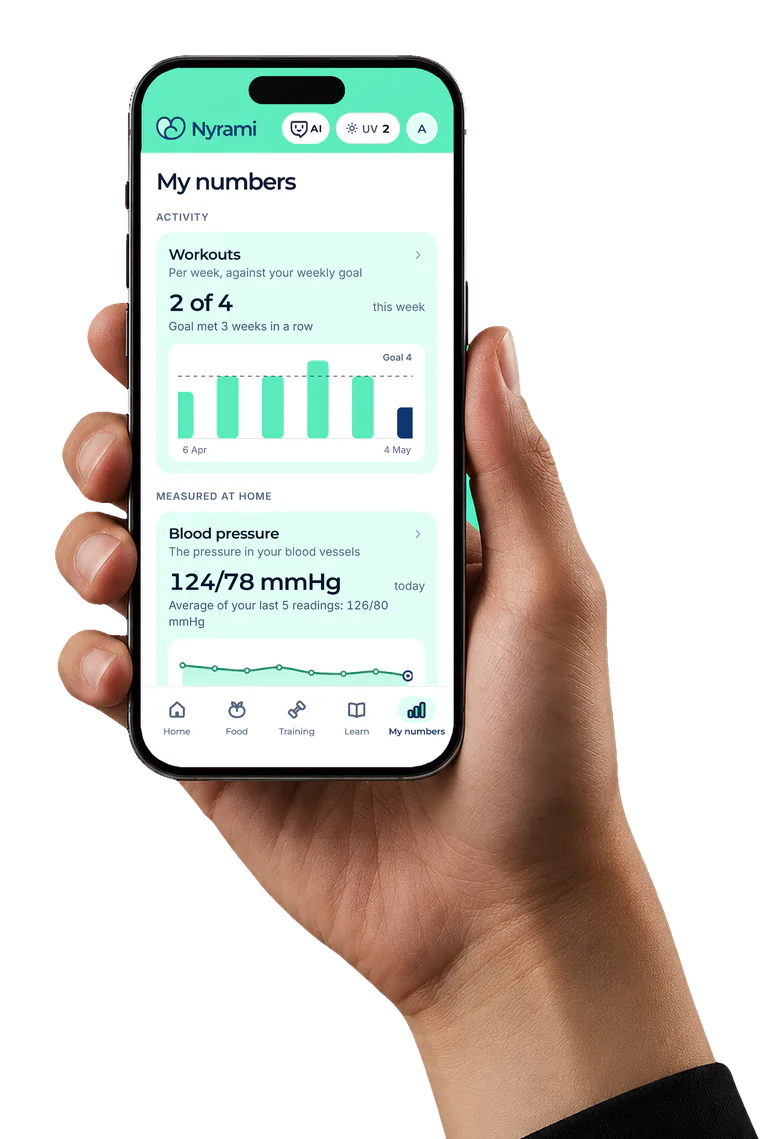
In the Nyrami app you have your eGFR, creatinine, albumin, blood pressure and stage in one place, explained in words, so you have the figures ready when a doctor or pharmacist reviews your medicines. The app is free for iPhone and Android. It does not give advice about your own medicines: those questions should always go to your doctor or pharmacist.
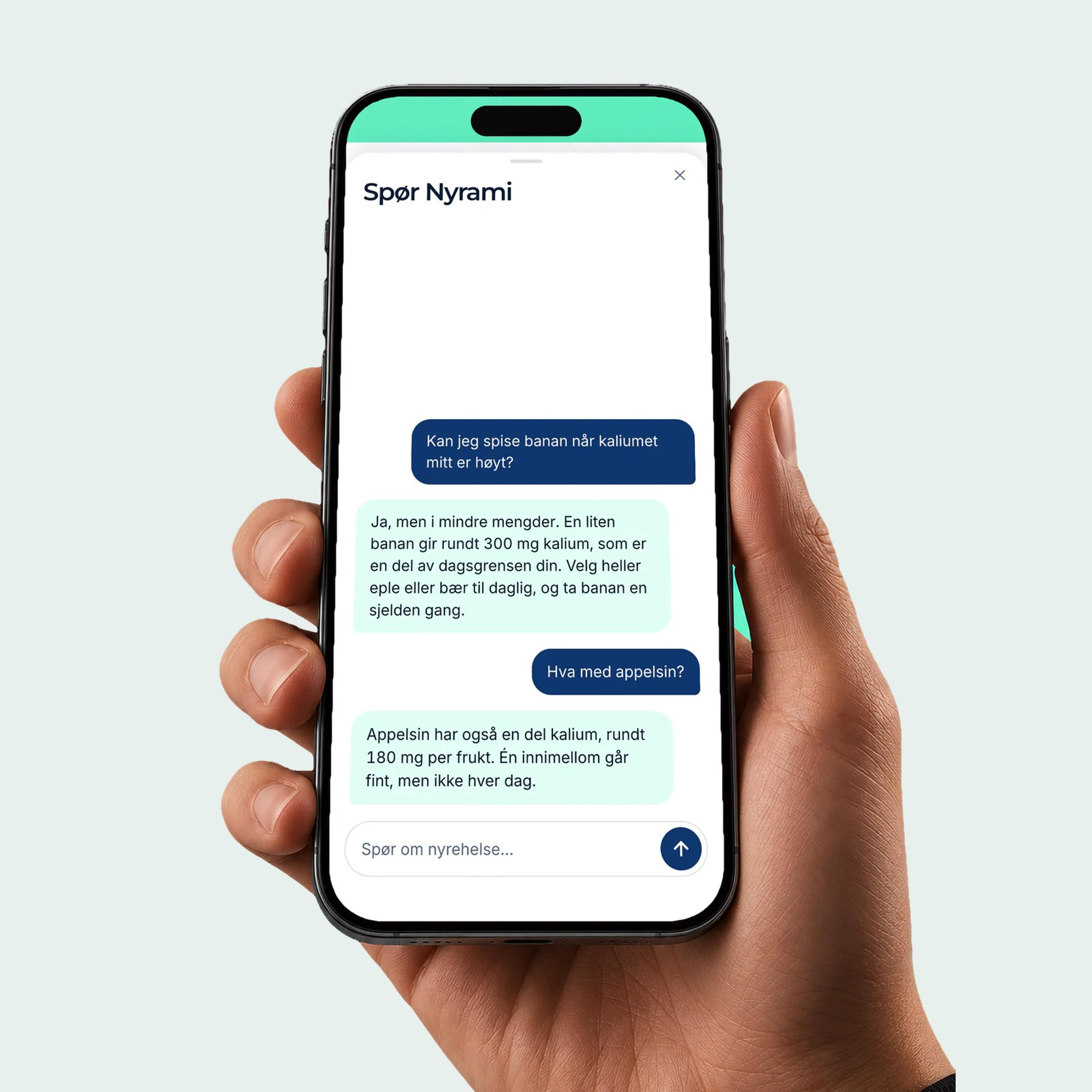
Turns the advice into something you can use in the shop and the kitchen: scan food and see potassium, phosphorus and salt assessed for you, and follow your numbers over time. Free on iPhone and Android.