Polycystic kidney disease (ADPKD): symptoms, genetics, care
A simple cyst on the kidney is common and almost always harmless. Polycystic kidney disease (ADPKD) is something else: an inherited disease in which many cysts grow in both kidneys. Each child has a one in two chance of inheriting it. Good blood pressure control and sometimes the medicine tolvaptan can slow it down.
Perhaps your scan report said "cyst on the kidney" after an ultrasound or CT taken for a completely different reason. Or perhaps a parent, a sibling or you yourself have been diagnosed with polycystic kidney disease. These are two very different things, and the first thing you need to know is which one applies to you. Here is the difference, and everything important about the inherited disease.
What is polycystic kidney disease?
Polycystic kidney disease is an inherited kidney disease in which many fluid-filled sacs, cysts, grow in both kidneys over a lifetime. The medical name is autosomal dominant polycystic kidney disease, ADPKD for short. The cysts gradually take space from healthy kidney tissue, the kidneys get bigger, and in many people kidney function eventually falls.
The disease is most often caused by a variant in the PKD1 gene, behind around three in four cases, or in the PKD2 gene, behind around fifteen per cent. According to KDIGO, about one in 1,000 people carry such a variant, but far fewer have been diagnosed. The Norwegian patient organisation LNT estimates that more than 2,000 people in Norway carry it. Cysts in the liver are also common with ADPKD, but they rarely cause liver failure.
There is also a rare, recessive form (ARPKD) that usually shows up before birth or in babies. It is inherited differently and is not covered here.
Are cysts on the kidneys dangerous?
Usually not. A simple kidney cyst is a small, thin-walled sac filled with fluid. It is almost always benign, rarely causes symptoms and usually needs no follow-up. Simple cysts are not inherited, and they do not damage kidney function. Polycystic kidney disease, on the other hand, is a separate, inherited disease with many cysts in both kidneys.
Simple kidney cysts become more common with age. The US National Institute of Diabetes and Digestive and Kidney Diseases (NIDDK) states that around one in ten people have them, and nearly one in five among people over 50. Most are one to two centimetres across and rarely grow beyond a few centimetres. Occasionally a large cyst can cause pain in the side or blood in the urine. It can then be drained or removed, but that is rarely needed.
Simple kidney cyst or polycystic kidney disease?
How common
Simple kidney cyst
Very common, especially after 50
Polycystic kidney disease (ADPKD)
Around one in 1,000 people carry the variant
Number of cysts
Simple kidney cyst
One or a few
Polycystic kidney disease (ADPKD)
Many, in both kidneys, and more over the years
Inherited
Simple kidney cyst
No
Polycystic kidney disease (ADPKD)
Yes, a one in two chance for each child
Kidney function
Simple kidney cyst
Not affected
Polycystic kidney disease (ADPKD)
Often falls gradually, at very different speeds
Follow-up
Simple kidney cyst
Usually none
Polycystic kidney disease (ADPKD)
Regular checks of blood pressure and kidney function
Simple kidney cyst or polycystic kidney disease?
Simple kidney cyst
Polycystic kidney disease (ADPKD)
How common
Very common, especially after 50
Around one in 1,000 people carry the variant
Number of cysts
One or a few
Many, in both kidneys, and more over the years
Inherited
No
Yes, a one in two chance for each child
Kidney function
Not affected
Often falls gradually, at very different speeds
Follow-up
Usually none
Regular checks of blood pressure and kidney function
A simple, round cyst with a thin wall and only fluid inside is not cancer. The radiologist judges how the cyst looks on CT or MRI, not just how big it is. Cysts with thicker walls, internal walls (septa) or solid tissue inside are called complex, and they are graded using a system called Bosniak, from I to IV.
Bosniak I and II: harmless cysts that need no follow-up.
Bosniak IIF: slightly unusual, but most often benign. They are followed with new scans over a few years.
Bosniak III and IV: the risk of cancer is high here, and your doctor will usually recommend surgery. In a Scottish study, a clear majority of the cysts that were removed turned out to be cancer, but most often early and slow-growing.
So size alone says little. If you have been told about a complex cyst, it is because it needs to be followed or investigated, not because you necessarily have cancer. According to KDIGO, polycystic kidney disease is not clearly linked to a higher risk of kidney cancer either.
What are the symptoms of polycystic kidney disease?
Most people with polycystic kidney disease notice nothing in childhood and adolescence. Symptoms usually appear between the ages of 30 and 50, and high blood pressure is often the first sign, often before kidney function starts to fall. Many are diagnosed because someone else in the family has the disease, or because the cysts were seen by chance on a scan.
High blood pressure
Pain in the side, back or abdomen, often because a cyst bleeds or the kidneys are large
Visible blood in the urine
Urinary tract infections and infection in a cyst
Kidney stones
Later, with reduced kidney function: tiredness, poor appetite, nausea and itching
Blood in the urine can be frightening, but it is a known feature of the disease, and KDIGO recommends that doctors explain this early. Bulges on blood vessels in the brain (aneurysms) are also somewhat more common with ADPKD, and most of them never burst. Read more about the general signs in Symptoms of kidney failure.
Is polycystic kidney disease hereditary?
Yes. Polycystic kidney disease is inherited in an autosomal dominant way. This means it is enough to inherit the variant from one parent, and each child of a parent with the disease has a fifty per cent chance, one in two, of inheriting it. Sex makes no difference. The disease does not skip generations, but sometimes the variant arises new in a person with no family history.
The diagnosis is usually made with ultrasound, sometimes MRI. In adults with the disease in the family, doctors use the number of cysts in relation to age: in people aged 15 to 39, three or more cysts are enough to make the diagnosis. If the result is unclear, a genetic test can give the answer. Read more about inheritance and other inherited kidney diseases in Is kidney disease hereditary?.
How is polycystic kidney disease treated?
The aim of treatment is to slow the disease and protect the heart and blood vessels. The single most important measure is well-controlled blood pressure, usually with an ACE inhibitor or an angiotensin II receptor blocker (ARB) as the first medicine. Some people also get tolvaptan, the only medicine approved to slow the growth of the cysts themselves.
Blood pressure: KDIGO often recommends a lower blood pressure target in ADPKD than otherwise, especially for younger people with good kidney function. You agree on the right target for you with your doctor. Read more in Blood pressure and the kidneys.
Tolvaptan (brand name Jinarc) has been available in Norway since 2015. It blocks the hormone vasopressin, which drives the cysts to grow, and slows both kidney growth and the fall in kidney function. It is meant for adults with signs that the disease is progressing quickly, and it is started and monitored by a kidney specialist. It causes a lot of thirst and frequent urination, also at night, and because it can rarely harm the liver, liver blood tests are taken regularly. It must not be used in pregnancy or while breastfeeding, and you should avoid grapefruit and grapefruit juice while taking it.
With severe kidney failure, dialysis and a kidney transplant are options, as with other kidney diseases. Polycystic kidney disease does not come back in a new kidney. See Chronic kidney disease stages for what the different stages mean.
What should you eat and drink with polycystic kidney disease?
There is no special diet for polycystic kidney disease, but some habits help. KDIGO and NHI.no recommend drinking 2 to 3 litres of water spread through the day, eating little salt, keeping a healthy weight, being physically active and not smoking. The advice about plenty of water only applies while kidney function is good enough, and not if your doctor has said otherwise.
Water: the advice applies when your eGFR is 30 or higher. With lower kidney function, or with certain medicines, too much water can cause low sodium in the blood. Ask your doctor. See Fluid balance in kidney disease.
Alcohol: KDIGO recommends no more than one drink a day for women and no more than two for men. See Alcohol and the kidneys.
Coffee: avoid large amounts of coffee, especially during pregnancy.
Painkillers: paracetamol is usually safer for the kidneys than ibuprofen (Ibux), diclofenac (Voltaren) and other NSAIDs. See Painkillers and the kidneys.
Exercise: at least 150 minutes of moderate activity a week is a good goal, but avoid contact sports with a risk of blows to the back and abdomen, because a cyst can burst.
What is the outlook with polycystic kidney disease?
It varies a lot from person to person. Without treatment, around half of people with ADPKD will have developed severe kidney failure by the age of 60, according to NHI.no, but not everyone develops kidney failure that causes symptoms. With a PKD1 variant, kidney function usually starts to fall between 30 and 40, with PKD2 about ten years later.
Other things that affect the outlook are sex, lifestyle, other illnesses and which variant you have. With MRI or CT, doctors can measure how large the kidneys are for your age, and so estimate whether the disease is moving quickly or slowly. LNT writes that people with ADPKD today need dialysis or a new kidney about five years later than twenty years ago. The figures apply to groups, not to you as an individual. Read more in Can kidney failure get better?.
What should family members and children know?
If a parent, sibling or child has polycystic kidney disease, you may carry the variant yourself. Adult close relatives can get genetic counselling and, if they wish, a genetic test or an ultrasound. Many choose to know, because blood pressure can then be followed and treated early. Others prefer to wait. Both choices are fine, and a genetic counsellor can help you think it through.
Children: most children with the variant have no symptoms. KDIGO recommends measuring blood pressure every year from the age of five in children who may have inherited the disease. Whether a child should be tested is decided together with the doctor.
Family planning: both men and women with ADPKD should be offered counselling before having children. Some blood pressure medicines and tolvaptan must be stopped before pregnancy.
Brain haemorrhage in the family: if someone in your family has had a brain haemorrhage or an aneurysm in the brain, tell your doctor. An MRI of the brain may then be considered.
Kidney donation: if a relative wants to give a kidney, the hospital first checks whether the donor has ADPKD. See Donating a kidney.
When should you see a doctor?
Contact your GP (fastlege) if you have polycystic kidney disease in the family and have not had your blood pressure checked in the last year, or if you get blood in your urine, new pain in your side or many urinary tract infections.
Fever together with pain in the side can mean an infected cyst. Contact a doctor the same day, or the out-of-hours service (legevakt) on 116 117.
A sudden, extremely severe headache that peaks within seconds to a minute can be a brain haemorrhage. Call 113.
If you have been told about a complex kidney cyst (Bosniak IIF or higher), make sure you know when your next check is.
How Nyrami can help
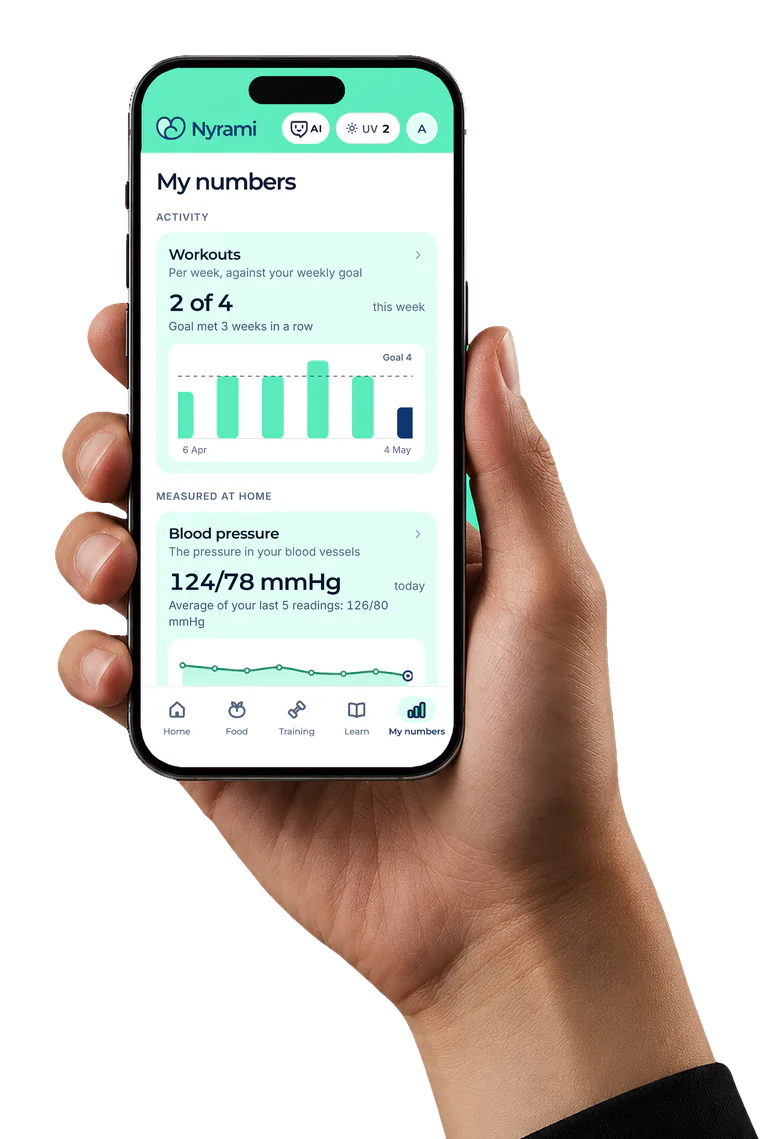
With polycystic kidney disease, much is about following blood pressure and kidney function over time. In the Nyrami app you can log blood pressure, eGFR, creatinine and fluid and have your values explained. The food scanner assesses sodium, potassium, phosphorus and protein for you, and you will find workouts with video at your own pace. The app is free for iPhone and Android.
Turns the advice into something you can use in the shop and the kitchen: scan food and see potassium, phosphorus and salt assessed for you, and follow your numbers over time. Free on iPhone and Android.