Foamy urine: is it protein, and when should you check it?
A little foam when you pee is common and is usually caused by a strong stream, concentrated morning urine or toilet cleaner in the bowl. If your urine foams a lot every time for several days, especially if you have swelling, diabetes or high blood pressure, it may be protein. A urine test at your GP gives the answer.
Many people get worried when they see foam in the toilet, often after reading that it can be a sign of kidney disease. Usually the explanation is completely harmless. But foam that comes back every time can be protein in the urine, and that is easy to check. Here is how to tell the two apart, and what your doctor will do.
What does it mean when your urine is foamy?
Foamy urine most often just means that air has got into the urine, because the stream hit the water with force or the urine was concentrated. Bubbles like these disappear quickly. Foam that stays, is dense and white, or appears every time you pee for several days, can however mean that the urine contains protein, also called albumin.
Healthy kidneys keep proteins in the blood. When the filters in the kidneys are damaged, protein leaks into the urine, and protein makes bubbles last, in the same way that egg white turns into foam when you whisk it. But foam is an unreliable sign. Of 72 patients who came to a hospital in South Korea because their urine was foamy, around one in five had clear protein in the urine. Most did not, but enough did to make a urine test worthwhile.
Why is urine foamy in the morning?
Morning urine is often more concentrated because you have not had anything to drink for many hours, and your bladder is full, so the stream is strong. Both give more foam. This is common and harmless, especially if the foam goes away once you have had something to drink during the day. Other common and harmless causes are:
A strong stream: a full bladder gives a stream that whips air into the water.
Not drinking enough: dark, concentrated urine foams more easily, for example after exercise, in hot weather or after alcohol. Urine should be light yellow.
Cleaning products: traces of toilet cleaner in the bowl can foam when you pee. Flush and see if the foam comes back.
Semen in the urine: in men, urine can foam after ejaculation. In retrograde ejaculation, semen goes into the bladder instead of out, and the urine can foam afterwards.
Is foamy urine dangerous?
Foamy urine is rarely dangerous in itself, but persistent foam can be the first visible sign that the kidneys are leaking protein. It is worth checking if the foam appears every time for more than a few days, does not go away when you drink more, or gets worse over time. This applies especially if you also have any of the following:
Swelling in your face, around your eyes or in your legs
Diabetes or high blood pressure
Kidney disease in the family
Unusual tiredness, nausea or poor appetite
Blood in the urine
Protein in the urine usually causes no symptoms. That is why the urine test, not the foam, gives the answer. Read more about what the finding means in the guide to protein in urine.
Can foamy urine be caused by diabetes or high blood pressure?
Yes. Diabetes and high blood pressure are the most common reasons the kidneys start leaking protein, because over time they damage the small blood vessels in the kidneys. Even so, foam appears late, and many people who leak protein never see any foam. If you have diabetes, the Norwegian Directorate of Health (Helsedirektoratet) recommends measuring albumin in your urine every year, whether you see foam or not.
Other causes of protein in the urine are inflammation of the kidney filters (glomerulonephritis), such as IgA nephropathy, inherited kidney diseases and autoimmune diseases such as lupus. Read more about diabetes and the kidneys and blood pressure and the kidneys.
What is nephrotic syndrome?
Nephrotic syndrome means that the kidneys leak a very large amount of protein, more than 3 grams a day. This leaves too little protein in the blood, and the body holds on to water. Typical signs are very foamy urine and swelling around the eyes, in the face, feet and lower legs, often with tiredness and poor appetite. In children it is most often caused by inflammation of the kidney filters, in adults also by diabetes and other diseases. The condition is rare and should always be investigated by a doctor.
Foamy urine in pregnancy: what does it mean?
A little foam is just as common when you are pregnant as at other times. But protein in the urine together with new high blood pressure after week 20 can be a sign of pre-eclampsia, which affects around three per cent of pregnancies. That is why your midwife or doctor measures your blood pressure and checks your urine at antenatal check-ups.
Protein in the urine alone is not enough for the diagnosis, and foam cannot tell protein from air. If you are wondering, mention it at your next check-up. If you get a severe or persistent headache, visual disturbances such as flickering, pain at the top of your stomach, nausea or sudden swelling in your face, hands or feet, contact your doctor, midwife or maternity ward quickly, whatever your urine looks like.
How does a doctor check for protein in urine?
Your doctor checks for protein with a urine test. Often a dipstick is dipped in the sample first, which gives a rough answer with plus signs. The most reliable test is the urine albumin to creatinine ratio (u-AKR in Norway, often called ACR or UACR elsewhere), which measures albumin relative to creatinine in the same sample. That way it does not matter whether the urine is concentrated or dilute. Your doctor will often also take a blood test showing eGFR, how well the kidneys filter, and measure your blood pressure.
Albumin in urine (albumin to creatinine ratio)
Ratio (mg/mmol)
What it means
Below 3 mg/mmol
Normal
3 to 29 mg/mmol
Moderately increased
30 to 299 mg/mmol
Severely increased
300 mg/mmol or more
Nephrotic range
Source: Helsedirektoratet, national clinical guideline for diabetes. Norway reports the ratio in mg/mmol; 3 mg/mmol is about 30 mg/g. One raised result must be confirmed with new tests.
Bring your first morning urine, and avoid hard exercise in the three days before the test. If you have a fever, a urinary tract infection or your period, you should wait. One raised result is not enough: Helsedirektoratet recommends a new test within three months, and only when two out of three are raised is it considered persistent. Read more about how kidney disease is detected.
When should you contact a doctor?
Book an appointment with your GP (fastlege) if your urine foams every time for more than a few days, or if you have diabetes, high blood pressure or kidney disease in the family and have not had a urine albumin test in the past year. Bring a morning urine sample so the test can be done the same day.
Contact a doctor the same day, or the out-of-hours service (legevakt) on 116 117, if you swell up a lot in your face, around your eyes or in your legs, pass much less urine than usual or have blood in your urine. If you are pregnant and have a severe headache, visual disturbances or pain at the top of your stomach, call your doctor, midwife or maternity ward straight away. If life is at risk, call 113.
How Nyrami can help
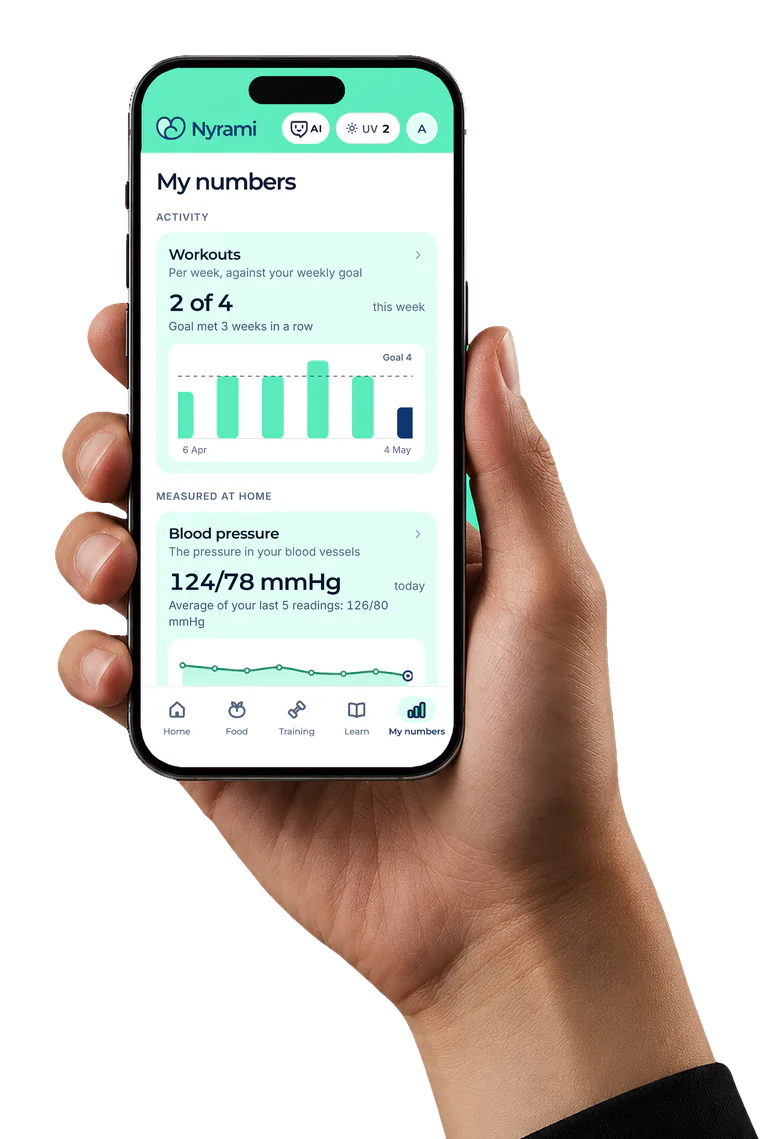
Once you have your urine test result, you can enter your albumin value in the Nyrami app and see which category it belongs to, explained in words. You can follow it over time together with eGFR and blood pressure, which is what your doctor looks at. The app is free for iPhone and Android.
Turns the advice into something you can use in the shop and the kitchen: scan food and see potassium, phosphorus and salt assessed for you, and follow your numbers over time. Free on iPhone and Android.