Creatinine normal range: table and what high levels mean
Normal blood creatinine is 45 to 90 µmol/l for adult women and 60 to 105 µmol/l for adult men. High creatinine can mean reduced kidney function, but it can also come from a lot of muscle, creatine supplements, a large meat meal, dehydration or certain medicines. What the number means for you depends on your age and sex.
A creatinine result flagged as too high can be frightening. Often the explanation is harmless. Here you can see what is normal, what numbers like 100, 150 and 200 can mean, what affects creatinine, and when it actually says something about your kidneys. If you want to see what your own number corresponds to, you can convert it in the eGFR calculator.
What is creatinine?
Creatinine is a waste product made when your muscles use energy. Your muscles make roughly the same amount every day, and healthy kidneys remove it in the urine. When the kidneys filter less well, creatinine builds up in the blood. That is why it is used to calculate eGFR, the best simple measure of kidney function.
What is the normal range for creatinine?
For adult women the reference range is 45 to 90 µmol/l, and for adult men 60 to 105 µmol/l. Men are higher because on average they have more muscle mass. Teenagers have slightly lower limits. Laboratories can differ a little, so always check the reference range printed on your own result.
Reference ranges for blood creatinine (µmol/l)
15 to 17 years
Women
41 to 79
Men
53 to 100
18 years and over
Women
45 to 90
Men
60 to 105
Reference ranges for blood creatinine (µmol/l)
Group
Women
Men
15 to 17 years
41 to 79
53 to 100
18 years and over
45 to 90
60 to 105
Source: Fürst medisinsk laboratorium. UNN, Metodebok and Store medisinske leksikon give the same adult values.
A normal creatinine does not always mean normal kidney function. Creatinine rises slowly at first, and according to the laboratory handbook at the University Hospital of North Norway (UNN), kidney function can fall by about a third before creatinine goes above the reference range. In an older, slight woman, 85 µmol/l can mean lower kidney function than 100 µmol/l in a muscular man. That is why your doctor looks at eGFR, not just creatinine. To understand the other values on your result too, see Understanding your test results.
Is a creatinine of 100 normal?
For an adult man, 100 µmol/l is within the reference range. For a woman, 100 is a little above the upper limit of 90. What the number means depends on age and muscle mass, which is why the laboratory converts it to eGFR.
For a man aged 40, a creatinine of 100 corresponds to an eGFR of about 83, which is common and does not mean kidney disease on its own. For a woman aged 75, the same number corresponds to an eGFR of about 44. Older people often have less muscle mass, and then a creatinine that looks almost normal can hide reduced kidney function. Read more in Kidney failure in older people.
What does a creatinine of 150 or 200 mean?
A creatinine of 150 or 200 µmol/l is above the reference range for both women and men, but what it means for your kidneys depends on who you are. A creatinine of 150 corresponds to an eGFR of about 53 in a man aged 40, but about 29 in a woman aged 70. The table shows some examples.
What a creatinine of 100, 150 and 200 can correspond to
100
Person
Man, 40
eGFR, approximately
83
Stage
G2
100
Person
Woman, 75
eGFR, approximately
44
Stage
G3b
150
Person
Man, 40
eGFR, approximately
53
Stage
G3a
150
Person
Man, 70
eGFR, approximately
39
Stage
G3b
150
Person
Woman, 70
eGFR, approximately
29
Stage
G4
200
Person
Man, 60
eGFR, approximately
31
Stage
G3b
What a creatinine of 100, 150 and 200 can correspond to
Creatinine (µmol/l)
Person
eGFR, approximately
Stage
100
Man, 40
83
G2
100
Woman, 75
44
G3b
150
Man, 40
53
G3a
150
Man, 70
39
G3b
150
Woman, 70
29
G4
200
Man, 60
31
G3b
eGFR in ml/min/1.73 m², calculated with EKFC (Pottel and colleagues 2021), the equation Norwegian laboratories use. These are examples, not a diagnosis: the stage is only set once the value has been at that level for at least three months, and G2 only counts as kidney disease if there are also signs of kidney damage.
Work out your own number in the eGFR calculator, and read what the stage means in Kidney failure stages. If creatinine is raised in more than one test, your doctor should also take a urine test that measures albumin, see Protein in urine.
Why is creatinine high?
Creatinine rises when the kidneys filter less well, but it also rises for reasons that have nothing to do with the kidneys. The most common are a lot of muscle mass, creatine supplements, a large meat meal before the test, dehydration and a few medicines. A single raised value should therefore always be repeated before anyone draws conclusions.
Muscle mass
Creatinine comes from your muscles, so the more muscle you have, the more creatinine you make. A muscular person can be above the reference range with completely healthy kidneys. The opposite is also true: low muscle mass, for example in old age, after long illness or with muscle disease, gives low creatinine that can hide reduced kidney function. Very hard and unaccustomed exercise can, in rare cases, break down a lot of muscle tissue and strain the kidneys, see Exercise with kidney disease.
Creatine supplements
Creatine is a popular supplement among people who train. It is converted to creatinine and can give raised creatinine and lower eGFR without kidney damage. The laboratory at Vestfold Hospital recommends that your doctor either measures cystatin C, or that you take a break from creatine for two to four weeks before a new test.
Meat and fish
Boiled or fried meat contains creatinine that passes straight into the blood. In one study, creatinine rose from around 80 to around 101 µmol/l after a meal of cooked meat, and the value was highest one to two hours after the meal. Avoid large amounts of meat or fish in the 12 hours before the blood test. Ideally have the test in the morning, because creatinine rises a little during the day. Your usual diet otherwise makes little difference.
Dehydration
When you have lost a lot of fluid, the blood becomes more concentrated and creatinine rises. With severe dehydration, the kidneys also get less blood and actually filter less well for a while. Doctors correct temporary causes like these before assessing whether you have chronic kidney disease (CKD).
Medicines
Some medicines, such as the antibiotic trimethoprim and the stomach ulcer medicine cimetidine, stop creatinine from being removed without changing kidney function. Other medicines affect the kidneys more directly. Anti-inflammatory painkillers such as ibuprofen can reduce kidney function in vulnerable people, see the guide to painkillers and the kidneys. Blood pressure medicines such as ACE inhibitors can cause a small drop in kidney function during the first weeks, which is expected and protects the kidneys in the long run. Never stop a medicine without talking to your doctor. Read more in Medicines in kidney disease.
What does low creatinine mean?
Low creatinine is rarely a problem in itself. It is usually due to low muscle mass, and it is common in older people, in those who have been ill for a long time, and during pregnancy. The number then says little about the kidneys, and eGFR can be too high. If your doctor needs to know your exact kidney function, cystatin C can be used.
What is the difference between creatinine in blood and in urine?
Creatinine in the blood is the number used to calculate eGFR. Creatinine in the urine (urine creatinine) is mostly used to calculate the ratio between albumin and creatinine in the urine (uACR, called u-AKR in Norway), and says little on its own, because it varies with how much you have drunk. So a urine result should not be compared with the reference range for blood.
At what creatinine level do you need dialysis?
There is no fixed creatinine limit for dialysis. The need is assessed from eGFR, which is then usually below 15, and from problems such as nausea, itching, fluid in the body and high potassium that can no longer be kept in check with medicines and diet. The same creatinine can mean very different kidney function in two people. Read more in Dialysis.
How can you lower creatinine?
If creatinine is high for a temporary reason, it comes down by itself once the reason is gone: you recover, drink as usual, stop taking creatine or have the test without a meat meal beforehand. If it is due to reduced kidney function, there is no shortcut. The aim is then to protect the kidneys as they are.
What works is good blood pressure, well controlled blood sugar, less salt and kidney protecting medicines from your doctor. No tea, herb or cleanse can safely flush the kidneys or lower creatinine. Read more in the guide to chronic kidney disease.
When should you contact a doctor?
Contact your GP (fastlege) if creatinine is above the reference range in more than one test, if your eGFR is below 60, or if the number rises from one test to the next. Tell them about your training, supplements and all the medicines you take. If you have diabetes, high blood pressure or heart disease, your kidneys should be checked regularly, see the guide to how kidney disease is detected.
Call the out of hours service (legevakt) on 116 117 if you pass very little urine, swell up or feel unusually weak and sick. If a life is in danger, call 113.
How Nyrami can help
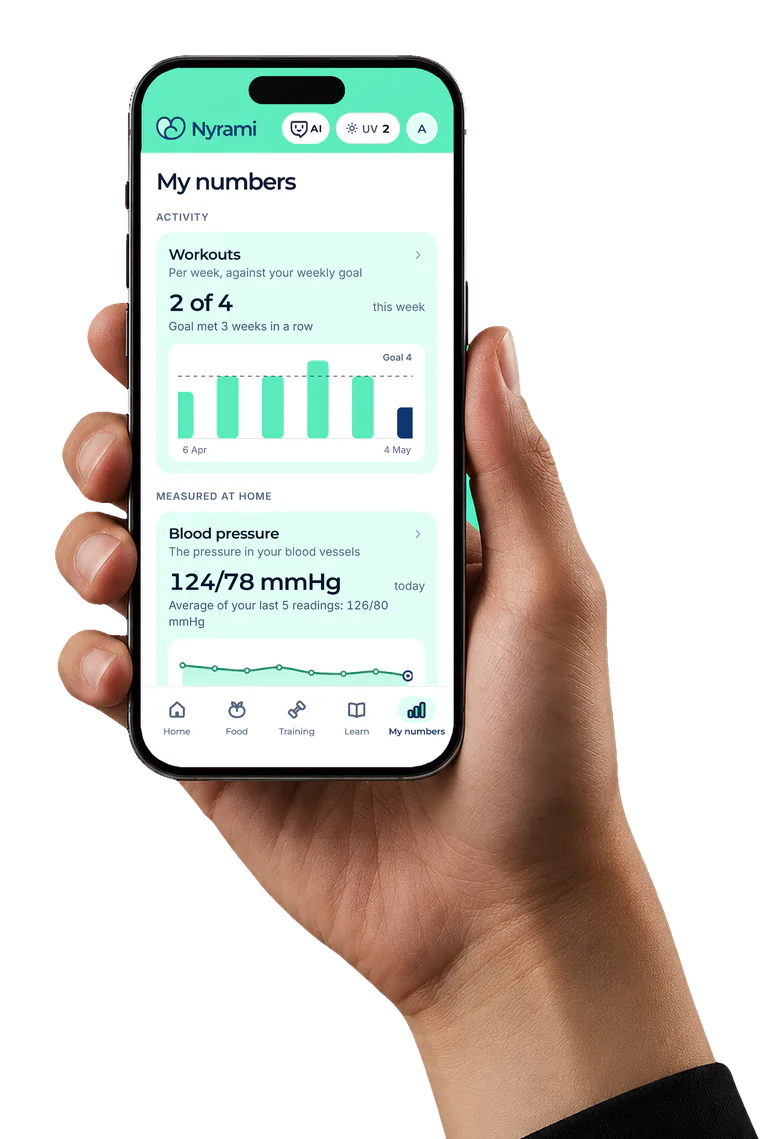
In the Nyrami app you can enter your creatinine, eGFR and other values and have them explained in words. You can see how they change over time, so a single high result does not need to frighten you. The app is free for iPhone and Android.
Turns the advice into something you can use in the shop and the kitchen: scan food and see potassium, phosphorus and salt assessed for you, and follow your numbers over time. Free on iPhone and Android.