The kidneys remove most of the uric acid in the body. When kidney function is reduced, uric acid builds up more easily and the risk of gout goes up. High uric acid can also cause kidney stones. If you have kidney disease, attacks and prevention need medicines that are safe for the kidneys, and you should usually avoid ibuprofen (Ibux).
Perhaps you woke up last night with a big toe so red, swollen and painful that even the duvet felt too heavy. Or perhaps you have kidney disease and have been told your uric acid is high. Gout and the kidneys are closely linked, and when you have both, there are a few extra things to keep in mind. Here is the overview.
How are gout and the kidneys linked?
Uric acid is a waste product made when the body breaks down purines, substances found in our cells and in food. The kidneys remove most of the uric acid. In about nine in ten people with gout, the main cause is that the kidneys remove too little. When kidney function weakens, uric acid therefore rises more easily, and gout becomes more common.
In a large American survey, gout was about twice as common in people with kidney function equal to stage 3 as in people with normal kidney function. Water tablets (diuretics), which many people with kidney disease and high blood pressure take, can also raise uric acid.
The link goes both ways. When a lot of uric acid passes into the urine, crystals can form and turn into kidney stones. Uric acid can also be deposited in the kidneys and urinary tract themselves. In studies, high uric acid is linked to faster worsening of kidney disease, but it has not been shown that uric acid lowering medicine slows kidney disease in people who do not have gout. That is why the international guideline KDIGO does not recommend such medicine just to protect the kidneys.
What are the symptoms of gout?
A gout attack causes a sudden, very painful joint that is swollen, warm and red. In more than half of attacks it is the big toe, but the ankle, knee, foot, hand and elbow can also be affected. The attack often starts at night, is worst after 12 to 24 hours and settles after a few days.
Without treatment, an attack can last a week or more. Some people get a fever. Between attacks most people have no symptoms at all, and there can be months or years between them. If uric acid has been high for a long time, lumps of uric acid crystals called tophi can form under the skin, for example on the ears, fingers or elbows.
Gout is the most common inflammatory joint disease after the age of 40. Around one to two per cent of adults in Western countries have it, most of them men. Among men over 75, about one in ten has had gout. After the menopause, women are affected almost as often as men.
What can be mistaken for gout?
The conditions that most often need to be told apart from gout are infection in the joint (septic arthritis), pseudogout and other forms of arthritis. Joint infection is serious and must be treated quickly. Think of it if you have a fever, feel unwell, or if the attack feels different from the ones you have had before.
Pseudogout looks similar, but is caused by calcium pyrophosphate crystals instead of uric acid. It more often affects the knee and older people. The surest way to tell them apart is to draw a little fluid from the joint and look for crystals under a microscope.
A blood test for uric acid is useful, but it can mislead you. In more than four in ten people, uric acid is normal during the attack itself, because the kidneys remove more uric acid then. The test is therefore often repeated two to four weeks after the attack. If uric acid is normal then too, the doctor should consider another explanation.
Is gout a form of rheumatism, and is it hereditary?
Yes, gout is counted as a rheumatic disease. It is joint inflammation caused by crystals, and it belongs to the specialty of rheumatology. Most people are still followed up by their GP (fastlege), and only some need to see a rheumatologist.
Gout, or podagra when it affects the big toe, is partly hereditary. Your genes affect how well the kidneys remove uric acid, and the disease often runs in families. Genes alone rarely decide, though. Overweight, alcohol, sugary drinks, water tablets, kidney disease, diabetes and high blood pressure matter a lot. In rare cases, inherited faults in how the body handles uric acid cause disease already in children and young people. Read more about genes and the kidneys in Is kidney disease hereditary?.
How is an attack treated when you have kidney disease?
With kidney disease, KDIGO recommends low dose colchicine, or prednisolone as tablets or an injection into the joint, rather than anti-inflammatory painkillers such as ibuprofen (Ibux). Treatment works best when started early, ideally within a day. The attack then often settles within one to two days.
NSAIDs such as ibuprofen (Ibux), diclofenac (Voltaren) and naproxen are widely used for gout in people with healthy kidneys. With kidney disease they can weaken kidney function, and with an eGFR below 30 they should not be used. Read more in Painkillers and the kidneys.
Colchicine has to be adjusted to kidney function. With severely reduced kidney function, treatment should be agreed with a kidney specialist. Colchicine must not be used together with ciclosporin (Sandimmun), and people with a kidney transplant who take such medicines must always ask their kidney doctor first. Prednisolone is a good alternative when colchicine or NSAIDs do not suit you, but it is used as a short course. Ask your doctor for a plan for what to take next time an attack comes, so you can start quickly at home.
Gout medicines and what applies with kidney disease
Colchicine
What it is used for
Attacks, and to prevent attacks in the first months on allopurinol
With kidney disease
Low dose, adjusted to kidney function. Not with ciclosporin
Prednisolone
What it is used for
Attacks, as a short course or an injection into the joint
With kidney disease
A good alternative when other medicines do not suit you
Ibuprofen, diclofenac, naproxen (Ibux, Voltaren)
What it is used for
Attacks
With kidney disease
Best avoided. Must not be used with an eGFR below 30
Allopurinol (Allopur, Zyloric)
What it is used for
Lowers uric acid and prevents new attacks
With kidney disease
First choice. Started at a low dose and stepped up after blood tests
Febuxostat (Adenuric)
What it is used for
Lowers uric acid when allopurinol does not suit you
With kidney disease
Not used with a very low eGFR. Caution with heart disease
Probenecid
What it is used for
Increases removal of uric acid through the kidneys
With kidney disease
Works poorly and is not recommended with reduced kidney function
Gout medicines and what applies with kidney disease
Active ingredient (example brand names)
What it is used for
With kidney disease
Colchicine
Attacks, and to prevent attacks in the first months on allopurinol
Low dose, adjusted to kidney function. Not with ciclosporin
Prednisolone
Attacks, as a short course or an injection into the joint
A good alternative when other medicines do not suit you
Ibuprofen, diclofenac, naproxen (Ibux, Voltaren)
Attacks
Best avoided. Must not be used with an eGFR below 30
Allopurinol (Allopur, Zyloric)
Lowers uric acid and prevents new attacks
First choice. Started at a low dose and stepped up after blood tests
Febuxostat (Adenuric)
Lowers uric acid when allopurinol does not suit you
Not used with a very low eGFR. Caution with heart disease
Probenecid
Increases removal of uric acid through the kidneys
Works poorly and is not recommended with reduced kidney function
No doses here: your doctor decides the dose based on your kidney function. Source: KDIGO 2024, Norsk legemiddelhåndbok, NHI.no, Revmatologisk avdeling Moss.
Which medicine prevents new attacks?
Allopurinol is the first choice for lowering uric acid and preventing new attacks, also with kidney disease. It is started at a low dose and stepped up carefully with regular blood tests, in smaller steps when kidney function is reduced. The target is usually a uric acid below 360 µmol/l, or below 300 µmol/l if you have tophi.
With kidney disease, KDIGO recommends considering uric acid lowering treatment already after the first attack. For the first six months, many also take colchicine or low dose prednisolone, because attacks can flare up when uric acid starts to fall. Do not stop allopurinol if you get an attack along the way, but talk to your doctor. If you get a skin rash, stop and contact a doctor.
Febuxostat is an alternative if allopurinol does not work well enough or causes side effects. It is broken down in the liver and needs less adjustment with reduced kidney function, but it is not used when eGFR is very low, and preferably not with heart disease. If you have a kidney transplant and take azathioprine (Imurel), allopurinol must not be used without your kidney doctor involved. You can read more about how your medicines work together in Medicines for kidney disease.
What should you eat and drink with gout?
What matters most in your diet is drinking little alcohol, especially beer, and avoiding sugary drinks high in fructose. Also limit offal and purine rich seafood such as shellfish, herring, mackerel and anchovies. Diet alone rarely lowers uric acid enough to prevent new attacks, though, so it does not replace medicine.
Alcohol: Alcohol slows the removal of uric acid and can trigger attacks. Beer also contains purines and raises uric acid the most, including alcohol free beer. See Alcohol and the kidneys.
Sugary drinks: Fizzy drinks such as cola and juice should not be what you drink when thirsty. Fructose raises uric acid. Sugar free cola does not have the same link with gout, but it contains phosphate, which you may need to limit with kidney disease.
Meat and seafood: Eat moderate amounts of meat and fish with your meals, and be careful with offal, shellfish and the most purine rich fish.
Water: Plenty of water helps the kidneys remove uric acid and helps prevent kidney stones. If you have been told to limit fluids because of your kidney disease, follow that advice. See Fluid balance in kidney disease.
Weight: If you are overweight, losing weight slowly helps. Fasting and rapid weight loss can trigger attacks.
Low fat dairy products, vegetables and fruit seem to protect against gout. With kidney disease you may still need to watch phosphorus and potassium, but only if your blood tests show they are too high. See Food with kidney failure and Phosphorus in food.
Are apples good for gout?
An apple is perfectly fine when you have gout. Fruit is part of the recommended diet, and a normal portion of fruit gives little fructose. It is drinks high in sugar, such as apple juice and large amounts of fizzy drinks, that are the problem. There is no good evidence that apples lower uric acid.
Does cod liver oil help with gout?
It is not well documented that cod liver oil (tran) or other omega 3 supplements prevent gout attacks, and Norwegian advice on gout does not mention it. Cod liver oil cannot replace medicine. If you have kidney disease, ask your doctor before starting any supplement.
When should you contact a doctor?
Contact your GP (fastlege) the first time you get a painful, swollen and red joint, and if attacks come back. With kidney disease it is especially important that the doctor chooses the medicine, because several of the usual gout medicines need to be adjusted to the kidneys.
Call the out of hours service (legevakt) on 116 117 the same day if you have a fever, feel unwell, or if the joint is different or worse than in earlier attacks. It may be an infection in the joint.
Contact a doctor quickly if you have severe, wave like pain in your side or back, or blood in your urine. It may be a kidney stone.
Contact a doctor if you get a skin rash after starting allopurinol.
Call 113 (the Norwegian emergency number) if you have chest pain, serious breathing problems or feel you are about to faint.
How Nyrami can help
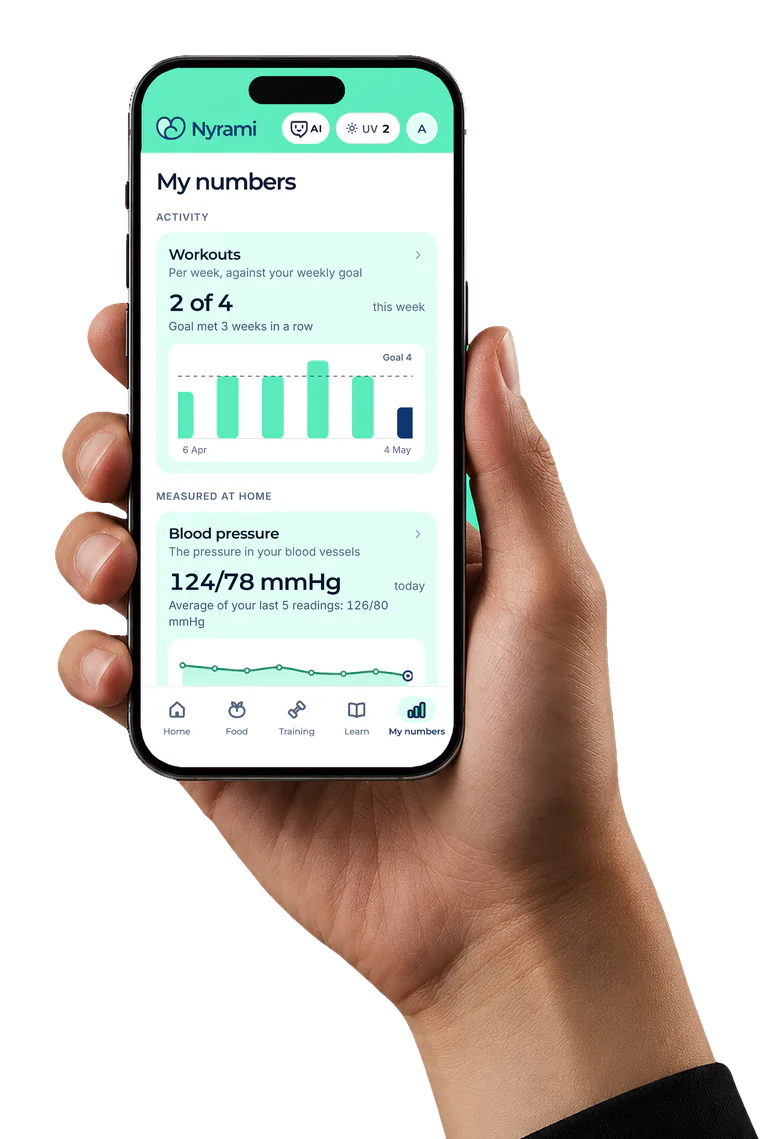
In the Nyrami app you gather your values, such as eGFR, creatinine and blood pressure, explained in words, and you can log how much you drink. The food scanner reads the barcode and assesses potassium, phosphorus, sodium and protein for you. It does not assess purines. The app is free for iPhone and Android.
Turns the advice into something you can use in the shop and the kitchen: scan food and see potassium, phosphorus and salt assessed for you, and follow your numbers over time. Free on iPhone and Android.